

Television


Radio



Exhibitions and Business News
Interview with the world-renowned pioneer of forensic psychology, Professor Raymond Bull, Professor of Criminal Investigation at the University of Derby. For decades, the criminal justice system relied on high-pressure, "common-sense" interrogations that frequently backfired or resulted in false confessions. Professor Bull has spent his career dismantling those flawed practices. He walks us through the evolutionary shift from coercive interrogation to rapport-based investigative interviewing. Learn how psychological principles are used today to interview suspects, victims, and witnesses to uncover the ground truth
Listen to more from Season 3 of Detective Diaries on Spotify and Apple Podcasts
Listen on Spotify
----------
Listen on Apple Podcasts
----------
The application of many of Professor Bull's principes used in P.E.A.C.E. witness interviewing practice

Listen to more episodes of Detective Diaries on Spotify, Apple Podcast etc
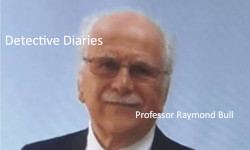
Podcast Interview on Cyberpsychology with Professor Emma Short
1
00:00:00,000 --> 00:00:08,240
Welcome to Detective Diaries brought to you by Private Detectives Answers Investigation.
2
00:00:08,240 --> 00:00:12,720
If you are captivated by the art of deduction, the thrill of solving the unsolvable, or the
3
00:00:12,720 --> 00:00:18,880
enigmatic world of private investigation, you've just found your new favourite podcast.
4
00:00:18,880 --> 00:00:23,560
Detective Diaries is where secrets unravel and the truth is always a clue away, presented
5
00:00:23,560 --> 00:00:29,880
by Private Detectives' Answers Investigation. Each episode contains offbeat conversations
6
00:00:29,880 --> 00:00:33,800
about the real people involved in investigation.
7
00:00:33,800 --> 00:00:40,760
Welcome again to Detective Diaries. Today, from the relax setting of purchases in
8
00:00:40,760 --> 00:00:44,840
Chichester, we're taking you through the art and science of investigative interviewing.
9
00:00:44,840 --> 00:00:49,400
I feel that blends psychology, strategy and the search for truth.
10
00:00:49,400 --> 00:00:53,880
I'm honoured today to be joined by a true Titan in the world of forensic and criminal psychology,
11
00:00:53,880 --> 00:00:59,000
Professor Ray Bull. Professor Bull is widely regarded as a leading figure in investigative
12
00:00:59,000 --> 00:01:03,480
interviewing research. He's an emritus of Professor Forensic Psychology at the University of
13
00:01:03,480 --> 00:01:08,840
Leicester, here in England. For over four decades his work has fundamentally reshaped how justice
14
00:01:08,840 --> 00:01:14,360
is pursued, most notably through his pioneering involvement in the PEACE method. This revolutionary
15
00:01:14,360 --> 00:01:19,160
framework moved police interviewing away from coercive interrogation towards an empathy-driven,
16
00:01:19,160 --> 00:01:25,560
non-coercive approach that prioritises rapport and psychological sides over common sense hunches.
17
00:01:25,560 --> 00:01:30,840
His work is not only shaped academia but also police training programmes internationally,
18
00:01:30,840 --> 00:01:37,160
from Europe and Canada to Asia, Africa and Latin America, advising police forces in over 35
19
00:01:37,160 --> 00:01:43,240
countries and serving as an expert witness in more than 150 cases. His accolades are also quite vast.
20
00:01:43,240 --> 00:01:48,760
In 2022, he was recognised as a distinguished member of the American Psychological Law Society
21
00:01:48,760 --> 00:01:53,640
for his exceptional contributions to Psychology and Law. He served as the president of the European
22
00:01:53,640 --> 00:02:01,800
Association of Psychology and Law from 2014 to 2017 and as immediate past president from 2017 to 2020.
23
00:02:01,800 --> 00:02:06,280
Professor Bull is also an honorary fellow at the British Psychological Society, which is limited to
24
00:02:06,280 --> 00:02:12,680
no more than 40 living psychologists awarded for his contribution to Psychology. He's co-authored
25
00:02:12,680 --> 00:02:18,280
over 300 papers, whose work directly informing UK government guidelines, including the memorandum
26
00:02:18,280 --> 00:02:21,880
of good practice for interviewing child witnesses. The amount of the amount of the
27
00:02:21,880 --> 00:02:25,720
amount of the guests has achieved continues over decades and while I would love to sit here
28
00:02:25,720 --> 00:02:29,640
and read through all of them, I don't think we'd have much of an episode left by the time I've done
29
00:02:29,640 --> 00:02:33,560
that. Professor Ray Bull, thank you so much for joining me here today.
30
00:02:33,560 --> 00:02:39,080
Oh, thank you. It's a pleasure to have the opportunity to talk with you and for people to listen
31
00:02:39,080 --> 00:02:44,840
to what we have to say. Brilliant. Thank you so much indeed. So I suppose the first question I have is,
32
00:02:44,840 --> 00:02:50,840
is every day still a school day? You've co-authored over 300 papers, are you still learning at the point?
33
00:02:50,840 --> 00:02:59,400
Yes, yes, I mean, we had a slightly earlier conversation today where you made a very good point that I
34
00:02:59,400 --> 00:03:05,240
would like to follow up on, which is when people are being interviewed in investigation, for example,
35
00:03:05,240 --> 00:03:14,280
by the police or by another professional organisation. Are they more constrained when being video and
36
00:03:14,280 --> 00:03:21,560
audio recording compared to being audio recorded only? Indeed. I'm not aware of anything on that
37
00:03:21,560 --> 00:03:27,080
in the investigative arena. There may be literature in other arenas like medical professionals
38
00:03:27,080 --> 00:03:34,600
interviewing patients or in social work or the helping professions, but I haven't come across anything
39
00:03:34,600 --> 00:03:40,600
in the literature which I tried to read quite a lot within the investigative interview. And
40
00:03:42,440 --> 00:03:48,280
I think it was last year or the year before I was lucky enough to be invited to give a lecture in
41
00:03:48,280 --> 00:03:55,960
person at a university in Malaysia. And at question time, one of their PhD students said, and I'm now
42
00:03:55,960 --> 00:04:06,120
quoting him, "Professor, I very much like the idea that we get information not from students pretending
43
00:04:06,120 --> 00:04:15,000
to be victims, witnesses or suspects, but we actually analyse things in real life". So he said the work
44
00:04:15,000 --> 00:04:21,240
you've cited on what people that were now in prison have got to say, or analysing recorded interviews
45
00:04:21,240 --> 00:04:27,880
with suspects. He said, however, what about the people who have never been detected, who have never
46
00:04:27,880 --> 00:04:34,840
been interviewed and therefore are not in prison? What about them? And I thought, oh, gosh,
47
00:04:35,400 --> 00:04:41,800
what an interesting question. Indeed. And so much so that when Professor Bechamel invited me
48
00:04:41,800 --> 00:04:48,520
in the journal that she edits, she was editing a version celebrating the journal's 25 years.
49
00:04:48,520 --> 00:04:56,120
And so she invited me to write about my 25 years. I've finished that article with that student's
50
00:04:56,120 --> 00:05:01,080
question. Amazing, amazing. So always learning. Always learning and always developing. It's quite
51
00:05:01,080 --> 00:05:07,080
interesting, as you just said, you know, there are particular niche fields, perhaps within the
52
00:05:07,080 --> 00:05:12,760
investigative interviewing. Yes. I still yet to be explored. So every day is a school day. Yes.
53
00:05:12,760 --> 00:05:18,120
Did you find that still quite joyous when you perhaps come across something new or something that hasn't
54
00:05:18,120 --> 00:05:24,440
been explored and you think, that's what I want to go into? Yeah, absolutely because it confirms
55
00:05:24,440 --> 00:05:31,560
that there's still more to learn as Albert Einstein said and I'm quoting Einstein if I may. Of
56
00:05:31,560 --> 00:05:39,640
course, please. So he said, "the more I learn, the more I realize I don't know". Right. And I've got that
57
00:05:39,640 --> 00:05:45,560
I'm saying on the wall in my office. I've really, so it's sort of a daily motto and reminder to
58
00:05:45,560 --> 00:05:51,400
you. Yeah. Excellent. Excellent. So obviously investigative interviewing, as I said,
59
00:05:51,400 --> 00:05:57,400
in introduction, you are a man who has decades of experience about this, but what area perhaps
60
00:05:57,400 --> 00:06:05,240
do you most enjoy researching when looking at this field? As you kindly said in your introduction,
61
00:06:05,240 --> 00:06:13,960
many years ago, my focus with colleagues, including then Becky Meln doing her PhD,
62
00:06:13,960 --> 00:06:19,800
was how best to interview children who may have had a negative experience in order to get
63
00:06:19,800 --> 00:06:27,720
information from them. And a lot of people around the world did really good work on that. So we know
64
00:06:27,720 --> 00:06:35,000
what to do. The ability to do it is the issue. Right. So we have guidance around the world more
65
00:06:35,000 --> 00:06:40,440
recently from the European Association of Psychology and Law that you mentioned. And all that
66
00:06:40,440 --> 00:06:46,440
guidance has the same skeleton, the same guidance irrespective of where it's been published.
67
00:06:46,920 --> 00:06:54,440
So we, as I say, we know what to do. But as I was coming to realize that we know what to do
68
00:06:54,440 --> 00:07:02,280
for interviewing children, I thought, hmm, what's the field that's not been so well developed? I'm
69
00:07:02,280 --> 00:07:07,080
talking decades ago. Sure. And that was the field of interviewing suspected persons,
70
00:07:07,080 --> 00:07:14,680
mostly adults rather than children. Sure. So I then moved into doing work on interviewing suspects,
71
00:07:15,640 --> 00:07:22,280
probably about 25 years ago or more. Yeah. So that's what I focused on up till today.
72
00:07:22,280 --> 00:07:29,960
It's such an expansive field. And you sort of, you know, mentioned the particulars there of perhaps
73
00:07:29,960 --> 00:07:34,760
what techniques would be applied when interviewing children and perhaps what would be applied when
74
00:07:34,760 --> 00:07:40,040
you're dealing with a difficult subject. But I mean, obviously your methodology, the PEACE methodology,
75
00:07:40,040 --> 00:07:45,000
are you able to sort of take us through a little bit of that just to an executive summary if one can
76
00:07:45,000 --> 00:07:50,440
ask. Yes. Well, I think it would be interesting for listeners just to spend a short time
77
00:07:50,440 --> 00:07:57,640
explaining how it came about. Yes. Very good. And so England and Wales, as far as I'm aware,
78
00:07:57,640 --> 00:08:04,840
were the first countries that by law had to chape record the interviewing of suspects. And this was
79
00:08:04,840 --> 00:08:12,680
from 1986 when video recording was extremely expensive. So it only began audio recording. And now,
80
00:08:12,680 --> 00:08:19,880
of course, there's a lot of video. So from 1986, the police had to audio record that interviewing of suspects.
81
00:08:19,880 --> 00:08:26,520
And then the government quite rightly and the chiefs of police wondered whether
82
00:08:26,520 --> 00:08:33,320
that newly recorded interviewing was of a sufficient quality. And there were four studies,
83
00:08:33,320 --> 00:08:39,960
two by the government and two by police officers for their PhDs. And these four studies on different
84
00:08:39,960 --> 00:08:46,440
samples and different forces all came to the same conclusion, which was the interviewing though
85
00:08:46,440 --> 00:08:53,320
it was not coercive. It was not wrong as had been in some cases in the past. Right. And is still the
86
00:08:53,320 --> 00:09:00,200
case in many other countries. It wasn't very skilled. And then when they wondered, oh, why are the people
87
00:09:00,200 --> 00:09:04,360
who had the difficult job with interviewing suspects not very skilled? The obvious answer was
88
00:09:04,360 --> 00:09:10,120
what they didn't have any training. Right. There was no training, no national agreed training. So the
89
00:09:10,120 --> 00:09:17,240
government and chiefs of police set up a committee of 12 detectives in 1990 to develop a philosophy
90
00:09:17,240 --> 00:09:24,840
and training on how to interview initially into suspects. And it was those detectives
91
00:09:24,840 --> 00:09:33,800
who came up with this PEACE method. Right. But why it includes a lot of psychology is that one of the
92
00:09:33,800 --> 00:09:40,760
people who was doing his PhD on the initially recorded interviews, a wonderful guy called
93
00:09:40,760 --> 00:09:47,160
Tom Williamson who was a rising star in the London Police. He realized because he himself had a
94
00:09:47,160 --> 00:09:53,400
degree in psychology that some aspects of psychology in his opinion were relevant. Right.
95
00:09:53,400 --> 00:09:58,760
To the interviewing of suspects. So what he did was he got a small number of psychologists,
96
00:09:59,320 --> 00:10:06,360
lucky enough including myself to meet with him on Sunday's in our own free time and gathered together
97
00:10:06,360 --> 00:10:12,600
everything in psychology and allied disciplines that could be possibly of use to that committee
98
00:10:12,600 --> 00:10:18,760
who had to come up with training. Right. And in those days, there was almost no research directly
99
00:10:18,760 --> 00:10:25,160
on interviewing suspects. The skills needed. There was work on how not to do it. You know, it's not a
100
00:10:25,160 --> 00:10:33,240
good idea to be very aggressive because it's against the law. But what Tom had realized is that in other
101
00:10:33,240 --> 00:10:40,600
aspects of human behavior where a professional is talking with a person who may not want to tell you
102
00:10:40,600 --> 00:10:47,720
a lot is in clinical psychology, the training in medics, particularly those who work in sexually
103
00:10:47,720 --> 00:10:53,000
transmitted diseases where the person you're talking with might want some treatment but
104
00:10:53,000 --> 00:10:57,320
doesn't want to tell you everything about the contacts even though you need to know who the
105
00:10:57,320 --> 00:11:02,440
contacts are. So that they can get checked out. Yes. So there were a lot of arenas.
106
00:11:02,440 --> 00:11:09,320
Obviously what you want to do if the evidence is strong in a democracy where most suspects do have
107
00:11:09,320 --> 00:11:15,320
relevant knowledge is you want that suspect to provide their relevant knowledge, indeed, including that
108
00:11:15,320 --> 00:11:25,880
they might be innocent. And so Tom realized that getting that person to change their mind from not
109
00:11:25,880 --> 00:11:34,280
wanting to tell, to tell, he realized that there was research in consumer psychology and attitude
110
00:11:34,280 --> 00:11:41,480
change in marketing on how you ethically get somebody to stop doing something, you know, buying
111
00:11:41,480 --> 00:11:51,080
whizzo and buy something else by your own product. Yes. Yes. And so what we did was we wrote down all this
112
00:11:51,080 --> 00:11:59,000
or we collected all this information into an unpublished rather big book. And then Tom gave it to
113
00:11:59,000 --> 00:12:05,880
the chairperson of the 12 male detectives and we had no idea whether they would take any notice
114
00:12:05,880 --> 00:12:11,720
of it whatsoever. Why should they? Right. Right. They were experienced detectives who mostly started
115
00:12:11,720 --> 00:12:17,240
policing when they were 18 and in those days. Sure. This is a question of bringing the academia
116
00:12:17,240 --> 00:12:22,920
well down to what they know. Those guys, you know, had very limited academic experience
117
00:12:22,920 --> 00:12:30,680
themselves. So we were quite prepared for them to totally ignore what we had propelled. However,
118
00:12:32,520 --> 00:12:41,080
to my amazement when I worked at the University of Portsmouth, a parcel arrived, a large parcel.
119
00:12:41,080 --> 00:12:49,720
And it was at the time of IRA and other issues. And so any organization when an unexpected parcel
120
00:12:49,720 --> 00:12:55,880
arrived security called you. Yes. And say, are you expecting this parcel? And I said, no, I'm not
121
00:12:55,880 --> 00:13:00,600
expecting a parcel. And they said, well, apparently it comes from the police, but we don't know whether
122
00:13:00,600 --> 00:13:07,720
to believe that. And I said, oh, yeah, I think it will be okay. And they opened it and it was okay.
123
00:13:07,720 --> 00:13:15,320
And then it came to me. And it was amazing because the covering note said from the 12 detectives,
124
00:13:15,320 --> 00:13:23,000
"dear professor, we have decided to incorporate into our training a lot of that psychological stuff.
125
00:13:23,000 --> 00:13:30,440
But we have been told that our training has to be understood by every police officer
126
00:13:30,440 --> 00:13:36,680
even early career police officers, some of whom may left school at 16. Right. So we have
127
00:13:36,680 --> 00:13:45,080
written our draft guidance that's in this parcel in everyday street language. And we are worried
128
00:13:45,080 --> 00:13:51,880
that we have mistranslated, misinterpreted those high-faluting psychological notions
129
00:13:51,880 --> 00:13:59,160
into concrete street language. So can you go through it and tell us where we've got it wrong"?
130
00:14:00,120 --> 00:14:05,320
Right. It was amazing. They hadn't got anything wrong. Fantastic.
131
00:14:05,320 --> 00:14:10,680
There were a few arenas where I could help improve the communication of the concept.
132
00:14:10,680 --> 00:14:20,600
And that became what those police officers called the PEACE method. They had realized that to get
133
00:14:20,600 --> 00:14:27,960
somebody to decide to talk to you, you have to behave in the normal street language,
134
00:14:27,960 --> 00:14:36,920
were meaning of behave peacefully, not coercively. Yes. But they realized that what they were advocating,
135
00:14:36,920 --> 00:14:45,400
and this is where the five letters PEACE come in, that you're more likely to do successful if you
136
00:14:45,400 --> 00:14:53,800
can plan and prepare before you interview. So that's the P. That's the P, yep. Then they realized that at least in the
137
00:14:53,800 --> 00:15:00,760
UK you're required by law to explain to a suspect why they are in the interview. You're not required
138
00:15:00,760 --> 00:15:06,520
to tell them everything you know, particularly information that may not be incriminating. They
139
00:15:06,520 --> 00:15:11,960
happen to be in a certain town on the day the prime was committed. That's not very incriminating.
140
00:15:11,960 --> 00:15:18,360
They could have been doing anything exactly in that town. So you have to explain, and then the crucial
141
00:15:18,360 --> 00:15:27,560
point is they realized that to enable a person to be more willing to tell you, you need to engage
142
00:15:27,560 --> 00:15:33,880
them in conversation, not yet about the alleged crime. But about something from the planning
143
00:15:33,880 --> 00:15:41,080
and preparation that you know that interviewee is interested in, that knew yourself, genuinely
144
00:15:41,080 --> 00:15:49,640
interested in. You can't fake it. And so something that almost everybody is interested in if you don't
145
00:15:49,640 --> 00:15:57,480
know any match between the suspect and yourself is certainly in the UK to talk about the weather,
146
00:15:57,480 --> 00:16:04,280
or some big thing that's in the national news that almost everybody knows about. So you try
147
00:16:05,000 --> 00:16:12,520
to engage the person in conversation that will reduce their anxiety, shows your own humanity.
148
00:16:12,520 --> 00:16:24,680
That normally can be achieved. And then you gradually move into gaining a relevant account.
149
00:16:24,680 --> 00:16:33,160
This is the A. So this is the A. And there are various ways of best getting the account
150
00:16:34,600 --> 00:16:39,560
one way is to invite the person to talk you in their own words and not yet question them.
151
00:16:39,560 --> 00:16:47,880
Yes. So when and if they have finished whatever they want to say, you can then ask your questions
152
00:16:47,880 --> 00:16:54,280
that come from your planning and preparation. Right. And then normally at the end of the questioning,
153
00:16:54,280 --> 00:17:01,880
an interview would have finished, but these detectives realize there is more to do. And this is the
154
00:17:01,880 --> 00:17:12,280
C of PEACE, which is called closure, closure, where you try to provide an effective summary of what
155
00:17:12,280 --> 00:17:17,560
the person says, which of course, the more they've said, the more difficult it is to summarize it correctly.
156
00:17:17,560 --> 00:17:23,320
And then you say is there anything more you'd like to add? And quite often if people have provided
157
00:17:23,320 --> 00:17:31,080
some information, providing an account, hopefully correctly back to them, what we say in psychology
158
00:17:31,080 --> 00:17:37,320
queues off more things. And they say, Oh, yes. Now I remember Sansa, the front. And then
159
00:17:37,320 --> 00:17:43,720
when you finish talking about what they've said and if and when they're telling you anything,
160
00:17:43,720 --> 00:17:50,040
again, you might think the interview is finished, but it's not because the second part of closure is
161
00:17:50,040 --> 00:17:56,440
to go back to what you talked about in rapport. So if the interviewee, whether suspect in the early days
162
00:17:56,440 --> 00:18:03,960
or witness or victim has chosen to tell you something that's been difficult for them to tell you,
163
00:18:03,960 --> 00:18:11,960
you have a professional duty that they don't leave the room in that negative state that's caused by
164
00:18:11,960 --> 00:18:17,720
them telling you, but you try to help them relax and you might go back and talk about the weather or
165
00:18:17,720 --> 00:18:23,880
soccer or president Trump for another 10 minutes. So when they walk out of that room,
166
00:18:25,400 --> 00:18:31,880
they think you've done a good job even if they've in detail confessed to a serious crime.
167
00:18:31,880 --> 00:18:38,120
Yes. Yes. They feel that they have been treated well. They would tell other people about that
168
00:18:38,120 --> 00:18:45,800
and so on. So that's the interviewing finished, right? But we have the final E of PEACE, which is
169
00:18:45,800 --> 00:18:52,520
Evaluation. Obviously, given that the information is recorded, you and others as the investigate,
170
00:18:52,520 --> 00:18:59,480
can you evaluate the information, but also of course, a recording enables you and a trusted colleague
171
00:18:59,480 --> 00:19:05,560
to evaluate what you did well so you know you can do that. What you did reasonably that you need
172
00:19:05,560 --> 00:19:11,160
to improve and if and when you did anything that you wouldn't have chosen to do, let's literally
173
00:19:11,160 --> 00:19:17,480
call that unskilled or wrong. Sure. I think, oh, yeah, I interrupted too often. Right.
174
00:19:17,480 --> 00:19:23,720
So that's the PEACE model. That's what those guys came up with in form by psychology. So at that point
175
00:19:23,720 --> 00:19:29,720
in time, as you say, this was kind of the pioneering aspects of researching into investigative
176
00:19:29,720 --> 00:19:35,080
interview, it kind of brings me back to a topic we were just touching on before. We began the
177
00:19:35,080 --> 00:19:41,240
episode, but how did you get into this? Because there's obviously such an interest in field, you were
178
00:19:41,240 --> 00:19:46,840
right there pioneering it, but obviously you had done some research, try it to this involvement of the new
179
00:19:46,840 --> 00:19:53,000
methodology. So how did you get into it? Well, I was fortunate enough to do my undergraduate
180
00:19:53,000 --> 00:19:59,880
three years and my graduate three years in psychology at the University of Exeter, where
181
00:19:59,880 --> 00:20:06,520
I learned quite a lot about different parts of psychology and the part of psychology to do with
182
00:20:06,520 --> 00:20:12,600
memory and related topics, which is called cognitive psychology. So my first very junior
183
00:20:14,280 --> 00:20:18,520
used to call it lectureship. Now they've called it Prof. Junior Professorship. You know, I was
184
00:20:18,520 --> 00:20:24,440
sitting in my 20s. So it wasn't very grand. It was in cognitive psychology at one of the universities
185
00:20:24,440 --> 00:20:32,440
in London. And it was a big department and we had like seven cognitive psychologists, some people
186
00:20:32,440 --> 00:20:40,920
more expert in perception than memory. But one of the other cognitive psychologists in memory,
187
00:20:40,920 --> 00:20:48,440
with whom I was initially lucky enough to share an office called Brian Clifford. We decided in the
188
00:20:48,440 --> 00:20:56,440
mid 1970s, just after I'd started there and he started here before me to write a book about the
189
00:20:56,440 --> 00:21:03,720
psychology of what's now called eyewitness testimony. So there's more about memory and interviewing.
190
00:21:03,720 --> 00:21:12,600
Right. So we published one of the first books in '78 on that and then I became more interested in,
191
00:21:12,600 --> 00:21:22,920
oh, well surely a person's produced memory of an event depends upon how well they're questioned.
192
00:21:22,920 --> 00:21:32,840
Right. So I gradually, in the 80s, got a bit interested in that. And then I was fortunate enough
193
00:21:32,840 --> 00:21:39,880
to have a job. I enjoyed the job in London. I had wonderful colleagues. But they in the nicest
194
00:21:39,880 --> 00:21:46,280
possible way said it's time for you to leave because you know, I'd been promoted within. We had a
195
00:21:46,280 --> 00:21:52,280
wonderful head of department. So that job wasn't available to me and people said, oh, maybe you should
196
00:21:52,280 --> 00:21:57,800
you know, apply to be a head somewhere else. So I was lucky enough to get a job in Glasgow. And
197
00:21:59,640 --> 00:22:08,200
as it was being announced, that I was moving to Glasgow, I moved in, I took up the job in 1987. So it
198
00:22:08,200 --> 00:22:15,880
was became public knowledge in 1986. A person in Scotland who had been very expert on eyewitnessing
199
00:22:15,880 --> 00:22:24,600
in children, Dr. Now Professor Rona Flynn, that I had met at some conferences, contacted me from
200
00:22:25,320 --> 00:22:31,800
where she was based in Aberdeen, there were family homes in Glasgow and said, is it truly a coming
201
00:22:31,800 --> 00:22:38,040
to Scotland? And I said, yes, she said, well, the Scottish government, are very interested in how
202
00:22:38,040 --> 00:22:46,440
to improve the way that children are questioned and children testifying criminal trials. And so she
203
00:22:46,440 --> 00:22:52,760
said, would I join with her in submitting a bid to the Scottish government to study children giving
204
00:22:52,760 --> 00:23:00,680
evidence and probably because of her, we were successfully getting that funding. So we then
205
00:23:00,680 --> 00:23:07,240
observed children testifying in the old way, which is right in the courtroom in front of the accused,
206
00:23:07,240 --> 00:23:11,640
possibly in front of the public, obviously in front of the jury. Yes.
207
00:23:11,640 --> 00:23:22,040
And one of the crucial questions that the Scottish government wanted us to answer was how well
208
00:23:22,040 --> 00:23:28,200
do the lawyers talk to young children, particularly lawyers who may not have had the benefit of having
209
00:23:28,200 --> 00:23:35,800
children themselves? So that's where the interviewing of persons relevant to justice initially children.
210
00:23:35,800 --> 00:23:42,040
That's where it started. Excellent. You mentioned before though, about how there were chances
211
00:23:42,040 --> 00:23:47,880
and how that opportunity was new to you in the sense of, this is something that hasn't been done,
212
00:23:47,880 --> 00:23:54,360
it's a chance to go and explore it. And that it must be fantastic to see that opportunity then
213
00:23:54,360 --> 00:24:00,360
bring you all the way up until today, where you co-authored on these 300 documents that
214
00:24:00,360 --> 00:24:04,360
quite rewarding in that sense, but also as you say, you're still learning. So,
215
00:24:04,360 --> 00:24:09,720
well, still learning. And of course, in many professions, including your own,
216
00:24:12,520 --> 00:24:19,080
one has the feeling, hopefully, an honest feeling that you're doing something of benefit to society.
217
00:24:19,080 --> 00:24:24,280
And that's always been very important to many people, including myself.
218
00:24:24,280 --> 00:24:30,680
There's every opportunity to learn more skills, more knowledge.
219
00:24:30,680 --> 00:24:35,960
Yeah. And that's so important, I think. Again, it's why it's a real pleasure to sit down with
220
00:24:35,960 --> 00:24:40,440
yourself because I'm sure I'm going to walk away from today and think, wow, there's certainly some
221
00:24:40,440 --> 00:24:45,400
techniques and ideas that might necessarily cross my path before today.
222
00:24:45,400 --> 00:24:51,240
No, we'll wait till the end of this conversation if Your presumption is a correct thing.
223
00:24:51,240 --> 00:24:57,320
I mean, it does bring me onto one aspect. So, the persistent myth about investigative
224
00:24:57,320 --> 00:25:01,480
interviewing that you think actually harms investigations. Because as I said at the start,
225
00:25:01,480 --> 00:25:07,160
you've obviously worked with a variety of police forces. Yeah. Is there a persistent issue or myth
226
00:25:07,160 --> 00:25:11,640
about the interviewing that you think actually harms the process? And what is that?
227
00:25:11,640 --> 00:25:18,360
Yes. I mean, a lot of things that psychologists have studied and therefore, if we can say,
228
00:25:18,360 --> 00:25:25,240
have found it be true, are the same as common sense. That's not a waste of time because it supports
229
00:25:25,240 --> 00:25:32,120
people. If they feel saying in child rearing that what common sense suggests is backed up by
230
00:25:32,120 --> 00:25:36,840
research, they're even more determined to do what they already thought they would do.
231
00:25:36,840 --> 00:25:45,160
Indeed. More rarely, psychology and other disciplines comes up with something that's the opposite
232
00:25:45,160 --> 00:25:52,440
common sense. And this is an example. A good friend of mine in California, Professor Richard Leo,
233
00:25:52,440 --> 00:25:59,880
is a wonderful guy. But when I'm talking about Richard, he doesn't know this. I sometimes say,
234
00:25:59,880 --> 00:26:06,120
he's a crazy, crazy guy. People say, well, I said because he's got two doctorates. I mean, most people
235
00:26:06,120 --> 00:26:12,200
climb intellectually Mount Everest to get one doctorate. Richard's got two, one in psychology and
236
00:26:12,200 --> 00:26:17,480
one in law. And he's a great writer. And many years ago, one of his most important books,
237
00:26:17,480 --> 00:26:26,280
probably 2008, something like that, he made the point that common sense tells us
238
00:26:28,440 --> 00:26:36,040
that if a professional such as a police officer is interviewing a suspect and in democracies,
239
00:26:36,040 --> 00:26:43,240
most suspects have relevant information and some of them did do it. The common sense view is
240
00:26:43,240 --> 00:26:50,120
that a guilty suspect, particularly of a serious crime, which might involve 25 years in prison
241
00:26:50,120 --> 00:26:56,680
or more, the common sense view is they will never spontaneously voluntarily tell you what they've done.
242
00:26:56,680 --> 00:27:02,840
Yes. That common sense view is actually wrong. And it's taken 30 years of research
243
00:27:02,840 --> 00:27:12,840
to prove that. And that is still an issue around the world with some professional investigators
244
00:27:12,840 --> 00:27:17,400
who are left to rely on their common sense because they get no training. They might be in the
245
00:27:17,400 --> 00:27:23,880
country where training is not important or where there's no money for training as in as in a developing
246
00:27:23,880 --> 00:27:32,360
world. And what a lot of researchers show, particularly research with me and my wonderful co-authors,
247
00:27:32,360 --> 00:27:42,920
is that if you are skilled enough to interview in a way following the PEACE method and something
248
00:27:42,920 --> 00:27:49,240
we might talk about later more recently called the Mendes principles, part of the UN initiative,
249
00:27:50,280 --> 00:27:56,840
then if you are skillfull enough to adopt what research tells us about interviewing,
250
00:27:56,840 --> 00:28:04,680
what you do find is quite a lot of people who have actually committed serious crime will tell you.
251
00:28:04,680 --> 00:28:14,200
Another thing that researchers found out began with my good friend Professor Mark Kebel in Australia
252
00:28:14,200 --> 00:28:19,960
who was one of the first to get permission to talk with people now in prison convicted of crime.
253
00:28:19,960 --> 00:28:20,520
Right.
254
00:28:20,520 --> 00:28:25,400
Therefore most of them in democracy were guilty, not many false convictions.
255
00:28:25,400 --> 00:28:32,920
What their intention was when they walked into that interview or interrogation room.
256
00:28:32,920 --> 00:28:42,600
And what Mark found was enormously surprising was that a certain proportion
257
00:28:42,600 --> 00:28:47,000
were intent on denying but that was about 25-30%.
258
00:28:47,000 --> 00:28:53,720
An equal proportion said that when they went into the interview they were going to tell the truth
259
00:28:53,720 --> 00:29:01,160
about what they'd done. These were sex offenders. And then majority said they had not yet made up
260
00:29:01,160 --> 00:29:06,840
their mind and when Mark asked and his colleagues asked them, "Well, what were you waiting for?"
261
00:29:06,840 --> 00:29:12,920
They said, "I was waiting for two things. One's obvious, the evidence, but the other one was
262
00:29:13,640 --> 00:29:20,760
how they treated me." And that how they treated me was first studied by a detective in Sweden called
263
00:29:20,760 --> 00:29:30,120
Alphomburg. 25 years ago I had the pleasure of being the assessor of all PhD at the University in Sweden.
264
00:29:30,120 --> 00:29:36,120
And Alph also managed to get permission to do research on people now in prison.
265
00:29:36,120 --> 00:29:41,720
And in those days in Sweden there was no national training.
266
00:29:41,720 --> 00:29:48,360
There is now I was lucky enough to play a minor role recently in development of a national
267
00:29:48,360 --> 00:29:54,680
training and philosophy for the Swedish police. But in those days as it was the case in England
268
00:29:54,680 --> 00:30:01,320
many years ago the police were just doing their best. And what these people in prison said. So half of them
269
00:30:01,320 --> 00:30:09,560
through a questionnaire that Alph gave them reported that they were treated in a coercive, arrogant,
270
00:30:10,680 --> 00:30:18,200
common sense way. Right. The other half said that they were treated politely. Alpf labeled the
271
00:30:18,200 --> 00:30:25,720
behavior that they taught the police showed them as "humane." Right. And the crucial finding of Alph's
272
00:30:25,720 --> 00:30:33,800
work was that more of those who said their interviewing was "humane" had chosen to confess.
273
00:30:34,440 --> 00:30:42,120
So that relates to what Mark found about people in prison. Some of them are willing to tell you
274
00:30:42,120 --> 00:30:50,520
but only if you behave appropriately. Others have not yet decided so how you behave is also
275
00:30:50,520 --> 00:30:56,920
important for them. And of course those whose intention was denied, there is research on this. How
276
00:30:56,920 --> 00:31:03,880
do you assist a person that you think is guilty, who in fact is guilty, who initially plans to
277
00:31:03,880 --> 00:31:13,800
deny? How do you shift them to deciding to tell the truth? Yes. And so we've done some work on that.
278
00:31:13,800 --> 00:31:19,640
My last sentence in this answer is "I had the pleasure at Portsmouth of supervising the work of Stabrula
279
00:31:19,640 --> 00:31:26,440
Suqara and we got permission from a UK police organisation to analyse their interviewing
280
00:31:26,440 --> 00:31:32,680
and in her final study she analysed a sample of interviews in which the person
281
00:31:32,680 --> 00:31:41,800
interviewed humanely under the peace method. Initially was not talking or actually denying.
282
00:31:41,800 --> 00:31:47,720
And then at a point later in the interview shifted to providing information that showed that they
283
00:31:47,720 --> 00:31:55,880
were guilty. And what Stabrula found was the skills that underpinned a humane method,
284
00:31:55,880 --> 00:32:02,360
were the ones that were being displayed in the time up to a denying suspect deciding to tell the truth."
285
00:32:02,360 --> 00:32:11,240
It's quite interesting because for the younger listeners perhaps they might have the life on Mars
286
00:32:11,240 --> 00:32:17,240
in their heads with the DC's aggressive tone, physical as well, presence being quite important.
287
00:32:17,240 --> 00:32:23,960
A large person coming into the room throwing chairs around, advocating that I'm serious,
288
00:32:23,960 --> 00:32:28,280
you're going to shut up and listen to me when actually what you're saying and it's very interesting
289
00:32:28,280 --> 00:32:32,680
because it can't lead me on to ethical methods and outperforming coercive ones.
290
00:32:32,680 --> 00:32:37,960
Are the true and tried and tested better way better method?
291
00:32:37,960 --> 00:32:44,360
Yeah, And what happens of course is that when people receive
292
00:32:46,600 --> 00:32:54,520
not just what I've said but information that illustrates based on research that are more humane
293
00:32:54,520 --> 00:33:02,280
ways more effective, then they say, "Oh yeah, I see that. It's not as if it's stupid,
294
00:33:02,280 --> 00:33:06,920
but they don't think of it." So the common sense of you is the aggressive coercive because
295
00:33:06,920 --> 00:33:09,400
based on the assumption that people will not tell me.
296
00:33:09,400 --> 00:33:14,760
Yes. And then when you go through the research and when I'm working with police and other
297
00:33:15,400 --> 00:33:24,520
investigators around the world who have never had the opportunity to be updated as to what research
298
00:33:24,520 --> 00:33:30,040
in professional practice tells us. When you explain it, they go, "Oh yeah, that makes sense."
299
00:33:30,040 --> 00:33:37,880
And they relate maybe to their own personal life when they might have wanted to get a family member,
300
00:33:37,880 --> 00:33:48,040
perhaps a teenage boy, a son. You have to get your teenage son to tell you about what that funny smell is.
301
00:33:48,040 --> 00:33:54,120
Without them going and defending themselves, it wasn't me, it wasn't me, it wasn't me. Yeah
302
00:33:54,120 --> 00:34:00,280
So when you explain it, it then becomes common sense, but it wasn't common sense until you explained it.
303
00:34:00,280 --> 00:34:05,960
Yes, I think it's very important actually that the general presumption when someone is going to
304
00:34:05,960 --> 00:34:11,400
interview someone that prefaces, well they're not going to tell me anything, they're not going to open
305
00:34:11,400 --> 00:34:18,040
up. And I think you're so right, if you are entering an interview with that mindset, you've kind of
306
00:34:18,040 --> 00:34:23,080
already lost from that starting point because it is that presumption that kills.
307
00:34:23,080 --> 00:34:29,800
Well, yes. I mean, you will be right, but for the minority of interviewees because following on from
308
00:34:29,800 --> 00:34:37,480
March, brilliant research, there was a studying Canada of people in prison and then I was lucky enough to
309
00:34:37,480 --> 00:34:45,800
work with a wonderful rising star in American psychology professor Hailey Cleary who managed to get
310
00:34:45,800 --> 00:34:52,360
access to more than 500 people recently put in prison in jail, I should say, in the USA.
311
00:34:53,160 --> 00:35:04,280
And one of the many things we did led by Hailey is to get the kind of information that people in
312
00:35:04,280 --> 00:35:10,360
prison that the previous researchers had done plus some new things. And even in the USA, which we
313
00:35:10,360 --> 00:35:18,760
might refute as a more coercive society where people are more used to coercion, even in the sample
314
00:35:18,760 --> 00:35:27,400
of people recently put in jail, the same finding occurred that it was a minority who went into
315
00:35:27,400 --> 00:35:35,960
that interrogation. They told us with the intent to deny the majority who open minded some intended
316
00:35:35,960 --> 00:35:40,600
to tell the truth. So we have now three studies, we need more studies, but they're in different countries.
317
00:35:42,760 --> 00:35:52,440
That underpins that what you need is a method of interrogating using the American word or interviewing
318
00:35:52,440 --> 00:35:59,160
which takes account of the fact that some people will deny or want to deny initially,
319
00:35:59,160 --> 00:36:03,320
some people are open minded, some people want to tell the truth. How do you have a method
320
00:36:03,320 --> 00:36:11,080
that coax with all three of those? And the answer is the PEACE method indeed. We would like to end on
321
00:36:11,720 --> 00:36:15,800
sort of the younger listness, people who perhaps going into fields or if it be education,
322
00:36:15,800 --> 00:36:20,280
we're going to this kind of well, what's a message that you can pass on to them? Perhaps about your own
323
00:36:20,280 --> 00:36:25,240
experiences, all those looking to go into interviewing, psychology, any rounds like that,
324
00:36:25,240 --> 00:36:31,160
other words that you could pass on to them? Yeah, I mean, I can't think of anything
325
00:36:31,160 --> 00:36:36,040
necessarily that they would not have had the benefit of hearing before, but I think to
326
00:36:38,280 --> 00:36:48,520
be not too fixed in your plans. To have some kind of idea, but to be open minded to something
327
00:36:48,520 --> 00:36:54,520
unexpected that could be actually quite interesting and fruitful. So
328
00:36:54,520 --> 00:37:00,680
be open to what people sometimes call, what seems to be chance events.
329
00:37:03,000 --> 00:37:09,720
Obviously, it has to be something in which you can genuinely be enthusiastic. Yes. So
330
00:37:09,720 --> 00:37:16,440
to have a rough idea, it's very difficult, I'm thinking back when I was a teenager, did I have a
331
00:37:16,440 --> 00:37:23,880
neat rough idea of what I was good at? I probably didn't, but if you can get good feedback from people
332
00:37:23,880 --> 00:37:28,680
you love and trust about what you are good at and what you're not so good at, then of course
333
00:37:30,120 --> 00:37:37,160
to go down a road in which you have your better skills, I think that would be very useful to help
334
00:37:37,160 --> 00:37:41,960
people decide what to do. Wise words indeed. Wise words indeed.
335
00:37:41,960 --> 00:37:45,560
First of all, thank you again so much. It really has been a pleasure to hear your insight
336
00:37:45,560 --> 00:37:50,040
and wealth of experience. And then there's going to be a lot of people listening who will learn
337
00:37:50,040 --> 00:37:55,800
from this, especially myself, about those techniques and things that drive the investigative
338
00:37:55,800 --> 00:37:59,480
interview. So thank you so much for your time. Well, thank you for the opportunity.
339
00:37:59,480 --> 00:38:07,640
Thank you. Hi, I'm Professor Emma Schultz, Cyberpsychologist at London Metropolitan University. So
340
00:38:07,640 --> 00:38:13,720
come and listen to me talk on detective diaries. We had an incredible hour talking about the online
341
00:38:13,720 --> 00:38:18,920
environment, how it may enable crime, when watching Crosses the Line and perhaps becomes snooping.
342
00:38:19,960 --> 00:38:24,440
And also what happens when the crowd takes control of an investigation.
343
00:38:24,440 --> 00:38:34,120
Get involved. Detective diaries is interactive, which involves you, the listener.
344
00:38:34,120 --> 00:38:39,480
Do you have a case you'd like to discuss? A burning question about investigative life.
345
00:38:39,480 --> 00:38:48,360
Send an email to podcast@privatedetectives.co.uk or reach out via social media. You may hear your
346
00:38:48,360 --> 00:38:56,280
story featured in an upcoming episode. Don't forget to leave your contact details.
347
00:38:56,280 --> 00:39:11,560
We hope you enjoyed today's podcast brought to you by answers investigation and UK fingerprint.
348
00:39:11,560 --> 00:39:16,120
If you've enjoyed our conversation and want to learn more about the fascinating world of
349
00:39:16,120 --> 00:39:22,280
investigations, be sure to check out private detectives answers investigation. Their experience
350
00:39:22,280 --> 00:39:27,800
team offers a wide range of discrete and professional services, helping you find the answers you need
351
00:39:27,800 --> 00:39:33,720
with integrity and expertise. If you're interested in fingerprint analysis or require specialist
352
00:39:33,720 --> 00:39:40,280
fingerprint services, don't miss UK fingerprint. As one of the leading fingerprint companies in the UK,
353
00:39:40,280 --> 00:39:45,400
they provide everything from identification to background checks, working with individuals,
354
00:39:45,400 --> 00:39:55,880
businesses, financial institutions and gambling companies. To find out more, visit www.private-detectives.co.uk
355
00:39:55,880 --> 00:40:05,080
That's a minor sign, and www.ukfingerprint.co.uk. These are your go-to resources for investigative
356
00:40:05,080 --> 00:40:08,680
solutions and fingerprint expertise. You can call that