

Television


Radio



Exhibitions and Business News
Private Detective Harry Watts tells some of the secrets and experiences of working as a Private Investigator - his career since University
Listen to this episode on Spotify
----------
Listen to this episode on Apple Podcast
----------
Or you can hear the whole Detective Diaries series on Spotify here
Learn more about Private Detective Harry Watts

Podcast epsiode one year on
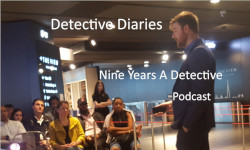
More Podcasts from Detective Diaries

Harry Watts
Welcome to Detective Diaries, brought to you by Private Detectives Answers Investigation. If you're captivated by the art of deduction, the thrill of solving the unsolvable, or the enigmatic world of private investigation, you have just found your new favourite podcast. Detective Diaries are where secrets are unravelled, and the truth is always a clue away. Presented by Private Detectives Answers Investigation, each episode contains offbeat conversations about the real people involved in investigation.
Host
I'm in the back office of Answers Investigation, and I'm with Harry, who's an example of how, unlike other private investigation firms, Answers are almost unique by dint of the variety of ages and experiences of their investigators, and other skilled people. The age range spans generations, the oldest in their 60s with decades of experience, and the youngest just 18 years old. The epitome of a modern investigator is illustrated by Harry Watts, who started his career at the age of 21 as an undergraduate placement, and who now eight years later-wow, eight years-is a skilled investigator with a thousand stories to tell. Harry mixes his professional life between general investigation and specialist forensic work. Harry, are you happy to share some of your experiences and secrets with us?
Harry Watts
I'll certainly be happy to share some stories-some secrets, we’ll have to wait and see about that!
Host
Well, for my part, I can say I have shared some of those experiences, often in quite ridiculous circumstances.
Harry Watts
Singapore comes to mind-answering phone calls at 5:00am.
Host
Oh what, that wonderful thing about investigators may be bright, but they can't always remember time differences when the phone rings?
Harry Watts
That's the one!
Host
So, I have got to ask- it’s the question everybody asks, but what inspired you to become a private investigator, and how did you get started in this whole field?
Harry Watts
I think it is probably the most common question and, by all means, I always have an answer for it. I, when I was younger, always wanted to be a police officer, had that dream of being that on the beat cop helping out Mrs Muggins with whatever her problems may be. You get into the world, you realise it's not as black and white as it may seem, and you also realise then, unfortunately, a lot of the police actually work within certain confines as well. So, here I am after my undergraduate, eight years later, with a wealth of knowledge and experience that I can certainly say I have only learned by doing this job.
Host
So, university - what did you study?
Harry Watts
I studied criminology and criminal justice studies. Nothing wrong with the degree. I think we all know that- I think today's world, quite oversubscribed -teaches you good foundations. A lot of what I did went into the criminal justice aspects, you know, ‘Police and Criminal Evidence act’, but a lot of it is theory, a lot of it is studying, and I think the major difference at the moment is the practical aspects.
Host
So what, it’s different-theory and real life-I mean, how?
Harry Watts
Yeah, certainly how you deal with a client and how you deal with their problem is not something that you can be taught in a textbook because, of course, it varies from person to person. A lot of the general basis of perhaps how you handle someone and certainly the solutions, again, can be taught, but practical enactment of those sorts of exercises, solutions- whatever they may be-is certainly very, very different per case than any textbook can teach you.
Host
Harry, you've got to describe, I don’t know, the typical day or, I don't know- a week, or month, or year-is there a typical one?
Harry Watts
Well, I think people generally have this view that we're going to be out there- surveillance, and sort of scurrying away in back alleyways, but a lot of the time it can be consulting over the telephone, and it’s always last minute as well. A lot of times it might be 5.00, 5:30 on a Friday and you get a phone call about being out on a job the next day, at 6am in the morning, so, you've got to be flexible, and you've got to change at every whim. But no, the day to day can vary you know, for example; one week I could be doing ‘on site’ forensics for two or three days-whether that be at the client's home, business- and some days I may be in the office doing some audio enhancement or mobile phone analysis, so it can certainly vary-we try to be out there, on site, as much as possible- because that's, quite frankly, where the interest is.
Host
What's that BBC series about MI6 where they described it as ‘it’s not 9 to 5’?,
Harry Watts
Truer words have never been spoken! No, 9 to 5 doesn't exist here, and if you have a good plan- it can be the best of plans- it's probably going to change.
Host
So-stereotypical image- some guy, a little bit seedy in a scruffy Mac- I don’t know-watching out through holes in a cut in a newspaper- I don't know, do we still have newspapers these days? I'm sure they've all gone now and everything's online, but, I mean, is that the typical image? I mean, is it all about surveillance or watching people?
Harry Watts
I think that's the general view that people take when they think of investigators again, hiding in the alleyway or their car, trench coat on, smoking pipe in one hand, but no it is very, very different. A lot of investigators we deploy are kind of trained to make themselves blend in and camouflage into that day-to-day world. So, when they're operating as surveillance investigators, you would have no idea. But generally speaking, yeah, a lot of private investigators would be viewed as those people who perhaps tracing agents or surveillance operatives. But no, it is so different here and I've certainly seen it change over the years as well with the types of work that we do. And so this move perhaps into digital, digital world, certainly with aspects of mobile phone forensics that I deal with. So, it's very different, I think, than what the general view might be.
Tova Copeman
Are you enjoying today's episode? I'm Tova Copeman and I'm a forensic investigator and you can listen to my forensic investigation podcast here, on Detective Diaries. You may even hear me talk about the decomposition of rats. Listen in and hear the real CSI.
Host
Yeah, but when you go and get on the tube train in London following somebody, don't you stand out a bit?
Harry Watts
I mean, I may have a bit of the facial hair, but I'd like to think that most people are on their phones. Imagine you're on the tube at the moment, or on a train-you'll likely find most people are so engrossed in their own conversations but, especially deploying young people we find as well, those who you wouldn't even bat an eyelid, whether they be young and female, even young and male, dressed in their casual attire-you would not suspect that they are in fact surveillance operatives. So, blending in is something that we excel at, and perhaps the sort of people you would least expect to be investigators, are the ones that we.
Host
So, when I sit on the tube and there is somebody who I dismiss- some, what I see perhaps as a kid, stuck as so many are in their phone- it's a reason to think that might not be who one might think it is.
Harry Watts
I don't want to put paranoia in all of the listeners, but you never know- is the honest answer. So, if you've got some skeletons in the closet, then perhaps, yeah, it might be worth having a little rethink about that person sat opposite you. But certainly, getting into buildings, commercial, industry or otherwise, a lot of the times it's using faces which you have no idea or, again, wouldn't have assumed anything of.
Host
I guess confidentiality is important.
Harry Watts
Yes, I mean, there's a lot of things I'm going to sit here and not say!
Host
So, you're not going to talk about it
Harry Watts
No, no, I don't. There's a lot of things that unfortunately, I can't touch upon, obviously, -nondisclosures and so forth applying here. But no-certainly got some stories I can talk about, but there's a lot of things I can't go into, I'm afraid.
Host
Well, we all want to hear the stories. I mean, what about ethics? I don't know-doing the right thing or doing the wrong thing-how do you judge?
Harry Watts
It's a very good question because I think, take the example of, perhaps, a husband phoning up who has had an argument with his wife, and then he goes into this story about wanting to find her, and that she's committed some atrocities, and you then look to verify your client because, of course, unfortunately, a lot of the times they're going to come from a lie, or they're either obscuring the truth in trying to get their version of the story out. And a lot of principles, three main principles, I should say, that we operate here: Is it legal, is it moral, and is it ethical? And deploying those three moral, sorry, those three statements, through all of our work and especially dealing with the clients that we deal with, we operate well within those rules and ensure that everything is up above board.
Host
All right, I’m going, sorry, I'm gonna push you on this, with apologies.
Harry Watts
Sure
Host
You've mentioned three watchwords: being legal, being ethical, and is it the right moral thing to do.
Harry Watts
Sure
Host
But, so how do you gather information legally and ethically throughout the investigation?
Harry Watts
It's a good question, yes, I mean, take surveillance is an example here. Gathering evidence in a legal and ethical manner means that you're doing things that aren't within the confines of people's homes. I think this would hopefully reassure some listeners in the sense that an investigator can't just barge into your home. You know, they're not going to be bursting in, taking photographs of your prized possessions, this, that and the other. No, surveillance normally is in the general public, it’s out and about where, legally, you look at an aspect that there is no privacy, you are going about your business. When you walk along the street and someone takes a photograph of the building next to you, there is no privacy implication there. Ethically, can be difficult because, again, you're perhaps dealing with criminal defense, for example, and you're dealing with a case that might, ethically, you know, scrape the boundaries and so forth. But when you're gathering the evidence, it's done in an ethical manner so that it can be admissible in a legal setting.
Host
Do you know something I remember, somebody telling me that they reckoned that despite the history of investigation going back into the 19th century, that it really started in the UK in the 1950s, and it was apparently it was down to the divorce laws.
Harry Watts
Right.
Host
So, what would happen-if this is true or not? I think it was. What would happen is that you, you'd have the, the married couple in London who needed to get divorced, and they were doing it civilly and amicably, but of course the divorce laws didn't necessarily let them do it. So, the husband would take the fall, okay. And what would happen is he would get on the train from London Victoria Station, go down to Brighton, no idea why Brighton- it was always Brighton-book a hotel room. Then he, his, the woman who he had hired who knew what was going on, would be with him in the hotel room.
Harry Watts
Right? Yeah.
Host
At a certain point he's with woman in a hotel room, behaving- because he's doing this sort of civil, the civilized divorce, you know, and not behaving with any impropriety. But the door would burst open, and then standing there with a camera, with an old-fashioned flashcard, would be the private investigator who would catch this photograph of the couple, adulterously, in a hotel living room in Brighton-and therefore there was the evidence.
Voiceover
Get involved. Detective Diaries is interactive, which involves you, the listener. Do you have a case you'd like discussed? A burning question about investigative life? Send an email to podcast@private-detectives.co.uk or reach out via social media. You may hear your story featured in an upcoming episode. Don't forget to leave your contact details.
Host
Do you think life's changed?
Harry Watts
I certainly do. I think probably a good summary of the expectations of that kind of shot is the money shot, is what we would call it. I think a lot of times there is this view and thought that, yeah, it's going to be the camera going through the 30th floor of a building, capturing the couple in their romantic intimacy, in their moments-but no, a lot of it you will just find on the street. You will find people going out on their daily business, interactivity between, say, couples having an affair, a simple arm around the shoulder, interactions, going to a restaurant when there's only supposed to be a booking for one person, so you find a lot of this information quite on the move as well, I should say-a lot of it's fluid, so again, a good plan normally ends up going out the window.
Host
Eight years, you must have seen technology change. How's that affected things day to day?
Harry Watts
I would say cameras are probably a big crucial one there, because again, the view is you're going to be the investigator with that giant lens, however many feet long, in your car, been sitting there for hours- when actually the megapixels on your average phone camera these days are vastly superior than what they used to be, sort of 10, 15 years ago. So, cameras are wonderful, especially when it's covert cameras as well. You know, we've got a few devices in the office, one we call a pen camera, for example, where it literally looks like your standard Biro pen. It will fit into a pocket. And that is the kind of tools that we can deploy now to capture great recordings. And then you've got digital footprints. People's lives now are completely put into their phones, their computers, and they leave this digital footprint. A lot of mobile phone forensic cases that I do now can revolve into getting up legal data from documents that may have gone through WhatsApp, or Signal, or similar sort of software or messaging app. And you're digging through people's lives, droving through all this information to get to the course when actually 10, 15 years ago, it may have been a bit of surveillance that got the answers that we wanted.
Host
So, what kind of skills, qualities do you think are essential for the success of a private investigator? No, actually, what skills are essential for you?
Harry Watts
Yeah, in terms of someone I'm looking at. Yeah, I would be looking at problem solving as a basic one. I know we all do this problem solving, whether it be in our lives or working world, but the ability to adapt to a situation where a client might be describing a case you've never dealt with before, or you've never heard of instances like that, and the ability to turn around to someone and to go through their problem, take them through the potential solutions- unorthodox or orthodox- whatever it may be, that problem solving is something that you can have, certainly something that can be learned, but it's not necessarily something that can be taught.
Host
Okay, you use the word unorthodox. Come on, tell, tell everybody just a couple of examples of unorthodox, of finding a different solution, not the one that people anticipate or would expect.
Harry Watts
A particular case comes to mind where it was a cold case. We, again, I can't go into too many details, but I'll sort of give the broad overview of it. We were dealing with a death, and this had occurred in a swimming pool. Now, we were given all of the reports, and sort of interviews with all the people responsible, family members, spouses and so forth. And the general basis was, is when reopening a cold case is to go and have a look and re interview people and look at it again. So, we wanted to take a different approach. We actually put together a case reconstruction of how this person had died. So, what that meant is bringing in a swimming pool. So, we had a wonderful location where we went to. A few staff members were prepped, and we recreated the scene that was on paper.
Voice:
Cuesta la storia di Giuseppe Dosi -un detective Italiano dei primi del novicento
Host
…..and an English translation: This is the story of Giuseppe Dosi, an Italian detective of the early 20th century. Here we relate the adventures of Signore Dosi on Detective Diaries.
Harry Watts
We put a staff member in the water who, okay, wasn't the exact weight of the individual.
Host
Hang on, hang on, hang on. Didn't the other people around using the swimming pool wonder what the heck was going on?
Harry Watts
Thankfully, we did put that out for a private booking, so undisturbed by the local population of where we were. But yeah, so to bring it all up to what the case facts were, we had a staff member in the water pretending to be the deceased. We put a weighted vest on them to bring them up to the weight of the individual, because obviously getting the exact weight of how many kilograms they were was going to be difficult. And we go through all of this case reconstruction, building a picture of how that statement.
Host
Wait, wait, wait, wait, wait. Just wind back a little bit. So, you get one of your colleagues to go and what, be a dead body?
Harry Watts
Essentially, yep, our lovely colleague, Adina .
Host
In a weighted vest?
Harry Watts
Indeed.
Host
Didn't they sink?
Harry Watts
Well, we actually learned that Adina can hold her breath for quite a long amount of time, much to the concern of all of us, and, obviously we had this lifeguard and appropriate staff obviously monitoring and watching all of this. But exactly as you just said, Adina recreated the deceased, the dead body, with this weighted vest in the pool.
Host
And you filmed it?
Harry Watts
We did, we did. The idea was, is to, the person who got the body out of the water, they gave a statement as to how they did it. So, we were very much comparing what the legitimate, and certainly plausible, avenues of how she describes putting it out, and putting it into practice.
Host
So, hang on, I'm still trying to get a mental picture of this. So, you have a swimming pool, there's nobody else in it, and then in some madness, you persuade one of your colleagues to put on a heavy weight. I mean, how heavy was this vest?
Harry Watts
The weighted vest was around 10kg.
Host
So, to put on 10kg of vest and then you throw them in a pool and wait for them to sink to the bottom.
Harry Watts
Near enough, to the point where, obviously again, the concerns were raised as to how long Adina was in there. But yes, the swimming pool was there, obviously cameras from all avenues and views were stationed. Adina puts herself into the water, allows herself to sink to the bottom, and then we have the other staff member, which was me in this instance, come in and try and recreate that, that statement of how this person pulled the body out.
Host
And this is all filmed.
Harry Watts
And this is all filmed. So, we put this all together and presented it to the client to essentially give grounds to saying this isn't possible in the way that it was said.
Host
Filmed with what? Just normally camera?.
Harry Watts
So, we had a variety of views. One was an underwater camera. So again, viewing it kind of in that perspective of this person, and how they would have gone about their actions, and then externally as well. So, you can, you know, use the measurements and obviously we're giving all the measurements of where this swimming pool was, so you can measure things like depth, and then you can recreate exactly that underwater as well.
Host
I've got to ask, was it out of her depth?
Harry Watts
It was out of her depth just slightly. I think we're talking centimeters here.
Host
But wearing a weighted belt, don't you sink to the bottom?
Harry Watts
You do. So, it very much is like a dead weight. So, whoever is, and obviously again, me, in this instance, pulling a person out of water, I can tell you now that's a lot of hard work- pulling someone from the bottom of the water, again, trying to get them out, especially in the way that Adina very well encapsulated being a body underwater in this case-it is a lot of work, a lot of physical work, and much more difficult than perhaps people would think
Host
Something I was going to ask you, were there any misconceptions that people have about howprivate investigators work? But after that story, I'm really not sure how that applies. But what are people's misconceptions?
Harry Watts
I think it's, I mean, pop culture is wonderful for us, you know, Sherlock Holmes exists, and it is a household name, and of course we can rely upon that, but it's what comes with it. You know, you take the Sherlock Holmes and Cormoran strike, and for those listeners who don't know Cormoran Strike- another private investigator- Cormoran Shrike, had one leg. And I think the differences about who we are as private investigators, we are normal people, you know, we don't, we both have both legs, most of us, hopefully.
Host
I've just looked under the table to check.
Harry Watts
They’re still here-I can give them a good knock. You know, we're normal people, we've gone from normal lives, and it might be that this is something that we've gone on to. You know, we've got staff who have come from different walks of life, communications, IT, car sales, you know, everything is there. And I think the common misconception is that we're people that sit in the dark and dreary room, sort of pondering in our mindscapes about how we get to the end of the case and make sure everyone's happy. No, we're real people dealing with real problems. And those problems can range from the small things about, you know, missing cats, all the way up into multi million-pound corporate espionage-so it really does vary.
Host
You know, I'm wandering around the back office, company's back office, and there's a glass cabinet and it's got various things including, I have to say, some handcuffs- which I'm really not too sure about-but various exhibits like a, like a mug with fingerprints all over it, and bits of vintage audio equipment. Quite fascinating going back over the years. Also copy the GCHQ puzzle book, which amuses me no end. But also there's a, there’s a whole sequence and series of awards and business awards and even this one -- award for Business Innovation, overall winner in the Surrey Business Awards, and Employee of the Year and Enterprise in Business, and various others. Apprentice of the Year. You got any awards, Harry?
Harry Watts
I'm very fortunate to say I have. Whilst I didn't necessarily win, I was student finalist of the Institute of Directors some years ago, I think that was 2019, so that was really nice to get an achievement shortlisted to the six finalists, all of which were a lot older than me at the time, and vastly more experienced. So that was quite, that was quite wonderful. And yeah, certainly the accolades: Member of the Charter Society of Forensic Sciences-so very proud and privileged to hold that, and that's again come from the sort of years, years of experience of learning different tools of the trade, and again not in that textbook setting. So I'm very honored to have that, and again, that's been hard work in demonstrating the forensic skills that have been learned over the years.
Host
Forensics-you do a lot of forensics?
Harry Watts
It tends to be what I specialize in. So, a lot of it is audio, a lot of it is mobile phone forensics and then we've got the fingerprinting forensics as well. So different techniques, different things to Master throughout those subjects, but again, that's changed over the years. Audio, for example, used to be analog audio recordings, and now we've got digital recordings, which of course change the way in terms of how we edit, and how we enhance these files and recordings that people provide us.
Host
You mentioned about audio forensics. What does that involve?
Harry Watts
It's, yeah, it's very different-perhaps not something people would assume a private investigator handles. The audio aspect falls into a couple of things with us. A lot of the time it comes into enhancement. So let's say you've got CCTV footage or perhaps an audio recording which you can't hear clearly what is being said, or perhaps what's going on. We'll take that audio recording, we'll enhance it, drive out the speech, and essentially provide you something back which is much clearer, much more audible to the lay listener. And the second side is actually verification as well. So, for example, you might be going into a legal setting where you've got a recording, or perhaps a contract, or something you were setting down. You may believe it's been edited. And the verification and authenticity testing that we do can prove whether or not someone has edited that file.
Host
So, if I record a conversation, I stress with somebody's permission to do so, and then I take that audio recording and I cut out the bits that I don't want in the audio recording, okay, and then that goes to be presented in court or whatever, employment tribunal. Are you saying you can pick that out?
Harry Watts
Yes. Yep. That is something that we can do here. The main basis comes into how it's been edited. So, a recording, I mean, most listeners will know that you've got your voice memos on your iPhones and Apple and Samsung devices, whatever it may be, so people can normally record quite easily. Editing and cutting is now that easy as recording. So, a lot of people may, as you rightfully put it, cut out things that they don't want to hear. So, what we can do is we can assess whether or not that's been edited. Look at things like live signal, so whether or not the recording device has been cut, so that you're no longer hearing that live signal. And then we can build a report to essentially analyze where we believe this has happened and what's been done to it.
Host
Harry, I'm gonna park that for a moment because it sounds like a massive subject. And I think something, if you didn't mind, I’d love to talk to you about separately.
Harry Watts
Would be wonderful-we could be here for hours, otherwise, I think.
Host
I think hours might be a little bit too long, perhaps we cut it into different segments. But before we go, this question I’ve got to ask you, there's lots of people out there, I don’t know, young, aspiring investigators, people who I'd imagine had the same kind of bug as you did when you were at school or college or whatever, those just climbing through education. What would you pass on to them? Got any tips?
Harry Watts
I think the main thing that I would say is, don’t just follow what you've been told. You might have this idea of what you want to be. You might go through education or indeed go into the working world and people will tell you, ‘Yeah, follow this avenue’. ‘This is what I did’, or ‘this is who someone inspires you did’. Don't follow the norm. If it's unorthodox and you like it, chase it. The thing is, these opportunities are not going to come to you, so you've got to go, and you’ve got to go and seek them out, and you've got to, you've got to take hold of them. You know, don't want to be all rhetoric on, you know, grabbing life as hard as we can, but it really is important just to go and seek out those experiences and those different things. And certainly, in the investigatory world, you will have to put yourself forward. Don't just think the police is the only avenue here. A lot of times people go into investigations and some of the things I've talked about today, audio enhancement and forensics, they are different realms you can go into. So don't think that the police is just the avenue that you have to go down, if this is your interest.
Host
Before we go, what does tomorrow, or what does next week hold for you?
Harry Watts
It's a good question. I've got a couple of bits of forensics on the go at the moment. We've got a case of thefts with corporate clients, so we're doing some ninhydrin testing. And then I think next week as well, we'll be out of office, doing a few networking events, meeting and greeting a lot of clients that we deal with, and connecting some bridges.
Host
You've floated my triggers again. You mentioned the word ninhydrin, which I assume is something that you use within forensic stuff. But, hey, let's talk about that another time.
Harry Watts
Absolutely. Will be more than pleased to do so.
Host
Harry, it's been a pleasure, as it's always a pleasure. All I can say is good hunting and follow that car.
Harry Watts
Certainly, will do. I'll keep you posted. Thanks again.
Voiceover
We hope you enjoyed today's podcast brought to you by Answers Investigation and UK Fingerprint. If you've enjoyed our conversation and want to learn more about the fascinating world of investigations, be sure to check out Private Detectives Answers Investigation. Their experienced team offers a wide range of discreet and professional services, helping you find the answers you need with integrity and expertise. If you're interested in fingerprint analysis or require specialist fingerprint services, don't miss UK Fingerprint. As one of the leading fingerprint companies in the UK, they provide everything from identification to background checks, working with individuals, businesses, financial institutions and gambling companies. To find out more, visit www.private-detectives.co.uk - that's a minus sign and www.ukfingerprint.co.uk. these are your go to resources for investigative solutions and fingerprint expertise.
You can call their office on 020-715-8032. Thanks once again for tuning in. Until next time, stay curious and keep seeking the truth.
