
Television

Radio

Exhibitions and Business News
In this episode of Detective Diaries we discuss the various techniques involved in Audio Forensic Investigation to enhance a recording and make it sound clearer
Hear this episode on Spotify
----------
Hear this episode on Apple Podcast
----------
Taking an Audio recording and making it clearer to listen to
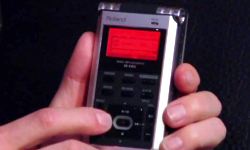
Listen to our Detective Diaries podcast series
Harry Watts
[MUSIC PLAYING]
Welcome to Detective Diaries, brought to you
by Private Detectives Answers investigation.
If you're captivated by the art of deduction,
the thrill of solving unsolvable, or the enigmatic world
of private investigation, you have just
found your new favorite podcast.
Detective Diaries are where secrets are unraveled,
and the truth is always a clue away.
Presented by Private Detective Answers Investigation,
each episode contains of beat conversations
about the real people involved in investigation.
Hello, and welcome to Detective Diaries.
Today, we're stepping into the world of sound, not music,
not radio, but the precise forensic science
of audio investigation.
Think distorted phone calls, muffled background noises,
or that critical recording in a legal case.
What can really be heard, and how do we separate fact
from fiction in a sea of static?
To help us decode all of this, I'm joined by Harry Watts,
an audio forensic technician from Answers Investigation,
a company that specializes in uncovering
the truth behind the noise.
Harry's work sits at the intersection
of technology, law, and audio engineering,
and today he's here to shed some light on what audio
forensics actually involves, how it's used
in real world investigations, and just how
far the technology can go.
So whether you're a true crime fan an audio nerd,
or just curious about how a simple sound bite
can become key evidence, stick around.
You're in for a fascinating lesson.
Harry, welcome to the podcast.
Great to have you here.
Thank you for the invitation, it's wonderful to be here.
Of course, so Harry, could you explain
for our listeners and myself?
What is audio forensics?
I mean, what does it include?
It can sound like a general term, can't it,
when you take the words audio and take the words forensic?
But in terms of what we do here,
there's quite a variety of means.
I mean, if you take the basics of forensics normally,
it's getting underneath the hood and finding out
exactly what the problems may lie,
and obviously trying to get to the solution.
So obviously with audio, what it tends to be
is clearing up the awkward sounds.
Background noises, you put to that wonderful intro there,
explaining quite a few issues that come across.
But fundamentally, it's getting to the root causes
of either a recording which has been provided,
or something that perhaps in post
has got an issue to it as well.
Okay, so is it just on mobile phones
or is it recordings from any sort of device
and what sort of queries and questions
do you get from your clients?
I mean, it's a good question because now a recording
is very, very easy to do.
Most of your smartphones, I mean,
people tend to mostly have apples these days,
but an iPhone has a voice memory function in it.
And that tends to be a lot of recordings
when people are perhaps looking at personal lives,
if you think about the investigatory topics
that we deal with.
You've got affairs, matrimonial basis
and the cases of partners recording each other.
But in a legal perhaps a corporate setting,
you've got CCTV footage.
You've got evidence from a site,
whether it's a business or an entrance way,
where perhaps a crime has been committed.
And it's uncovering what exactly perhaps was said.
And especially with audio, obviously,
CCTV comes with the video as well,
but video footage normally is fine.
It's the audio that lies underneath it,
which needs enhancing and clarifying.
I see, so is this sort of thing common?
It's more common than I think people might think it is,
purely because the realms of audio
into how we go about our lives, telephone calls and so forth
are a lot more abundant now.
I think a good example in modern settings is actually COVID,
because what we had at that point in time
was a few clients coming to us
with these video zoom meetings,
whether it be with employees or so forth.
And it goes into sort of authentication,
which I think then verification,
which we'll touch upon them, sure.
But it's essentially saying, has this been modified?
Has someone cut this clip or has someone edited it
to make it favorable to the recording party?
And that was quite interesting
because you started to get these different formats
rather than just sort of a sound bite.
It was a whole presentation.
And so that changed the landscape a little bit,
but as I say, audio is in our daily, day to day lives.
So the instances of how it gets to us
are very common, whether it be recording on a phone
or CCTV, but it's use varies widely,
whether that be private, corporate or legal.
So when you first receive a problematic audio file,
whether it's to enhance or, as you said,
to verify anything, what's the first thing you would listen for?
Why?
I think it comes down to the objective.
I think if you've got a case where you're trying to clarify,
perhaps what's being said, I'll listen to the speakers.
Now, obviously male voices and female voices
have different hertz levels and hertz is essentially
the unit frequency, which measures a sound wave
and how it vibrates, could get very technical there.
But essentially, it falls into a number.
So it's an accessible and quantifiable figure
that we can deal with.
So male voices tend to be on the lower hertz spectrum
where female voices tend to be higher.
So I would look at perhaps the speakers and who's in there.
But also on the background voices.
Sometimes it can be recording that's taken outside
rather than inside.
So you may have nature is quite a common one.
Bird noises, trees, wind, all of these basic forms.
But then you've got vehicles, which tends to be a common thing.
An engine starting when a recording is going
can be quite unhelpful when perhaps a key word has been said.
So I'm trying to mitigate those sounds
is part of the process as well.
So I'll do a run through and essentially work out
what the problem is.
And then we can look at where we're going to target and assess it.
So for example, when you do have those audio files
which have something going on that is louder
than what you're specifically looking for in the background,
how do you balance the volumes out
so you can clarify what's being said underneath?
Yeah, it's a good question because I think this will perhaps
bust a myth, that's out there.
A lot of times when you think about audio
and perhaps the CSI shows up-
Some of the younger listeners might watch them-
And it's very quick.
It's a five second job.
You put it into computer, comes out the other side.
It's brand-spanking new.
It's wonderful and it's very easy to listen to.
With this, it's a very manual adjustment,
which is very different to what the shows will tell you.
There's aspects which are called macros,
which are essentially adjustments
which you would make to particular variables of the sound.
So to answer your question,
if we're looking at something that's happening in the background,
we would then start to focus on the frequencies
of what that background noise or person is.
And then try to drown out what's in the front
to then draw out what's in the back.
And same could be said for the reverse, of course,
if you've got something in the foreground
that's being muffled by what's in the background again,
we'll try and draw out what's in the foreground.
Hi, I'm Tova Copeman and I'm the Head of UK fingerprint.
We take your fingerprints for police clearances overseas
and other licenses.
You can listen to my podcast and all the services we provide here
on Detective Diaries.
So, going back to our previous question,
you mentioned about verification work.
How does that sort of differentiate from this enhancement?
So the enhancement tends to be improving clarity
and then the verification is quite interesting.
It goes back to my point about how videos and audio clips
can be edited.
So the examples I have are,
clients will come to me normally, it's for a legal setting
and they'll have a recording which has been recorded either
by defendants or the applicant or whoever it may be.
And it's obvious to them that there's been parts of the audio
which have been clipped so that it's in favour of the person
who's recording it.
Now, to verify this, it's quite interesting
because instead of looking at enhancing something,
you're looking at perhaps where it's been cut.
And audio is very interesting in that,
whenever you record something, there's always a live signal.
So let's say we're sat in a room and there's nobody talking
and there's no noise.
Microphones will still -well good quality microphones,
I should say- will still pick up any background noise
and aspects in there, which is why you always get a live signal.
It's never flat.
With verification, we're essentially identifying
where there is a flat signal.
So going back to the voice memos that we were mentioning earlier,
it's very easy for the lay person to take that voice memo,
crop and cut it on their phone very simply.
I mean, it doesn't actually take too much technical knowledge
to do something like that.
But then what they would actually be doing is putting
the break of that live signal in, where they've cut the audio.
And that's the kind of thing that we assess for.
You can also look at it in terms of the file itself,
perhaps things like meta data would give a lot of,
if it's been modified or changed.
But the audio largely speaks to that kind of verification
of proving its authenticity that hasn't been tampered with, essentially.
OK.
So I'm going to put you on the spot here.
You mentioned metadata.
Yes.
What on earth is that?
So metadata, I mean, metadata will be
in any files, any properties essentially of something
that you're looking at.
And with audio, you can look at perhaps creation and modified dates.
It can be a little bit technical because, for example,
if a client sends a file to us, that will change the metadata
in terms of how it's downloaded.
We need the original source and looking at that kind of data there.
But yeah, it goes through the properties of the file,
essentially modified creation dates, perhaps how it was created as well.
But yeah, so certainly with audio, it comes from a varied amount of sources.
So sometimes it is difficult to get to that exact property
because it goes through a chain, so many things,
or some editing and so forth, which is why we usually
always where possible work with the original file
and so what we request.
So it all sounds very technological.
The burning question that I have is, if you had to teach someone,
say me, for example, with no technical background,
how do you do that?
How do you get them to understand what you do,
what analogy would you use?
Analogy is an interesting one.
I would probably assert this as a process of elimination.
It goes with that point of how it's very manual
and it's not just simply running through a machine
and software to complete it.
I would probably, as I say, look at it in that process of elimination,
'guess who' is a good example where in the game 'guess who',
for again, for listeners who don't know, you would ask questions
and receive answers.
And in this basis, I would say it's testing theories.
For example, oh, I've analysed that the frequency of speaker X is at 90 hertz,
for example, and then I'd focus in on that and see if I can draw that out.
And a lot of this kind of process of elimination and testing
is kind of a fundamental of the investigatory work that we do anyway.
So it's got quite a good tie-in with the holistic approach
that we take to every case and certainly applicable in terms of how we deal with the audio.
And then so yeah, it's systematic, question and answer.
What can we improve here?
How can we mitigate sound?
Why, when we want to get sound X?
So it very much a process of elimination going through.
I think the tinkering with the software can take time.
I mean, digital audio work stations, which is what we use,
or DAWs for short, can take a bit of time to learn because they are quite complicated.
And I mean, this kind of software is actually what music producers use.
And so you've got a variety of examples Ableton tends to be the one that I use.
FL Studio, Fruit Loops, that some of the younger listeners who would have heard of that.
And then you've got Pro Tools as well, which tends to be, you sort of hear
about your mainstream musicians using that kind of software.
So the software can be complicated.
But once you understand perhaps what you're trying to achieve and look for,
those lessons can certainly be taught to you.
You just got to have a good set of ears.
So surely is this not something that AI could do faster and easier?
It's a good point to raise.
I think the difference again is using it as a tool.
I think AI can certainly help in perhaps identifying the causes,
or again, going back into sort of the Hertz and male speakers being around 75,
90 to 155 Hertz.
You can sort of use AI as a tool to say what ranges are we dealing with,
with speaker X if you listen to their voices?
However, as with everything, it gets it wrong.
And the issue here is that I think someone just simply applying a tool to say,
"Hey, improve that, make it sound better."
It's not going to look at the specific things, which you can,
if you're willing to spend the time.
And I think that's the difference.
People think audio enhancement is going to take a five minute job.
There we go. It's, no, it is quite an intensive time.
In a technical environment, undisturbed looking through the
precises of what you need to achieve.
So I certainly think it's going to be helpful in the future when the tool is right.
As a generic thing to rely upon solely, I disagree.
I think it can be a hindrance potentially in that manner.
Get involved.
Detective Diaries is interactive, which involves you, the listener.
Do you have a case you'd like discussed?
A burning question about investigative life?
Send an email to podcast@private-detectives.co.uk
or reach out via social media.
You may hear your story featured in an upcoming episode.
Don't forget to leave your contact details.
So obviously we all know that a lot of audio is recorded digitally.
with technology sort of going up every time I even look at the news.
There will be something new and improved that's come out of the next iPhone.
But are there any circumstances where you've had like old analogued audio?
Like what are the differences between analogue and digital?
Yeah, it's a good question.
I mean most, as you say, much of you now is digital.
It is just the way it's become and how it's recorded.
But there are instances where there is quite an old analogue recording,
again quite old device, where you would need to digitize it.
And the examples I can give is where perhaps people now want to burn things off of CDs
and put them on their computers.
Same basis as that.
It goes through a transformation, if you will.
We always keep the integrity of the file and make sure nothing is changed.
But the actual differences comes down to how you can edit it.
So an analogue recording, I should take a step back to actually explain it,
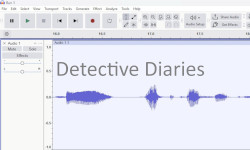
when you look at audio comes in what's called a waveform.
So a waveform as a visual representation of what audio looks like.
Now when you look at audio of an analogue recording, it will be a straight line.
Whereas when you look at digital, it will be a sort of not a straight line,
but sort of imagine pixels, a line which is slightly painted and not perfectly smooth.
And this is where the transformation is turned into essentially binary,
so zeroes and ones and the technical aspects that goes with it.
And then we can edit it much better because with digital.
We can really get into the crux of perhaps nanoseconds.
Okay, so going back to all the digital audio, obviously you've said it's most common nowadays.
Due to improved technology.
Other than phones, what sort of devices can you look into?
I mean, like I've got a ring doorbell at home.
Can you hear what's going on when I come home after a night out?
Ring doorbells are a really good example actually,
because not only have you got video but audio as well.
So yes, if you can get the video off or perhaps we can have the device to look at it.
For example, the CCTV, we tend to get the SD cards and so forth from all of these devices,
certainly can do so.
I actually have an example of this that comes to mind oddly.
It involved the theft of catalytic converters.
It long story short actually was helping out someone I knew was a neighbour
when I used to live in a different part of the country.
He came to me and he essentially said that a catalytic converter was sold from my car.
I've got a ring doorbell.
Is there anything that could be done with this?
And I sort of took it away, put some audio enhancement together and submitted it to the police
and thankfully the police actually used that evidence to help get to the criminals in the end
just by using voice as well, because there was a voice profile put together
and obviously with the video evidence as well they were able to essentially draw this together.
So that was quite nice, not lot work related of course, but it was nice to help out a neighbour at the time.
So yeah, ring doorbells are prime example, other than mobiles.
But yeah, as I say CCTV cameras, I think the problem is people tend to also have this idea that
a small device is going to be wonderful. You know, you can go onto Amazon these days and find
yourself a spy camera or a spy recorder and so forth. It will be the size of your small,
your little finger's fingernail. It will be tiny and in my opinion these devices are useless
because the microphone is so small it can't pick up anything useful and if it tries to pick up
something useful, again the microphone technology is so limited it's not going to provide something
that's very clear. So I definitely, you know, if you are looking to perhaps record maybe
your a student going to record your lectures or something, get yourself proper equipment,
you know, a dictaphone can really help out with something like that.
Okay, so when you have those kind of expectations and they believe that there's
going to be a miracle fix or as you said with those little spy cameras, if they've tried to like
catch their partner cheating and they've come in with this tiny little microphone, how do you sort
of handle those expectations of the miracle fix? So, yeah, it's a good question. I think people
seem to think that we have this magic wand where we will dust it over and it will randomly appear
and you know goes back into the machine doing it all. You know managing expectations is one thing.
I think where it comes on is also important as well. So for example, audio recordings, let's say we're
having a general conversation, you need to consent to having that voice recording done. So for example,
when you phone up your companies, utilities companies, whether they may be, they'll say
something online of this call has been monitored for training purposes and again that's the notification
that they're giving you. So that essentially, while okay, there is aspects of
consent which is a little bit different, you are essentially accepting that the recorder is going
to be recorded. So we always have to make sure that kind of thing is okay. When you're dealing with
affairs and so forth, that's when it gets into a bit of a gray area. Obviously we need to make sure
that the client is absolutely fine and we'll do that vetting and so forth. The miracle fix can be
a different one to explain and I think this is why this conversation today is really important
so people can understand it a bit more and a bit better. The problem is is that you can
get a better result for people. It might not be the result that they're thinking about, so you know
going back to your point about the husband or wife having this affair or what noise was heard
in the room over there when it's actually 15 feet away. It's going to be difficult for that small
little device to pick it up. So we can't just put this magic fix on it. We can try and rule things
out though, for example. When you have a clip which is just audio, sometimes it can be differentiating
between, is that just the radio or the TV in the background? And so through enhancement we can
actually clarify to say, "No, the voices you're hearing aren't from a human speaker, they're from
the television or they're from the radio." And so it can be that process of elimination saying,
"Well, why?" We can't necessarily hear that that important 10 seconds. We can make it sound better,
but we can actually remove some of the other aspects of doubt on any questions.
so, for example, is that an actual person speaking or is it a TV?
Harry's technical skills are absorbing to listen to. Listen to his story of how he got to where he is now
in his podcast episode, "Eight Years A Detective" here on Detective Diaries.
[Music]
Hmm, that's very interesting. So with all of this audio forensics,
when you're actually working on a case for a client, what type of environment is this in?
I imagine it would be a quiet one. Oh, it certainly is a quiet one. We have what we call a
technical environment. So this is where a couple of things actually for forensics a) the computer
is closer, meaning that it's not connected to the outside world. And then with the actual hardware
that we have in the technical environment, we've got studio grade speakers. So these are, you know,
big speakers that you'll see when perhaps you've gone to a performance somewhere, or, you know,
even recording studios will have these pieces of equipment. So it's an expensive room. I'm
careful when I'm treading around. And we sit there and essentially it is out of hours, so you're
undisturbed. Again, that technical environment, you don't want to be handling phone calls,
don't want to be doing other things. You need to be locked in, as you would say.
And it is certainly quiet. So headphones on, all of these studio monitor speakers,
sort of left to the work at hand. And I know sometimes when I walk out, I think,
"Well, I've been somewhere different for a past couple of hours in this different realm of just
listening to things constantly and not talking." I was going to say when you mentioned the speakers,
because I would just assume that it would all be through headphones. So what do you, why do you use
the headphones at some points and then what's the speakers used for? Yeah, it's good question. So the
studio speakers, again, for listeners to explain it, you get sort of different sizes. The ones I use
around seven inch. So again, they're heavy blocks, you know, these are big things. What they do is they
provide mono sound. So let's say you provide me a recording, which I don't know, has gone through
something before it gets to me. So it's not the original. You get things like equalizers that I'll
put on there. And using the studio speakers when we get the original audio, we can play it in
its true unedited mono sound. And then that is a difference between when you get perhaps an expensive
set of headphones, which will perhaps have those inbuilt equalizers and modifications. So that
what you're getting is, I mean, bass is a common example. In a lot of headphones now, which
will have bass amplification because it is at the Hertz levels, which naturally our voices, sorry,
are ears don't hear. And that's very different to the sort of studio speakers when they will just play it.
Flat is probably a term that can be used. It's not a flat sound, but it plays it without any
modifications and differences. So combination of both, because headphones do make for a much better
listening experience when you need to sort of hone in on something, but in an undisturbed environment,
the studio speakers are really helpful to getting that precise sound.
Well, I'll tell you what, you have actually explained it very well. And I actually understand audio
forensics. So for anyone interested in audio forensics or looking to read up on it, study it,
is there anything you would recommend? It's a good question, because I actually never did any
sound design audio engineering courses at all. This kind of knowledge I've learnt over time. I
mean, I'm a musician as well. So I play the drums, I've naturally got that interest. But digital audio
workstations and these tools are things that you can learn through courses. So anyone who's interested
in that kind of thing going into sound design, sound technology, it's important to differentiate
the two though, because with engineering, you're looking to perfecting when perhaps you've got a band
or so forth and isolating different instruments, whereas design can be very different because then
you're talking about synthesizers and hardware, which you wouldn't necessarily look at through
the software. And so anyone who's interested in that certainly go look up the courses, but if you're
interested, I know that there's quite a few free aspects out there as well. So Ableton, for example,
has a free version of it for educational use and FL Studios, Fruit Loop Studios. They, again,
to my knowledge through education, do provide courses and the software to use. So certainly have
a look into it. Okay, well, I'm sure that obviously helps with your musicianing. And I'm sure we
will delve upon that another time. But for now, thank you very much, Harry. We've love speaking with you,
and I'm sure everyone found that just as fascinating as I did. Thank you very much indeed, good to be here.
We hope you enjoyed today's podcast, brought to you by Ansys Investigation and UK fingerprint.
If you've enjoyed our conversation and want to learn more about the fascinating world of
investigations, be sure to check out Private Detectives Answers Investigation. Their experience
team offers a wide range of discrete and professional services, helping you find the answers you need
with integrity and expertise. If you're interested in fingerprint analysis or require specialist
fingerprint services, don't miss UK fingerprint. As one of the leading fingerprint companies in the UK,
they provide everything from identification to background checks, working with individuals,
businesses, financial institutions and gambling companies. To find out more, visit www.private-detectives.co.uk.
That's a minus sign, and www.ukfingerprint.co.uk. These are your go-to resources for investigative
solutions and fingerprint expertise. You can call their office on 02-0-715-8-0-332.
Thanks once again for tuning in. Until next time, stay curious and keep seeking the truth.
[END PLAYBACK]
