

Television


Radio



Exhibitions and Business News
Forensic Fingerprint Technician Tóva Copeman published her dissertation for her Masters in Criminal Psychology on the subject of Gender Bias in Forgiving Offenders
Hear all episodes of Detective Diaries on Spotify and Apple Podcasts
Hear episode on Spotify
----------
Hear episode on Apple Podcasts
----------
Norwegian Forensic Detective Tóva Copeman
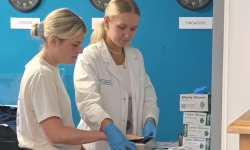
Listen to all seasons of Detective Diaries Podcast

The full text of Tóva's dissertation on "The Public Perceptions and Gendered Attitudes toward forgiving Released Ex-Offenders" is printed below or click here to download a pdf copy

Public Perceptions and Gendered Attitudes Toward Forgiving Released Ex-Offenders: A Study of Forgiveness and Social Reintegration

Tova Copeman
UP2052074
13/09/2025
Aaron Pycroft
Word Count- 14147
Dissertation submitted in partial fulfilment for the requirements of the MSc Criminal Psychology Masters degree.

UNIVERSITY OF PORTSMOUTH
● I hereby declare that this dissertation is substantially my own work;
●
 |
● I understand that if I consent, this dissertation will be accessible only to staff and students for reference only;
● This permission may be revoked at any time by e-mailing dataprotection@port.ac.uk.
SIGNED: 
PRINT NAME: Tova Copeman
DATE: 13/09/2025
This dissertation explores how gender influences public attitudes toward forgiving released ex-offenders and the implications of these perceptions for reintegration. Building on theories of stigma, forgiveness, and gender stereotypes, the study examines whether female offenders are judged more leniently than male offenders and identifies the factors that shape such judgments. The research is guided by the central question: Are the public more likely to forgive certain offenders based on gender, and if so, why?
A mixed-methods approach was employed to capture both measurable trends and indepth perspectives. Quantitative data was gathered through an online questionnaire (n = X), which utilised Likert-scale questions to assess public attitudes toward male and female exoffenders across contexts such as childcare, neighbourhood relations, and workplace settings. Qualitative data was collected via semi-structured interviews with six participants who had completed the questionnaire, providing deeper insight into the reasoning behind their responses. The interview data was analysed thematically using Braun and Clarke’s (2006) framework, facilitated by NVivo 12, employing an inductive coding strategy to ensure themes were grounded in participants’ accounts.
The results showed that while male ex-offenders were viewed more favourably in workplace settings, consistent with presumptions of male competence and resilience, female ex-offenders were generally preferred in caregiving and community contexts, reflecting stereotypes of women as nurturing and non-threatening. Themes from the interviews focused on how forgiveness is impacted by gender bias, the seriousness of the offence, personal impact, rehabilitation transparency, and mental health. These findings both confirm and contradict preexisting theories, indicating that although gender has a significant influence on forgiveness, it also interacts with more general social, cultural, and contextual elements. The dissertation comes to the conclusion that creating fair reintegration plans and lowering recidivism require an awareness of and commitment to eliminating gendered prejudices.
Firstly, I would like to thank those from the University of Portsmouth who have both helped me through the last 4 years at the University and those from this year who have advised me throughout my master’s degree.
I would like to acknowledge my supervisor, Aaron Pycroft for his help this year in both getting through this dissertation as well as deciding what to focus on specifically for this study. As someone who is used to having everything planned in advance, I was clueless in the beginning.
Personally, I would also like to thank those in life outside of university who have always proofread my essays and advised me from a more personal point of view. Anna, who has spent hours of her own time reading my dissertations and making comments on what I can improve, my partner Ben whose helped in more ways than one to keep my head on straight as well as those from my workplace who have given me the time needed to work on this study despite now working full time as a Private Detective and Fingerprint Technician. Although it has been hard juggling a dream job of mine as well as finishing my master‘s degree, I am forever grateful for the help and understanding from my bosses of my situation and letting me prioritise this dissertation.
Finally, I’d like to thank my mum and close family who have always made it known of how proud they are of me and helped me push through all the chaos to finalise this dissertation to the best of my ability. I couldn’t have done it without them.
I personally hope you find my research as interesting as I did doing it!
Statement of originality 1
Abstract 2
Acknowledgments 4
Contents 5
List of Figures 6
Glossary of terms 7
Chapter 1 88
Background, context and rationale 8
Aims & objectives 10
Chapter 2 1212
Reintegration 12
Shame, Guilt & Stigma 16
Forgiveness 18
Forgiving ex criminals 21
Gender Stereotypes 24
Intersectionality and Social Identity in Attitudes Toward Offenders. 26
Forgiving females vs male ex-offenders 27
Chapter 3 3132
Research design 32
Sampling 33
Data Collection 35
Ethical Considerations 38
Chapter 4 3940
Findings and discussions from questionnaire 40
Interview Findings 44
Limitations and Future research 56
Chapter 5 Error! Bookmark not defined.59
References 62 Appendices 79
- Figure 1 - A graph to show the quantitative data responses for questions related to gender within the questionnaire.
- Figure 2 - comparison diagram - comparing similarities between references to crime severity and gender bias between transcripts
- Figure 3 - matrix coding - to show the percentage of times these themes have come up within the interview
- Figure 4 - hierarchy chart - comparing all themes by the amount of coding in all interviews to identify prominent themes or concepts.
- CJS - Criminal Justice System
- VRAG - Violence Risk Appraisal Guide
- U.S. - United States
- UK - United Kingdom
The dissertation's focus is introduced in this chapter, which also provides background information, context, and justification for the investigation of gendered attitudes and public perceptions on forgiving released ex-offenders. It starts by placing the study in the context of broader issues with recidivism and reintegration, emphasising how stigma, forgiveness, and gender stereotypes affect the results for criminals after they are released from prison. The research aims, objectives, and key topic will then be presented in this chapter, along with an explanation of how the study examines alternative viewpoints like chivalry theory and criticises established ideas like double deviance. The dissertation's structure is finally described, offering a foundation for the way the study will be examined in the following chapters. This chapter also clarifies the conceptual frameworks guiding the research and outlines how findings may contribute to both academic understanding and practical policy development.
The proper reintegration of released ex-offenders into society remains a key concern for criminal justice systems across the world (Ganapathy, 2018). Despite many interventions, the reoffending rate remains exceedingly high, with more than half of offenders in the UK reoffending within a year after being released (GOV.UK, 2024). Public views about exoffenders, which are frequently influenced by stigma and cultural preconceptions, have a considerable impact on reintegration results (Braithwaite, 1989). Forgiveness, a complicated social and psychological term, has emerged as a possible component for stigma reduction and reintegration (Shapland, 2016). However, public perceptions and attitudes toward forgiveness may be misunderstood or strongly gendered, with criteria such as sexual offence history having ramifications for both male and female ex-offenders (Rade et al., 2016). Stigma itself does not necessarily preclude forgiveness however, it depends on what people believe forgiveness to be, how they interpret it and how it then applies within the Criminal Justice System (CJS) context. The danger is that forgiveness may be understood as a ‘taken for granted’ concept. A deeper exploration of forgiveness as both a personal and societal process is therefore crucial, particularly in contexts where public attitudes can directly impact policy decisions, offender rehabilitation opportunities, and community safety.
This research proposal examines the interplay of forgiveness, societal perceptions, and gender in influencing the reintegration experiences of released criminals. It aims to comprehend how societal stigma and an absence of forgiveness perpetuate the cycle of reoffending, while also analysing the many interpretations of forgiveness and, more specifically, the gendered aspects of these perspectives. This research seeks to bridge the gap by enhancing scholarly discourse on gender bias within forgiveness and offering insights for policies and initiatives designed to diminish recidivism by promoting social reintegration. By examining these issues, the study addresses a notable gap in criminological and psychological literature, where gender-specific forgiveness remains under-researched.
The study adopts a mixed-methods approach, combining quantitative and qualitative methodologies to provide a comprehensive analysis of public attitudes. It will look into how demographic characteristics, notably gender, impact attitudes about forgiveness and assistance for ex-offenders. The study will use this perspective to emphasise the complicated link between public opinion, social stigma, and the reintegration process, providing significant recommendations for lowering recidivism rates and fostering inclusive societal behaviours.
This approach is particularly appropriate given the complexity of the topic, as it allows triangulation of findings and strengthens the validity of conclusions by integrating numeric trends with lived experiences.
The study proposes a directional hypothesis that the public is more ready to forgive female offenders than male due to social conceptions of gender roles, which frequently portray women as less dangerous or deserving of pity. Male offenders, on the other hand, may receive harsher punishment owing to perceptions that link masculinity to violence and criminal behaviour. This contrasts with the traditional double deviance theory, which argues that female offenders face harsher judgments because they violate both legal and gender norms. However, it aligns with an alternative perspective suggesting that gendered stereotypes can sometimes work in favour of female offenders. The traditional double deviance theory suggests that women who commit crimes are judged more harshly than men because they break both legal norms (by committing a crime) and social norms (by defying expectations of femininity, such as being nurturing or law-abiding). If the crime is particularly violent or aggressive, women may be penalised more because they are seen as “doubly deviant”. This study challenges the traditional double deviance argument by suggesting that women may receive more forgiveness due to gendered perceptions that paint them as less dangerous, more emotional, or victims of circumstance (e.g., coerced into crime, mentally unstable, or driven by necessity). This idea is rooted in chivalry theory, which posits that the criminal justice system and public opinion may treat female offenders more leniently based on protective attitudes toward women. By testing this hypothesis, the study not only explores gendered attitudes but also evaluates how cultural narratives, media influences, and lived experiences shape perceptions of justice and
rehabilitation.
This research will be guided by the central research question: Are the British public more likely to forgive certain offenders based on gender? If so, why?
● Examine whether gender influences public attitudes toward forgiveness of released offenders.
● Identify the factors contributing to gender-based differences in public perceptions of forgiveness.
● Explore the broader impact of forgiveness and stigma on the reintegration process for male and female ex-offenders.
● Provide recommendations for addressing gender disparities in societal attitudes to enhance the effectiveness of reintegration strategies.
Summary
In conclusion, this chapter delineates the justification for investigating the influence of gender on public forgiveness of ex-offenders, situated within broader discourses concerning stigma, reintegration, and societal perceptions. By placing the research within frameworks such as double deviance and chivalry, it underscores the intricacy of gendered evaluations and the necessity to investigate whether women are, in fact, afforded greater leniency than men regarding forgiveness. The next chapter will look at the current research on reintegration, stigma, forgiveness, and gender stereotypes. This will give the study a theoretical basis and put it in the context of current criminological and psychological research. Ultimately, this chapter lays the groundwork for the entire dissertation, providing a rationale that links empirical investigation with pressing social and policy issues.
Chapter 2 Literature Review
This chapter examines the existing literature on forgiveness, stigma, and gender to contextualise the current study within wider criminological and psychological discourses. It starts by looking at theories of reintegration and desistance, focussing on how social support, stigma, and public attitudes affect how well ex-offenders can reintegrate into society. The conversation then moves on to the idea of forgiveness, looking at its many meanings and how it can help reduce stigma and encourage rehabilitation. Special focus is placed on gendered viewpoints, encompassing double deviance, chivalry theory, and the impact of stereotypes, which affect the disparate judgement of male and female offenders. Through a critical examination of these frameworks, the review delineates deficiencies in existing scholarship and formulates the theoretical basis for exploring the unequal distribution of forgiveness across gender lines.
The proportion of men and women in the penal system is very high, notwithstanding trends of closures of correctional facilities (Carson, 2015). By the end of 2014, an estimated 6,851,000 men and women in the United States were under correctional supervision, and an average of 90,000 in the UK with less than 25% being female (Kaeble et al., 2016; Sturge, 2024). Offenders are returning to their communities in enormous numbers due to the size of the penal system (Valera et al., 2017). An estimated 12 million individuals pass through federal and state prisons annually, and 700,000 criminals are released each year, 45,000 in the UK alone (Cuellar & Cheema, 2012; Minton, 2013). Long after they are released from prison, incarcerated individuals continue to have an influence on society (Valera et al., 2017). Recidivism and reincarceration are impacted by problems with criminogenic needs and the neighbourhood where prisoners return. For example, recently released offenders suffer from negative mental health effects due to a lack of a support system and the resources required for reintegration into the community (Bebbington et al., 2021).
According to Vivares (2023), numerous people have experienced relationship problems, job loss, and changes in living arrangements. One might not have the resources necessary to find employment, housing, a therapist, or a way to re-establish a connection with the community, as well as a social network, financial assistance, insurance, and other necessities. This point of view holds that stigma, prejudice, isolation, and instability are only a few of the psychological difficulties that ex-offenders encounter after being released from jail or prison (Baffour et al., 2021). Devastating outcomes like broken relationships, homelessness, substance misuse, recidivism, overdose, and suicide can result from such a situation (Vivares, 2023).
Regardless of their offence, released prisoners need employment to make ends meet in their new environment (Chikadzi et al., 2022; Obatusin & Ritter-Williams, 2019). According to previous studies, employment helps ex-offenders adjust to civilian life in a number of ways and lowers recidivism tendencies (Chikadzi et al., 2022; Obatusin & Ritter-Williams, 2019).
Employing ex-offenders can dramatically reduce the chance of criminal activity, claim Obatusin and Ritter-Williams (2019). First of all, work enables ex-offenders to regain lost relationships with their families and children while earning money to assist with everyday expenses such as food and transportation (Chen & Rine-Reesha, 2022; Riley, 2022). Second, employment offers organised activities and encourages socialisation among coworkers (Chen & Rine-Reesha, 2022; Riley, 2022). Third, employment raises a person's social standing and gives formerly incarcerated people a chance to show the world that they have changed (Chen & Rine-Reesha, 2022; Riley, 2022).
According to a life course view, effective re-entry is believed to be influenced by the importance of compliance related to intimate partner relationships, motherhood, and previous family bonds (Shapland et al., 2016). In summary, a life course theory perspective holds that the traditional pillars of social control—parenthood, intimate partner relationships, and family relationships—are essential to comprehending desistance (Laub & Sampson, 2006). According to Sampson and Laub (2006), criminal behaviour varies with significant life events; the more closely one is tied to one's family and job, the less criminal behaviour occurs. In accordance with this perspective, a social dynamic that results in informal social control is created by the constructive influence of a spouse or employer, as well as taking on the role of a parent (Liem & Weggemans, 2018). Pursuant to earlier studies, adopting typical roles in a family, like that of a spouse or parent, can help with the re-entry transition process by fostering the growth of pro-social identities (Shover, 1985; Maruna & Immarigeon, 2013; Visher, 2011). Living with a spouse can "increase shame" or give one "more to lose" when it comes to committing crimes (Horney et al., 1995). Furthermore, cohabitating with an intimate partner may have a substantial impact on the character of everyday activities, indicating that these lifestyle modifications may potentially help to reduce engagement in criminal activity (Giordano et al., 2002).
It is crucial to remember that desistance is not supported "by itself", by marriage, or by work; rather, desistance is predicted by the quality and strength of marriage (cohesive relationship) and employment (job stability, dedication to work, and mutual ties binding employers and employees) (LeBel et al., 2008; Marieke Liem, 2016). Research has examined the function of existing family relationships in supplying informal social control, in addition to taking into account recently taken social duties as a parent or intimate partner (Liem & Weggemans, 2018). For instance, José Cid and Joel Martí (2012) discovered that a person's family ties and other previous social bonds were essential to their decision to stop engaging in illegal activity. In this dynamic, the offender stops committing crimes to make up for the relationship's supporting function (Cid & Martí, 2012). Furthermore, in wider social networks and institutions, such volunteer and religious organisations, are also involved in the exercise of informal social control, in addition to the nuclear family (Cullen, 1994). Thus, social support might come from a range of sources that have been linked to desistance (Liem & Weggemans,
2018). When combined, these "webs of conformity" offer both supports and restraints (Marieke Liem, 2016).
All things considered, it is believed that marriage, parenthood, work, and prior familial relationships are informal social control mechanisms that help change the course of criminal behaviour and set ex-offenders on a route towards desistance (Horney et al., 1995; Laub & Sampson, 2006; Uggen, 2000). Thus, a noncriminal identity is reinforced and personal rewards are obtained by successful engagement in a romantic relationship, a career, or some other traditional sector of life (Shover, 1985; Liem & Weggemans, 2018). It is unclear at this time if this theoretical approach adequately describes the experiences of persons who have been in the public eye after their arrest, conviction, and release, despite the fact that this idea has been extensively tested across cultural boundaries and among different offender groups (Bersani et al., 2008). Given the nature of their offence, the ensuing public attention, and the stigma attached to it, one would wonder how much these offenders can participate in pro-social relationships after being released from prison (Liem & Weggemans, 2018).
Even the most well-thought-out human activities are subject to emotional impact in addition to intellectual control (Hosser et al., 2007). As a result, emotional processes are often included in cognitive-oriented action theories and, more recently, in the volitional approaches to action prediction (Gollwitzer & Bargh, 1996). On the other hand, emotions serve the primary purpose of promoting adaptive behaviour, and motivational inclinations are not just constitutive conditions for emotions (Hosser et al., 2007). According to this perspective, moral feelings like guilt and shame play a crucial role in controlling social behaviour (Barrett, 1995).When someone violates internalised societal standards or expectations and accuses themselves or others of acting immorally, there is a sense of guilt (Hosser et al., 2007). People who feel guilty over a certain behaviour feel tense and regretful for the "bad thing they’ve done" (Tangney et al., 2014). According to research, this feeling of stress and remorse usually spurs reparative action, which includes admitting fault, offering an apology, or making amends for the harm caused (de Hooge et al., 2007; Ketelaar & Tung Au, 2003; Sheikh & JanoffBulman, 2009; Tangney et al., 1996; Wicker, Payne, & Morgan, 1983; Tangney et al., 2014).
On the other hand, individuals who experience self-shame feel exposed, devalued, and degraded (de Hooge et al., 2007). The extremely painful shame feeling frequently inspires a defensive reaction rather than a desire for restitution (Bear et al., 2009). People who are disgraced seek to hide, run away, avoid taking responsibility, and place the blame elsewhere (Bear et al., 2009). The tendency to externalise blame has been demonstrated to mediate the relationship between shame and aggression (Stuewig et al., 2010), and it has been repeatedly linked to a tendency to blame others for one's failures and shortcomings (Bear et al., 2009;
Luyten et al., 2002; Tangney, 1990; Tangney et al., 1992).
According to Scheff (1988), shame is the fear of social rejection or, conversely, the expectation that one would be negatively assessed by others. This impression is brought on by the real or expected decline in one's social standing as a result of moral failings or unfulfilled ambitions (Hosser et al., 2007). Violations of internalised norms, laws, implicit and explicit rules and expectations, or traditions set off moral feelings (Hosser et al., 2007). People essentially become their own judges through emotions like guilt and shame since they make them examine and approve of their own abnormal behaviour (Abell & Gecas, 1997).
According to Mingus and Burchfield (2012) and Tewksbury and Lees (2006), sex offenders are considered to be among the most stigmatised types of criminals, and they face harsh repercussions such as social marginalisation, public recognition, and exclusion from social groups, organisations, and activities. Megan's Law (established in the U.S.) and other registration and notification regulations, such as Sarah's law (established in the UK), make this stigma worse by openly designating the people as sexual offenders (Robbers, 2009). Because being a sex offender becomes their principal status, this legal and social branding frequently hinders their ability to regain any good position in society after jail (Robbers, 2009).
The latter idea is especially crucial when working with this unique group: the stigma associated with being an ex-offender may prevent them from forming social bonds instead of imposing official limitations on specific job types (Liem & Weggemans, 2018). Three strategies for coping with the stigma associated with being an ex-offender have been described in earlier research (Liem & Weggemans, 2018). These include educating (preventative telling), social disengagement (withdrawal), and concealing one's criminal history (secrecy) (LeBel, 2008; Winnick & Bodkin, 2008). Ex-offenders must consider the advantages and disadvantages of disclosing when determining whether and when to do so (Liem & Weggemans, 2018). Finding people who can offer support or provide acceptance, fostering a sense of personal strength, and not having to worry about concealing it are all advantages of exposing (Liem & Weggemans, 2018). The disadvantages of exposing, on the other hand, include worrying about what other people think of you and being shut out of possibilities like jobs (LeBel, 2008). Given that just exposing their name allows others to identify them, it may be argued that withdrawal is the only choice accessible to prominent ex-offenders (Liem & Weggemans, 2018).
It is crucial to start with defining the term "forgiveness," as its numerous meanings skew our understanding of it (Wool Chun Fischer, 2009). For instance, we pardon ourselves and our peers for little transgressions against one another; we also pardon debts; we pardon the deceased; and many of us ask God to pardon us or seek to forgive god (Wool Chun Fischer, 2009).
The parallels and connections between forgiveness and our ideas of punishment, pardon, and mercy further conflate the term (Lacey & Pickard, 2015). Given the wide range of situations in which forgiveness is acceptable, the many applications of forgiveness are contingent on the context and might have quite diverse connotations (Strelan & Covic, 2006). All types of forgiveness, however, are based on the supposition that a crime or damage was done, or at least that it was thought to have been (Strelan & Covic, 2006).
As a first stage in the concept study of forgiveness, popular descriptive definitions were obtained from dictionaries and other reference books (Agnes & Laird, 2013). Webster's New World Dictionary and Thesaurus defines forgiveness as "to give up resentment against, or the desire to punish; pardon (an offence or offender)" (Agnes & Laird, 2013). Forgiveness is synonymous with absolution, pardon, acquittal, remission, dispensation, reprieve, justification, amnesty, and respite (Brush et al., 2001). Forgiveness occurs when someone is compassionate, openhearted, or generous (Brush et al., 2001). Common phrases of forgiveness, such as forgive me and pardon me, are frequently used when someone interrupts, requests explanation, or seeks exoneration for specific conduct. In business and finance, forgiveness is the act of releasing someone from a financial obligation or debt (Granof, 1983). Erasing or cancelling debt payments is related to the process of purging one's moral sins, which is taught in most faiths (Enright et al., 1998). However, religious notions of forgiveness are as diverse as religious practices themselves (Brush et al., 2001). Certain people, like South African President Nelson Mandela, have come to represent the notion of forgiveness (Brush et al., 2001).
Muller-Fahrenholz (1997) defined forgiveness as a communal phenomenon that frees individuals from past wrongs that may have hampered trusting relationships. He cited the Truth and Reconciliation Commission in South Africa and the Arab-Israeli peace process as examples of organisations investigating collective forgiveness (Geiko Müller-Fahrenholz, 1997). He claimed that forgiveness is essential for nations to effectively preserve their interests and overcome conflicts. Many modern definitions of forgiveness emphasise its theoretical meaning or conceptualisation from a behavioural-science standpoint (Lawler-Row et al., 2006). Forgiveness is defined as a process or journey that seeks to release or reduce bitterness, wrath, resentment, or hatred towards another or others (Diblasio & Proctor, 1993; Freedman & Enright, 1996). Others describe forgiveness as a process of liberating oneself from previous judgements and views or misperceptions of others or as a learned reaction to certain events (Grosskopf, 1999). Forgiveness is frequently associated with individuals' efforts to repair previous wounds from interpersonal damage or harm through the desire or capacity to release negative sentiments or hurt (Baures, 1996; Brush et al., 2001).
Flanigan (1992) defined forgiveness as a five-phase process that frees people from resentment and the desire for vengeance against those who have harmed them. According to their declaration, "forgiveness is for those people who are willing to confront their pain, accept themselves as permanently changed, and make difficult choices" (Brush et al., 2001). They wrote: ‘The first step in the process is to name the damage and evaluate its significance in the context of one's life’. Following that, the individual must claim the damage (step two) and assign responsibility to the injurer (phase three) before "balancing the scales" in phase four (Brush et al., 2001). At this moment, one has the option of putting the harm behind them, confronting the perpetrator, or mirroring their behaviour or injury. The individual eventually progresses to step five, "choosing to forgive", which involves the ability to let go of the injury and go ahead.
When it comes to living and prospering in society, our social ties with other people are crucial (Phillips & Hranek, 2011). Our relationships with other people offer us many advantages, from emotional solace to material or even monetary gains, regardless of whether they are close, personal partnerships or just acquaintances (Phillips & Hranek, 2011). But there are issues in every interpersonal interaction. People frequently intentionally or inadvertently betray or upset us (Phillips & Hranek, 2011). Given the work needed to build meaningful relationships with other people, it may be practical in some situations to be able to make amends for an interpersonal mistake without completely ending the relationship (Phillips & Hranek, 2011). One such method for preserving and mending our relationships following an interpersonal offence may be forgiveness (Phillips & Hranek, 2011). It has also been suggested that forgiveness is an adaptive response in some circumstances and that it evolved as a tool to help us maintain significant relationships (McCullough, 2008). Forgiveness carries some risks, even though it has numerous positive effects on our emotional health and the success of our relationships (McCullough, 2000). For instance, we run the risk of being perceived as softhearted, someone who is easily exploited by others and too fast to forgive an interpersonal offence (Exline & Baumeister, 2000). Furthermore, Luchies, Finkel, McNulty, and Kumashiro (2010) showed that forgiveness can occasionally have detrimental effects on the victim's selfimage, undermining both self-respect and the clarity of their self-concept. Acknowledging these possible dangers, forgiveness ought to be administered sparingly and only when the advantages are anticipated to exceed the disadvantages.
The effects of forgiveness in reducing the negative effects of victimisation are frequently the focus of empirical research (Jenkins, 2019). Serious and detrimental psychological (Berman et al., 1996; Herman, 2015), emotional (Masters et al., 1988), behavioural (Bloom, 2013), and somatic (Bloom, 2013; Kendall-Tackett, 2009) consequences are frequently experienced by victims of crime (Jenkins, 2019). Since forgiveness is believed to lessen the mental and emotional "burden" brought on by the transgression, victims who forgive report feeling freed from many of the agonising aftereffects of traumatic experiences (Enright, 2019), enabling forgivers to "move on" with their lives (Jenkins, 2018).
The extent to which the offender is likely to commit a similar offence in the future and disappoint us again is one factor that could affect the cost-benefit ratio of whether or not to forgive (Phillips & Hranek, 2011). Therefore, the probability of forgiveness should rise with any sincere expression of regret or remorse from the offender (Phillips & Hranek, 2011). According to Phillips and Hranek (2011), when an offender sincerely apologises, they are expressing that they value the relationship and are determined to keep it going, in addition to feeling horrible about the offence. Apologies are, in fact, frequently linked to greater levels of forgiveness, especially when they are freely offered and regarded as genuine, according to a significant finding in the literature on forgiveness (Darby & Schlenker, 1982; Hareli & Eisikovits, 2006; McCullough, 2000; Weiner et al., 1991).
The intimacy or closeness of the relationship is another significant element in predicting the possibility of forgiveness (McCullough et al., 1998). According to earlier studies, we are more inclined to pardon criminals with whom we have a personal relationship (Phillips & Hranek, 2011). Forgiveness ought to be more common in our closest relationships for a number of reasons, one of which is that we stand to lose more if these connections ended (Phillips & Hranek, 2011). For instance, Finkel, Rusbult, Kumashiro, and Hannon (2002) showed that the desire to stay in the relationship, rather than a long-term orientation or psychological attachment, was the primary driver of the relationship's association between commitment and forgiveness. This suggests that forgiveness in our closest relationships is motivated by the desire to keep the relationship going.
However, forgiveness is not always assured by closeness or intimacy in a relationship. To help the forgiving process along, we may still need some indication of regret or remorse, like a heartfelt apology (Phillips & Hranek, 2011). In fact, studies have indicated that apologies from those we are closest to may have a greater impact than those from acquaintances and strangers (Bottom et al., 2002). Apologies have not been found to have any impact on forgiveness levels in a few studies, all of which involved crimes committed by strangers (Baron, 1990; Sharliki, Folger, & Gee, 2004). Nevertheless, this does not imply that a relative stranger's apology is ineffective (Bottom et al., 2002). Perhaps more proof of sorrow or remorse should be shown when less personal people apologise. Apologies alone may not be as successful as apologies combined with pledges of reparation, according to research by Bottom,
Gibson, Daniels, and Murnighan (2002) (see also Goodwin & Ross, 1992).
Although a victim’s perspective is frequently used to examine the significance and value of forgiveness in resolving injury, there is a dearth of research on how offenders understand forgiveness (Jenkins, 2019). According to studies on the effects of combat on soldiers (Cigrang et al., 2014; Hecker et al., 2013; Westwood et al., 2010) and violent criminals (Evans et al., 2007; Pollock, 1999), people who injure other people may experience negative outcomes like PTSD (Pollock, 1999) and persecution-induced traumatic stress disorder (PITS) (Jenkins, 2019). Such literature promotes the idea that offenders experience negative consequences from their criminal activity that may benefit from forgiveness, much like victims of crime (Jenkins, 2019).
Forgiveness can help wrongdoers stop committing crimes, promote compliant behaviour (Murphy & Helmer, 2013), reduce guilt, and increase joy and comfort (Gassin,
1998). However, there is a lack of knowledge as to how or why this happens (Jenkins, 2019). It must first be understood how offenders interpret forgiveness, especially in relation to the context of their offences, in order to assess whether forgiveness has the ability to ameliorate the negative personal effects connected with criminal wrongdoing (Jenkins, 2019).
The 1970s and 1980s saw the emergence of discussions around gender and crime in criminology (Silvestri & Heidensohn, 2012). Whether data from studies of male offenders could be extrapolated to female offenders, whether female criminality—particularly violence—might be unique to women's roles in society, or whether female offenders were more deviant than non-offenders were the main topics of early criminology discussions (Silvestri & Heidensohn, 2012; Heidensohn, 2000).
Since human violence is not uniform, it is perhaps best viewed as an exchange between people in a specific social setting (Canter, 1994). (In this view, organised wars and conflicts with social backing and endorsement are not considered forms of violence). Given that at least 80% of violent offenders are men, a statistic that seems to be consistent across nations and cultures, it would seem logical to suppose that gender role expectations and stereotypes could be pertinent to the study of human violence (Monahan, 1994). However, the majority of men are not violent, and in the majority of community populations, there is a high proportion of non-violent males, even if the majority of violent offenders are men (Ali & Adshead, 2022). In general, using violence to violate the law is rare, and throughout the past 40 years, violence rates have been declining in the majority of social democratic societies (Ali & Adshead, 2022). This is even the case in the U.S., even though gun ownership has significantly increased the country's homicide rate (Stroebe et al., 2024).
Some early theoretical models of violence do not consider gender. Bronfenbrenner's (1977) work introduced an ecological model that identifies risk factors for violence based on both societal and individual cultures. Macro risk factors for violence include peer pressure, deprivation and exclusion, and the formation of deviant sub-cultural groupings (Bronfenbrenner, 1977). Micro risk factors include neurophysiological and psychological elements, including attitudes towards rule-breaking and violence in families and societies, as well as non-empathic or antisocial belief systems (Bronfenbrenner, 1977). The model does not include gender as a risk factor, despite its aim to bridge the gap between criminological and psychological perspectives on crime risk (Ali & Adshead, 2022).
If the gender role is considered a risk factor for violence, masculinity may appear to be a significant determinant (Ali & Adshead, 2022). Lantz (2021) mentions a writer who describes violence as "a resource for demonstrating masculinity," implying that aggressive women may be particularly "masculine." One risk assessment tool, such as the VRAG (Violent Risk Appraisal Guide), considers gender to be a protective factor against violence, making it difficult to apply to female perpetrators (Lantz, 2021). Male aggression, despite being unlawful and unwanted, is often seen as natural, as are the causes behind it (Ali & Adshead, 2022). Supporters of an evolutionary perspective claim that males may engage in violence to maintain their reproductive status and power over male rivals (Kanazawa & Still, 2000). Male aggression might be motivated by anger, protection, social recognition, imagined benefits, and enjoyment (Ohlsson & Ireland, 2011). Female violence is typically thought to be distinct from male violence, although there is little evidence to support this assumption (Ali & Adshead, 2022). Despite lower rates of violence, the motivations for female aggression appear to be similar (Adshead, 2011; Phillips, 2003; Kruttschnitt & Carbone-Lopez, 2006).
Gender stereotypes also apply to victims of violence (Ali & Adshead, 2022). Women are generally stereotyped as victims of violence, despite the fact that men are more likely than women to be murdered globally (Ali & Adshead, 2022). Context is important in understanding the correlation between homicide rates and gender. Males are more likely to be murdered in countries with a high homicide rate, while women are more likely to be victims in countries with low drug-related crime (Sheehan et al., 2012). Relational violence is also more prevalent in these countries (United Nations Office On Drugs And Crime, 2014). The reason for the disparity in the number of violent perpetrators between genders is unclear, although it is likely due to a combination of individual and systemic variables (Ali & Adshead, 2022). Gender stereotypes may play a role in developing normative accounts of masculinity that accept violence and accounts of femininity based on victimisation (Ali & Adshead, 2022).
Criminologists claim that there is a poisonous variety of masculinity that denigrates others' vulnerability, increasing the danger of violent attacks (Pearson, 2019). On the other hand, it's possible that traditional gender role expectations of femininity benefit women by promoting social connection and discouraging the kind of social isolation that is linked to poor mental health and violence (Ali & Adshead, 2022).
While gender is an important lens for understanding public forgiveness, it does not function in isolation. Other social identities, such as ethnicity, socioeconomic background, mental health, and age, interact with gender to influence how offenders are perceived and reintegrated into society. According to intersectionality theory (Crenshaw, 1989), people frequently encounter overlapping systems of privilege and disadvantage, which can exacerbate stigma or change their ability to forgive. For example, research has indicated that minority ethnic offenders may experience additional discrimination, with perceptions about race and criminality influencing public opinion and judicial outcomes (Phillips et al., 2023). Similarly, criminals from poorer socioeconomic origins are frequently seen as more likely to reoffend, reflecting broader social biases on poverty and deviance (Wacquant, 2009). Mental health also plays a nuanced role: while some members of the public may feel more empathy for offenders with mental illnesses, others may link these illnesses with unpredictability or risk (Lamb and Weinberger, 2014).
Understanding these intersecting elements is critical for avoiding oversimplifying public opinions and developing a sophisticated understanding of forgiveness (Mallari et al.,
2020). For example, a female offender with a mental health diagnosis may be seen differently than a male criminal without such a diagnosis, and a male offender from a minority ethnic background may suffer harsher public censure, regardless of the gravity of the act (Mallari et al., 2020). These examples show that forgiveness and stigma are not only gendered, but also stratified by other social aspects (Mallari et al., 2020). By including intersectionality into the analysis, this dissertation acknowledges the complexities of social identities and emphasises the relevance of context when contemplating forgiveness and reintegration. Such an approach broadens the scope of the discussion, ensuring that findings contribute to inclusive rehabilitation strategies and culturally sensitive policy recommendations (Bowleg, 2012).
If forgiveness is primarily a connection-maintenance strategy, as was previously mentioned (Finkel et al., 2002; McCullough, 2008), then it should be encouraged to extend forgiveness to even a total stranger in the hopes to have a relationship with them in the future. Forgiveness in this situation would enable us to maintain our alternatives for possible future interactions (Phillips & Hranek, 2011). The mate value of the other person is one factor that could affect the desire for a connection with them (Phillips & Hranek, 2011). Mate value, according to evolutionary psychologists, is the whole attractiveness (physical and otherwise) of a person as a prospective spouse in comparison to other prospective spouses in the current "mating market" (Johnson et al., 1999)
Attractive people, especially women, are regularly assessed as having a greater total mate worth, even if the concept of mate value extends beyond simply physical attractiveness (Buss, 1989; Buss & Barnes, 1986). When there is not much known about the target person, like when we are interacting with a relative stranger, for example, attractiveness might be especially crucial (Phillips & Hranek, 2011). We might be inclined to forgive an attractive stranger of the opposite sex for a minor interpersonal transgression so that we can pursue a relationship with them in the future, but we might still need an apology to support our decision to forgive and give them another chance (Phillips & Hranek, 2011). Therefore, the victim may be more forgiving of an apology from a beautiful person of the opposite sex since they believe it to be more effective than one from a less attractive person (Phillips & Hranek, 2011). As previously mentioned, this positive bias towards an attractive offender is only expected when the offender is of the opposite sex or represents as a potential romantic partner (Dion et al., 1972). Despite this, the above prediction is consistent with earlier research showing the "What is beautiful is good" phenomenon (Dion, Berscheid, & Walster, 1972; Eagly et al., 1991). In actuality, attractive people of the same sex may be viewed as possible competitors and, as a result, may face harsher criticism (Phillips & Hranek, 2011).
Prior studies have demonstrated that our responses to infidelity in our relationships are influenced by the rival's traits to some extent. In particular, when the rival exhibits high levels of traits associated with mate value, victims report feeling more jealous (Buss et al., 2000). Most significantly, research indicates that when the opponent is physically beautiful, women react with more jealousy (Phillips & Hranek, 2011). This is most likely because physical attractiveness plays a significant role in men's mate selection (Buss, 1989). According to other research, a person's degree of physical attractiveness may affect how we interact with people outside of our close, personal relationships (Phillips & Hranek, 2011). Luxen and Van de Vijver (2006), for instance, showed that women were more likely to hire the less attractive female candidate, whereas men were more likely to hire an attractive female candidate. This supports other theories which state that women have a tendency to react negatively to a potential rival who has a high mate value (Rinn et al., 2020). This result is also in line with a study by Hill and Buss (2006), which showed that participants' expressions of jealousy were typically triggered by peers of the same sex who were directly competing for resources. Based on these results, it makes sense to assume that our opinions of an apology and our subsequent choices on forgiveness may also be influenced by the physical beauty or mate value of a same-sex offender (Phillips & Hranek, 2011). But in this instance, if the victim is the same sex, a beautiful criminal may be at a disadvantage (Rinn et al., 2020). A victim of the same sex may be less inclined to forgive and may evaluate an attractive attacker more harshly (Phillips & Hranek, 2011).
In order to answer these concerns, current studies like Phillips and Hranek (2011), combine investigations on the effects of physical attractiveness on intrasexual rivalry and mate selection with studies on how well an apology works to promote forgiveness. An attractive female offender’s apology is expected to elicit a more positive response from male participants than one from a less attractive female offender. Therefore, while engaging with a male target, an attractive female criminal will have an advantage and will be more likely to be forgiven for a minor offence as long as she apologises (Phillips & Hranek, 2011). A less attractive female offender, on the other hand, will have an advantage when interacting with a female target because the female victim is likely to react negatively to the offence and the attractive offender's subsequent apology, therefore they will be less inclined to forgive (Phillips & Hranek, 2011).
In their study, Phillips and Hranek (2011) investigated the relationship between physical attractiveness and how people perceive the quality of an apology and the forgiveness that follows. Participants assessed female offenders with varying degrees of beauty in two tests. Male participants were more forgiving of beautiful offenders, while female participants were more forgiving of less attractive offenders, according to the results, which showed a pronounced gender difference. Men rated apologies from beautiful offenders as more sincere, while women rated apologies from less attractive offenders more favourably, according to a follow-up trial which demonstrated that perceived apologetic quality moderated these effects (Phillips & Hranek, 2011).
These findings are consistent with studies on the "beautiful-is-good" stereotype, which postulates that people who are physically attractive are frequently seen more favourably and given more leeway (Dion et al., 1972). Legal settings are a clear example of this bias, as handsome defendants are typically viewed as more moral and trustworthy and are commonly given lesser sentences (Efran, 1974; Sigall & Ostrove, 1975). This wider halo effect of physical attractiveness is shown in Phillips and Hranek's (2011) study, which found that male participants were more forgiving of handsome offenders.
The results do, however, also point to a significant countertrend: women are less forgiving of attractive female offenders (Vaillancourt, 2013). This trend is in line with studies on intrasexual competition, which indicate that women may view very attractive people of the same sex as social dangers, leading to increased mistrust (Vaillancourt, 2013). Such dynamics indicate that attractiveness may function as both an advantage and a liability, depending on the perceiver’s gender and the social context (Vaillancourt, 2013).
All things considered, this study emphasises how gender and physical attractiveness interact in intricate ways to influence judgements of forgiveness (Phillips & Hranek, 2011). When viewed by peers of the same sex, beauty can be a "curse," but when viewed by those of the opposite sex, it can be a "gift" (Phillips & Hranek, 2011). These results imply that forgiving processes are influenced by wider societal views related to gender and beauty as well as the offender's actions (such as the calibre of their apologies) (Phillips & Hranek, 2011; Vaillancourt, 2013). Although these results are based on attractiveness and so each participant has seen the ‘offender’ and what they look like, what’s not been considered is how these results may differ if only the gender is known, not what they look like. As well as this, it can also be argued that what is considered attractive to one person may not apply to another and so differences in opinion may vary when basing assumptions purely on attractiveness as its not generalisable.
Summary
In summary, the literature indicates that forgiveness is essential for diminishing stigma and facilitating offender reintegration; however, attitudes towards forgiveness are frequently influenced by gender stereotypes and cultural narratives (Lacey & Pickard, 2015). Theories like double deviance and chivalry offer conflicting reasons for why women might be judged more harshly or more leniently than men (Lightowlers, 2018). On the other hand, research on stigma shows that offenders of any gender face social barriers that are bigger than their gender (Lightowlers, 2018). Despite these insights, there is still not enough empirical research that directly looks at how people's views on forgiveness differ between male and female exoffenders in everyday situations. To fill this gap, the next chapter explains how this study used a mixed-methods design to get both measurable patterns and in-depth views on gendered forgiveness.
Chapter 3 Research Methodology
The methodological framework used to examine gendered attitudes and public perceptions regarding forgiving released ex-offenders is described in this chapter. It starts by defending the application of a mixed-methods design, which combines quantitative and qualitative techniques to record quantifiable patterns and more in-depth individual insights. Data on general attitudes and gender-based variations in forgiveness across everyday contexts were provided by the quantitative strand, which took the form of a questionnaire. Through semi-structured interviews, the qualitative strand provided a deeper comprehension of the rationale behind participants' opinions and the variables affecting their assessments. Before discussing the ethical issues that influenced the study, this chapter describes the research design, sampling plans, data collection techniques, and analysis methods. When taken as a whole, these methodological decisions guarantee a thorough and reliable investigation of the ways in which gender influences forgiveness and offender reintegration.
In order to fully address the research objectives, this study used a mixed-methods approach, combining qualitative and quantitative methodologies. This research is especially well-suited for a mixed-methods approach since the phenomenon being studied is complex and cannot be fully comprehended from a single methodological perspective. Measurable data that can be used to assess relationships, spot trends, and provide some degree of generalisability can be gathered using quantitative methods (Ahmed et al., 2024). However, quantitative results by themselves might not go far enough in comprehending the subtleties of experience and environment that influence participants' viewpoints (Noyes et al., 2020). A deeper investigation of meanings and motivations is made possible by qualitative approaches, which offer rich, descriptive insights that capture these nuances (Ahmed et al., 2024).
Crucially, the pragmatic paradigm, which emphasises methodological adaptability and the utilisation of various data sources to tackle intricate research enquiries, forms the basis of this combination (Ahmed et al., 2024). Instead of favouring one epistemological position over another, a pragmatic approach acknowledges that both narrative and numerical data offer distinct types of evidence, and that combining them improves the reliability and applicability of results (Noyes et al., 2020). The limits of single-method techniques are further lessened by this arrangement, as statistical analysis may be used to support and expand qualitative interpretations while qualitative themes can contextualise and explain quantitative data (Noyes et al., 2020). As a result, using a mixed-methods approach is not just additive but integrative, resulting in a more comprehensive and reliable knowledge of the study subject than either methodology could accomplish on its own. (Noyes et al., 2020)
Participants in this study were recruited voluntarily and represented a diverse crosssection of the general public. Recruitment took place through social media channels such as Snapchat, Facebook, and Instagram to ensure accessibility and reach to a geographically and demographically diversified community. These platforms were chosen for their capacity to engage with people of all ages, occupations and geographies, allowing the study to acquire a diverse spectrum of opinions.
Participants in the quantitative component agreed to complete an online questionnaire aimed at exploring attitudes towards forgiveness and gender. To reduce bias, the questionnaire was anonymous, and no identifying information was collected other than demographic factors like age and gender. This anonymity was essential for encouraging honest responses, especially considering the sensitivity of themes like crime, forgiveness, rehabilitation, and gender bias. To optimise participation, a large, unrestricted recruitment strategy was implemented, with the goal of obtaining a sufficient sample size for significant statistical analysis. The study did not specify a maximum number of responses, but it stressed the significance of having enough participants to assure the reliability and validity of the findings. The responses were summarised using descriptive statistics (mean, median, mode) to discover noteworthy patterns across demographic groups (Vetter, 2017).
For the qualitative component, a purposive sample was recruited from individuals who completed the questionnaire and demonstrated a desire to participate in follow-up interviews. A maximum of six people were chosen to allow for in-depth investigation of attitudes while keeping the dataset manageable for thorough analysis. Participants were chosen to represent a balance of gender and questionnaire replies, ensuring a diversity of opinions and limiting the possibility of uniformity (Fisher et al., 2024). This sampling strategy enabled the study to obtain both breadth and depth: the questionnaire detected broad trends, while the interviews provided comprehensive, contextualised insights into participants' thinking, emotions, and prejudices.
This questionnaire was the quantitative component of the study using Likert scales to assess people’s opinions and attitudes towards forgiving criminals who are being released from prison, and whether or not they agree with how the current government/society treats them, lack of employment/housing etc. The structured questionnaire was designed using a 5point Likert scale to measure their engagement and perceived opinions for each question. Additionally, the questionnaire first presented the audience with a page of contents describing what the study is about, as well as a consent form, reminding them they can withdraw their answers at any time. As previously mentioned, the questionnaire was anonymous to avoid bias and reduce response bias (Chipeta, 2020), and only questions on gender and age were asked initially. It was distributed onto social media platforms using Google Forms, which was chosen for its ease of use and ability to reach a geographically diverse audience. Online distribution ensured greater accessibility for participants, reducing barriers such as time constraints and physical distance (Raby & Madden, 2021). The number of responses were managed; however a higher number of responses was favoured, and so there was no maximum needed, as long as there was enough data to ensure statistical significance. These responses were summarised by calculating the mean, median and mode. These descriptive statistics were used to indicate whether there are significant differences in perceptions of forgiveness based on demographic factors such as age or gender.
A maximum of six individual participants, aged 18-23, who had previously filled out the questionnaire, leaving contact details expressing their willingness to engage in an interview, were interviewed in a semi-structured manner for the qualitative component. This flexibility allowed the researcher to examine predetermined themes while keeping an open mind to fresh and emergent discoveries (Adams, 2015). Key questions pertaining to the study's goals were included in the interview guide, along with follow-up questions to entice participants to go into further detail in their answers. Participants were asked to assess their own personal views and convictions regarding forgiveness in the first question. Setting the framework for a more in-depth conversation, this introductory question offered a basis for comprehending the subject. The questions that followed examined how forgiveness could support recovery, how participants' readiness to forgive might differ according to gender, and what circumstances affect their choices. Participants were prompted to consider the wider moral, social, and psychological ramifications of forgiveness as it relates to gender perspectives, rehabilitation, and society reintegration. Participants were challenged to think about potential biases and the morality of forgiveness by asking whether an offender's gender influences forgiveness. Additional enquiries focused on whether male and female exoffenders should have equal access to reintegration chances and how showing genuine regret may affect their willingness to forgive. When taken as a whole, these enquiries sought to spark important conversations about justice, equality, morality, and social advancement. The purpose of the interview was to better comprehend participants' viewpoints and have a deeper comprehension of their questionnaire responses (Noyes et al., 2020). Depending on the preferences of the participants, interviews took place either in person or by Zoom. In addition to providing better accessibility for individuals unable to attend in person, Zoom interviews enabled participants to remain anonymous by opting not to reveal their faces. With the participants' permission, all interviews were videotaped and transcribed, and thorough notes were collected to support the audio recordings.
The qualitative data was coded and managed using NVivo 12. This allowed for effective data arrangement, coding, and topic creation through systematic thematic analysis using Braun and Clarke's (2006) six-phase methodology. To ensure that the analysis remained based on participant viewpoints rather than being limited by preconceived notions, an inductive coding approach was used to let themes emerge directly from the data. Nodes were made to arrange important codes and subthemes, and coding was mostly done at the semantic level to record specific meanings. Through the arrangement of nodes, NVivo's functionalities facilitated the analysis and made it possible to systematically identify links between related concepts. To guarantee the transparency and dependability of the results, an audit trail was kept during the coding process, recording coding choices and theme evolution over time (Cutcliffe & McKenna, 2004).
Both methodological and practical factors played a role in the choice to use NVivo instead of manual coding. Although versatile, manual methods can become laborious and run the danger of losing transparency when managing several interviews, especially when trying to track how themes change over time among participants (Salmons, 2023). NVivo provides a more organised and auditable procedure that makes it possible to clearly record coding choices and makes it easier to replicate the analytical method (Salmons, 2023). By enabling more methodical theme comparison and the discovery of subtle linkages within the data, its ability to save, retrieve, and cross-reference codes significantly improves analytical rigour (Salmons, 2023). Since NVivo's digital auditability enhances the findings' legitimacy and dependability, it is especially well-suited for studies that prioritise openness and methodological soundness (Salmons, 2023).
However, the use of NVivo is not without criticism. Some scholars argue that software packages risk creating a “false sense of objectivity” because they can give the impression that coding is purely mechanical, when in reality, interpretation still depends heavily on the researcher’s judgement (Woolf & Silver, 2018). Others point out that reliance on pre-defined coding frameworks in NVivo can constrain creativity and lead to overfragmentation of data, obscuring narrative flow (St. Pierre & Jackson, 2014). These critiques highlight that while NVivo enhances transparency and rigour, its benefits must be balanced against potential risks of over-reliance, accessibility issues, and the danger of privileging technical procedure over deep interpretive analysis.
Finding patterns and classifying themes that emerged from participant responses were made possible by thematic analysis coded using NVivo (McLeod, 2024). The software's ability to effectively handle qualitative datasets made it easier to examine the connections between themes and gave researchers a more sophisticated grasp of the study subject (Salmons, 2023). The results were given narratively, with actual quotes from participants to highlight important ideas.
Ethical approval was obtained from the University of Portsmouth's Research Ethics Committee. All participants received an information sheet detailing the purpose of the study, their role in it, and their rights as participants. Informed consent was sought from all participants before data collection. As well as this, participants were made aware and reminded throughout that their participation was voluntary, and that they have the right to withdraw at any stage without penalty. To ensure confidentiality, all identifying information was anonymised, and their data was stored securely on password-protected devices to increase the privacy and protection of data (GOV.UK, 2018). Audio recordings and other sensitive data were encrypted and deleted after transcription and analysis.
Summary
To summarise, this chapter explained the justification for using a mixed-methods approach as well as the procedures for gathering and analysing data in order to investigate gendered perspectives on forgiveness. The study guarantees both breadth and depth in addressing the research goals by fusing quantitative data from questionnaires with qualitative insights from semi-structured interviews. The qualitative strand was made even more rigorous and transparent by the use of NVivo 12 for thematic analysis in conjunction with an audit trail. To protect participants and guarantee the validity of the results, ethical considerations were closely monitored at every stage. The analysis' findings are presented in the following chapter, which also looks at how gender influences attitudes towards offender reintegration and forgiveness by fusing statistical patterns with thematic insights.
Chapter 4 Findings and Discussion
With an emphasis on how gender affects perceptions of forgiveness towards exoffenders in various social circumstances, this chapter summarises the main conclusions from the study's quantitative and qualitative components. Comparative graphs that display the quantitative data show clear trends in the public's preference for male and female ex-offenders in a variety of contexts, including childcare, neighbourhood ties, and professional encounters. In order to interpret the subtle changes in viewpoint between contexts, these patterns are examined in light of feminist viewpoints, cultural conventions, and prevalent gender stereotypes. Existing literature is consulted. The results specifically show how gender interacts with views of competence, safety, trust, and rehabilitation to produce different levels of acceptability for male and female ex-offenders based on the role.
This questionnaire aimed to subsequently find out people of all ages’ opinions on forgiving ex-criminals but also to see whether their opinions differentiated depending on the gender stated within the questions. The questions based on gender were asked throughout the survey intertwined with general questions about forgiveness to try and reduce any potential response bias. As previously stated, all answers for the survey questions were in the form of Likert scales from strongly agree to strongly disagree. The following graph summarises their responses to the gendered questions in quantitative form (see Figure 1).
Figure 1 - A graph to show the quantitative data responses for questions related to gender within the questionnaire.

As you can see from the graph (Figure 1), the responses mainly align with the hypothesis that women will be favoured when it comes to forgiving criminals. 58% of people said they would prefer a female to look after their children compared to a male (42%). 54% said they would rather live next door to a female ex-offender than a male (46%). This could be due to multiple reasons such as male stereotypes, societal norms as well as female stereotypes and feminism (Hagenbuch, 2023). Men's capacity for power and desire to rule others are frequently the basis of negative preconceptions about them (Hagenbuch, 2023). These activities might be anything from violent acts to making decisions for other people. It is a well-known and reasonable negative notion that men are violent or aggressive (Hagenbuch, 2023). According to statistics, a woman was the victim and a man was the perpetrator in around 93% of domestic violence instances (Refuge, 2022). Furthermore, the idea of a "culture of honour" is used to explain why men behave differently when others challenge their male authority or reputation (Hagenbuch, 2023). According to this theory, males usually react violently to threats or hostile conduct from other people (Im, 2018). Men are appropriately portrayed as being more violent and aggressive than women in light of these figures and the idea of a "culture of honour".
Conversely, stereotypes of women might favourably influence how people view them in these situations. Women are frequently thought of as kind, compassionate, and nurturing— qualities that fit with jobs like child care and being a reliable, safe neighbour (Mussida & Patimo, 2020). On the surface, these stereotypes may seem favourable, but they are based on long-standing gender role expectations that portray women as naturally moral, kind, and community-focused (Mussida & Patimo, 2020). The greater preference for female ex-offenders in circumstances involving trust and safety may be explained by such perceptions.
These views may also be influenced by feminist movements. By promoting women's agency, equality, and opportunity for rehabilitation, feminism has contested constrictive and unfavourable views of women (Lwamba et al., 2022). By portraying female offenders as people who may be reintegrated into society with assistance rather than as constant threats, these changes in public discourse may promote more forgiving and compassionate attitudes towards women. The preference for women may still be based in part on antiquated beliefs about the intrinsic virtue of women, as this sympathy can coexist with the continuation of traditional gender stereotypes.
Interestingly, the “work with” category presents a notable shift in responses compared to the childcare and neighbour scenarios. 56% said they would rather work alongside a male ex-offender, than female (44%). These gendered impressions indicate that attitudes towards forgiveness may be highly context-dependent. Several potential explanations could account for this reversal.
First of all, in professional settings, apparent competence, expertise, and productivity are frequently valued more highly than nurturing or caring characteristics. Historically, societal preconceptions have linked men to superior physical prowess, technological know-how, and leadership qualities (Eagly & Karau, 2002). These preconceptions may influence respondents' subconscious assessments, making them believe that male ex-offenders are more capable or robust in work-related activities, even though they are not supported by empirical evidence in many professions (Ramakers et al., 2016). Regardless of their criminal background, men may even be viewed as more suitable than women for jobs that require teamwork, physical exertion, or assertiveness (Ramakers et al., 2016).
Second, some people could believe that workplaces have built-in protections including policies, oversight, and performance reviews that lower the personal danger of working with someone who has a criminal history. In contrast to more intimate and sensitive situations like childcare or living arrangements, this may lead responders to be more receptive to possible worries about male offenders in a professional setting.
Gendered narratives of rehabilitation offer another explanation. Rather than being the product of innate character defects, men's misdeeds are frequently explained away as the consequence of situational pressures, bad judgement, or socioeconomic circumstances (Huebner, 2015). This framing could be interpreted in the workplace as the idea that male exoffenders can "redeem themselves" by discipline, skill development, and a stable job (Ramakers et al., 2016). Respondents may assist male offenders in finding employment possibilities as part of their reintegration process because employment is also frequently seen as a crucial component in lowering recidivism (Ramakers et al., 2016).
Lastly, gender relations at work may have an impact on these findings. Particularly in professions where men predominate, some people could think that employing or working with a male ex-offender presents fewer social issues or biases from other coworkers (Beasley &
Xiao, 2023). On the other hand, women in the workplace, especially those with a criminal past, may experience dual stigma, which is the intersection of stigma connected to offenders and gender-based discrimination (Beasley & Xiao, 2023). This could result in increased scrutiny or scepticism from others (Opsal, 2012). It is possible that respondents are unaware of these difficulties and, instead of considering women to be "safer" in their jobs, believe that they are more likely to encounter obstacles that make it harder for them to integrate into the workforce (Beasley & Xiao, 2023).
All things considered, the results show a complicated interaction between feminist influences, female stereotypes, and masculine stereotypes. Greater preference for female offenders in caregiving and community settings may be a sign of perceptions of progress towards gender equality, but it also runs the risk of reinforcing gendered presumptions, which can be restrictive in and of themselves.
Transcripts were used to construct an initial set of 120 codes. These were divided into broader groups using NVivo nodes, resulting in the identification of eight overarching themes. The software's visualisation tools (such as tree maps and cluster analysis) helped to identify patterns and linkages between codes. Iterative code reviews were conducted to ensure internal consistency and distinctiveness across themes. Thematic labels were improved to represent both semantic meaning and underlying conceptual relevance, resulting in a strong framework for presenting the findings. Key similarities between references to crime severity and gender bias are illustrated in Figure 2, which maps out how often participants discussed these two themes in relation to each other.
Figure 2 - comparison diagram - comparing similarities between references to crime severity and gender bias between transcripts

Figure 2 shows that comments of gender bias frequently overlapped with ratings of crime severity, notably for serious crimes and assaults against minors. It demonstrates how gender preconceptions shape perceived danger and readiness to forgive.
Theme 1 - Forgiveness definition
At the start of each interview, the participants were asked about their opinion on defining forgiveness. The participants combined relational, moral, and emotional aspects to present a deep and complex perspective of forgiveness. Forgiveness as an emotional release or the letting go of unpleasant emotions became a recurring subject. For instance, Jess said that "if you forgive someone, it means not holding a grudge against them" and "not bringing up past events," while Greta defined forgiveness as "letting the anger and the upset there be resolved." In line with therapeutic paradigms that see forgiveness as an internal release from resentment, these viewpoints emphasise forgiveness as a process of emotional regulation and psychological unburdening (DeMarco, 2024). Other participants also highlighted forgiveness as a deliberate decision to accept hurt and move on. According to Millie, it entails "accepting what they've done and choosing to go forward... looking past what they've done, but knowing that they've still wronged you." Ellen described it as "accepting someone's wrongdoings and being able to move forward from a situation that you might have an opinion on". These thoughts demonstrate a practical, proactive approach to forgiveness—the capacity to admit sin without becoming mired in it. "You don't hold it against them... you like the person for who they actually are," stated Ben, providing a more relational description that focused on distancing the individual from their behaviour, not the things they did. In the context of interpersonal forgiveness, this cognitive reinterpretation is consistent with psychological ideas of empathy and humanisation (DeMarco, 2024). With the assertion that "forgiveness is mainly built upon the understanding that the person has changed for the better… and will not make the mistake that they made before, again," Leo, however, provided a more conditional and evaluative viewpoint. According to his perspective, forgiveness may be morally negotiated and not always unconditional, depending on behavioural change or apparent guilt. Together, these viewpoints show that although forgiveness is frequently presented as a moral and emotional process, its actualisation is highly relational and context-dependent, influenced by assessments of one's own character, responsibility, and ability to move on.
Theme 2 - Gender bias
Participants described conflicting emotions towards their own gender bias in regards to ex-offenders and how they may stereotype them into assuming the crimes they committed based on their gender. Several participants showed gender prejudices, whether consciously or unintentionally, “it's probably a gender bias with myself, as I'm a female, I would say I would feel more comfortable working with other females”. Female participants (Jess, Millie, Ellen, and Greta) experienced greater comfort near female ex-offenders, particularly in residential or caring settings. Millie claimed that this bias stemmed from "violence against women" and an "ingrained fear" of men. Greta and Ellen linked male criminals to increased violence, citing media depictions and statistical patterns “men usually are committing more violent crimes than women” “And statistics, they do commit more violent crime”. In contrast, Leo and Ben showed no gender difference in forgiving, however Leo did accept traditional distinctions in risk and nurturing responsibilities, “Women are more nurturing to children”.
The Nvivo data analysis shows that Greta, Jess, Ellen and Millie discussed the highest percentage of gender bias, “I'm probably a bit biased because I'm female myself”. The coding percentage and representation of gender bias themes are further clarified using NVivo’s matrix output (see Figure 4), which quantifies participants’ discussions by theme and speaker. They admitted to being potentially biased to the opposite gender because they are females, whereas the male participants did not care to choose either side for gender bias and disregarded it. As shown from the matrix coding (see Figure 4), Greta (24.96%) and Millie (30.27%) had the highest percentages of coding within the gender bias theme, indicating strong acknowledgment of gendered attitudes.
Figure 3 - matrix coding - to show the percentage of times these themes have come up within the interview
Theme 3 - Transparency

For participants to be willing to forgive, an offender's rehabilitation attempts had to be transparent. Leo firmly agreed that it is more difficult to evaluate development when there is a lack of transparency, pointing out that many rehabilitation programs have flaws, “majority of rehabilitation barely ever works”. According to Millie and Jess, their trust and forgiveness were greatly enhanced when they learnt that an ex-offender was taking part in programs or behavioural therapy, “it would be helpful to know sort of what differences they're making if they are trying really hard to put the past behind them”, “Go on programs or rehabilitation schemes to help better their behaviour and like to change then I’d be more inclined to forgive”. Greta went on to say that she would be more forgiving if an offender had shared their efforts or participated in victim-offender mediation “offender-victim meetings, that would make me be more lenient to forgiveness”.
Participants suggested several ways for offenders to demonstrate genuine regret, with actions perceived as more relevant than words. The majority identified behavioural change, for example, not reoffending, pursuing work, and avoiding previous environments—as crucial markers. Ben emphasised public outreach (such as TED presentations and mentoring) as key examples of responsibility, “giving speeches and helping other people not be in the same situations”. Millie and Greta saw community service and participation in restorative justice as important evidence of remorse, particularly if the goal was to discourage others from committing similar crimes, “youth programs to help juveniles get out of drugs or gangs”.
Theme 4 - Personal impact
Participants' opinions about forgiveness were shown to be significantly influenced by the subject of personal impact, with many stating that being emotionally close to an offence would change how they responded. "If it was personal to me and I knew the person then I think it would be very different," Ellen explained, recognising that "if I had a personal connection to it, then that's a whole different game", “It would evoke a lot more feelings in me”. Jess expressed a similar opinion, saying, "It would be a very different story if anything was done personally to me", highlighting how a more intense emotional connection would make it more difficult for her to forgive. "I don't think my forgiveness would really… should really matter to them unless it affected me directly" Leo added, further defining the limits of his moral obligation. These opinions demonstrate how many participants made a distinction between their practical emotional reactions when the offence felt personal or immediately damaging and abstract ideas of justice or forgiveness.
Millie offered one of the more detailed perspectives on the emotional calculus involved in forgiving those who have caused personal harm. She suggested that if she were directly wronged, “my forgiveness would in some way help them move forward with their life”, but more importantly, “it would help me as a victim and move on with my life knowing that I’ve kind of accepted what’s happened”. This reveals that forgiveness was not only framed as a moral or social act but also as a therapeutic tool for self-healing. However, she also qualified her willingness to forgive based on the severity and nature of the offence. She explained she was “less inclined to forgive a sex offender or anyone that’s done anything offensive or like against children and like murder” compared to non-violent crimes such as drug dealing. Millie further added that “if it’s something that I feel like could potentially impact me, I’ll be less inclined to forgive them” highlighting how perceived personal threat shapes moral judgment. Greta also touched on the relational implications of forgiveness, noting that “if I was ostracising them, then it would not help them”, subtly recognising how her reaction toward a known offender could either support or hinder their reintegration. Collectively, these reflections underscore that the closer the offense is to the individual emotionally, relationally, or morally, the more complex and guarded the decision to forgive becomes.
Theme 5 - Severity of the crime
Most interviewees agreed that their views about forgiveness and rehabilitation are greatly influenced by the seriousness and the type of crime. The distinction between minor and significant offences was a common issue, with many people arguing that the seriousness of the crime determines whether forgiveness seems acceptable. Ben highlighted a conditional moral response based on harm caused by stating that it "depends on the severity of the crime". "If someone has done something that's like a completely different level, like they've committed murder compared to someone who's just not paid their taxes… it's a massive difference to why you might not forgive them," Ellen said, echoing this with a stark comparison. Leo added that "some crimes are still unforgivable, unfortunately," which furthers the moral hierarchy that less sympathy is shown for violent or sexually deviant offences. Jess took a practical approach, saying, "if it was something like homicide or a sexual offence… I wouldn't feel comfortable," particularly when it came to reintegration or job referrals. Although forgiveness is possible, it is far more difficult when offences are viewed as aggressive, personal, or particularly destructive, according to the widespread consensus.
Participants also offered insightful observations that went beyond the crime's type to include its context, frequency, and impact on the individual. Regardless of the type of crime, Greta stressed "less on the crime, more on the volume of the crime," implying that recurrent offences undermine the legitimacy of the offender's rehabilitation. Similar to this, Millie emphasised situational and moral limits, stating that she was more forgiving of non-violent crimes like drug offences but "less inclined to forgive a sex offender or anyone that's done anything offensive or like against children". She clarified, “if it’s something that I feel like could potentially impact me, I’ll be less inclined to forgive,” referring to the intersection of severity and feeling of personal threat. Greta also discussed relational dynamics, stating that "if I've already built a working relationship with the person and then found out their crime, I wouldn't then cut them off". This suggests that knowing someone's crime after developing a bond with them could make selections more difficult. These observations show that forgiveness is rarely absolute; rather, it is negotiated through situational, emotional, and ethical filters, and the circumstances surrounding the crime have a significant impact on one's ability to make amends with the perpetrator.
Theme 6 - Mental illness
A more common theme with the male participants was the discussion of mental illness.
Rather than delegating their opinions to the severity of the crime or gendered stereotypes, both Leo and Ben were the only participants to mention mental illness throughout the interview as a potential factor affecting their willingness to forgive. Leo mentions that “some crimes are still unforgivable”, however believes "it's the context of the person. If they have a mental illness or a disease that caused them to act a certain way”. While Leo discusses how mental health acts as a reason for committing crime, Ben mentions the topic as mental illness which has been either improved or worsened due to their punishment, and how this then affects his willingness to forgive - “I guess, just how they've acted and how they've been during their punishment for their mental health as well”.
Theme 7 - Gender rights to rehabilitation
Despite differences in the breadth and justification of their affirmations, participants generally showed a strong consensus that men and women should have equal rights to rehabilitation. Some, like Ben, responded succinctly but affirmatively—“Yes”—showing agreement but without further explanation, indicating either tacit acceptance or little thought on the subject. Greta and Ellen both gave concise answers, saying, "Yeah, I do," and "Yeah, I think they both do, yeah", presenting opinions that are affirmative but underdeveloped, which can be a reflection of the accepted norm of gender equality in modern speech. According to Jess, however, equal rights to recovery are justified "if they are making the effort to try and rehabilitate themselves". This is a more conditional endorsement. Her perspective suggests that perceived moral effort or willingness to change may be more important in determining access to rehabilitation than gender, revealing a merit-based approach that adds nuance to the conversation. The most thorough response came from Millie, who vehemently supported equal rights to rehabilitation: "Yeah, definitely. In order to avoid recidivism and facilitate their reintegration into society, I believe they should be granted the same opportunities to participate in programs, receive finance, shelter, or other forms of assistance”. She makes a clear connection between gender equality in rehabilitation and more general social reintegration objectives, including preventing reoffending. This framing shows that rehabilitation is seen as a societal investment as well as an individual right.
The participants' replies ranged in strength, depth, and logic, ranging from instinctive agreement to complex reasons based on social justice and practical benefits, even though they generally favoured equal rehabilitation access for both genders. This difference implies that although participants generally accept gender equality in theory, its application may be assessed differently depending on the situation, particularly when factors like personal accountability or public safety are taken into account.
Theme 8 - Forgiveness and rehabilitation link
Although the participants' viewpoints differed in depth and emphasis, they all expressed a strong but nuanced confidence in the link between successful rehabilitation and forgiveness. Ben claimed that "going to prison… shouldn't be a punishment" and presented rehabilitation as a corrective rather than punitive process. It should enable the criminals to understand that their actions were wrong, to grow from them, and to reintegrate into society. By implying that "forgiving the offender for what they've done" can aid in their rehabilitation and lower the chance of reoffending, he clearly connected this process to forgiveness. Greta agreed, stating that forgiveness “helps with reducing reoffending” when ex-offenders feel accepted into a community “that isn't holding grudges against them”. A number of participants reaffirmed the notion that societal attitudes, such as judgement and stigma, had a direct effect on a person's capacity for rehabilitation. Ellen underlined the psychological impact of social rejection by emphasising that people "are not going to be able to move forward if people… have like a judgement on them". In a similar vein, Jess acknowledged the ongoing stigma associated with ex-offenders, stating that "there would always… be that stigma of being an ex-offender". She also made the case that forgiveness may assist people in "letting their past be the past," which, with the right assistance, allows for reintegration.
However, forgiveness was not widely regarded as clear or unconditional. Ellen, Jess, and Leo all offered cautions, implying that forgiveness and rehabilitation must be contextualised. Ellen noted, "it really depends on what they've done", contrasting small offences with more heinous crimes like murder to demonstrate the moral complexities involved. Leo agreed, saying, "Some crimes are still unforgivable, unfortunately," and argued that circumstances like mental illness or the greater context of the crime may influence the public's ability to forgive. Millie offered a reflective, victim-centred perspective, indicating that while her "specific forgiveness" may not have a significant impact on an offender's life, refusing to treat them as "any less than a normal person in society" was an important type of societal acceptance. Noting that it could “let me as a victim… move on with my life knowing that I've kind of accepted what's happened", she also emphasised the twin benefits of forgiveness. Overall thematic prominence across all interviews is illustrated by NVivo’s hierarchy chart (see Figure 4). This figure shows the distribution and relative weight of each theme identified in the interviews. Figure 4 highlights which themes were most prominent across all participants, with gender bias, forgiveness definition, and crime severity ranking highest. This visualisation supports the narrative analysis, showing the relative importance of each area in participants’ perceptions of forgiveness. These observations highlight how forgiveness is ethically complex and impacted by the type of offence, individual values, and larger societal institutions, even though it can greatly improve rehabilitation outcomes by lowering stigma and creating a sense of belonging.
Figure 4 - hierarchy chart - comparing all themes by the amount of coding in all interviews to identify prominent themes or concepts.

Despite the benefits of combining quantitative and qualitative methodologies, several constraints must be recognised in order to contextualise the findings. First, the quantitative survey was mostly circulated via social media sites. While this increased reach and accessibility, it also resulted in a self-selected sample that may not accurately represent the general population (Bryman, 2016). Respondents who participate in academic studies online may differ from those who do not, thereby altering attitudes about rehabilitation and forgiveness (Rapp et al., 2022). Furthermore, demographic data were confined to gender and age, implying that other important variables such as ethnicity, socioeconomic status, education level, or political orientation were not consistently collected. The absence of these variables restricts our knowledge of how numerous identities and social positions interact to influence forgiveness (Crenshaw, 2011).
Despite offering deep and complex insights, the qualitative interviews were limited to six individuals. The findings' applicability to larger populations is limited by the small sample size, despite the fact that it permitted in-depth research and theme identification (Creswell & Poth, 2018). Furthermore, social desirability bias or the interviewer's expectations may have influenced participants' readiness to talk about delicate topics including gender bias, the seriousness of the crime, and forgiveness (Fisher, 1993). These elements may have an impact on the genuineness and range of answers.
The use of self-reported views recorded at one particular moment is another drawback. Particularly with more exposure to rehabilitation narratives, media coverage, or personal experiences, attitudes towards forgiveness and reintegration might change (Tuschick et al.,
2025). These temporal alterations cannot be adequately captured by a cross-sectional design (Menard, 2002). Deeper understanding of how attitudes evolve over time, especially in reaction to societal events or policy reforms, may be possible through longitudinal or repeated measures research.
The study's main emphasis on gender is both a benefit and a drawback. Gender isolation made it feasible to spot distinct trends in attitudes, but it also meant that other crucial aspects, such the type of offending, the gravity of the crime, mental health issues, or family background, were not thoroughly examined. Future research should look into these aspects, as seen by this study, they may play a key role in mediating decisions about forgiveness. A wider analytical lens would be beneficial, as the qualitative data suggested these intersections (e.g., participants’ higher emotions to crimes against children) (Braun & Clarke, 2021).
By using bigger, more varied samples and taking intersectionality into account, future studies should build on these findings. Comparative research in various cultural contexts may also show how gendered forgiveness is shaped by social norms (Heidensohn & Silvestri, 2012). To determine how public views can be changed, experimental designs may examine treatments like changing media narratives or disseminating knowledge about rehabilitation. Larger-scale integration of mixed approaches may offer significant contextual insights in addition to statistical robustness. Furthermore, investigating the viewpoints of both the public and exoffenders themselves may provide a more comprehensive knowledge of forgiveness and
reintegration.
In reality, these research routes could inform targeted initiatives, such as awareness campaigns to combat gender stereotypes, employer training programs, or stigma-reduction support services. By addressing the limitations identified here, future research can improve understanding and lead to more inclusive and effective reintegration programs.
Summary
Overall, the results of the questionnaire and interviews confirm and add to the material discussed in Chapter 2, showing that gendered attitudes of forgiveness are ingrained in larger cultural norms, stereotypes, and rehabilitation ideas. In line with studies on gender-role expectations (Eagly & Karau, 2002) and the "beautiful-is-good" effect (Phillips & Hranek, 2011; Dion et al., 1972), female ex-offenders were generally seen more favourably in roles involving trust and care, while male ex-offenders were thought to be more appropriate in professional settings. The results of the interviews supported the impact of feminist discourse in fostering more understanding views of women, as well as the cultural myths around female caring duties and male aggression (Hagenbuch, 2023; Im, 2018). In keeping with theories of desistance that place an emphasis on relational, contextual, and behavioural change, participants also highlighted situational factors that moderated their willingness to forgive, including the severity of the crime, the personal impact, the transparency of rehabilitation efforts, and mental health (Laub & Sampson, 2006; Shapland et al., 2016). These findings not only support but also clarify current theories, indicating that although gender is still a potent prism through which forgiveness is assessed, it interacts intricately with other social and individual factors. This paves the way for more equitable and successful rehabilitation techniques by highlighting the necessity of reintegration policies and public education that address gendered bias as well as the complex nature of forgiveness.
Chapter 5 Conclusion
This dissertation sought to answer the fundamental research question: Is the public more likely to forgive specific offenders based on gender, and if so, why? The study hypothesised that female ex-offenders would be treated more favourably and forgiven more quickly than male ex-offenders due to social gender roles and preconceptions. Using a mixedmethods approach that included both quantitative questionnaire data and qualitative interviews, the findings substantially confirmed this hypothesis while also revealing crucial contextual and moderating variables.
The quantitative research revealed a strong preference for female ex-offenders in caring and community-related roles, confirming long-held stereotypes of women as nurturing, trustworthy, and less threatening. Male ex-offenders, on the other hand, were perceived more positively in workplace settings, implying that judgements of competence, resilience, and productivity are still shaped by masculine norms. This data suggests that forgiveness judgements are very situational, reflecting both gendered norms and the social positions in question.
Qualitative interviews deepened this understanding by revealing the complicated logic behind these preferences. Perceptions of danger, transparency of rehabilitation, crime severity, and mental health appeared as important modifiers of forgiveness. Female participants openly admitted their own gender prejudice, frequently associating fear of male aggression with increased caution. Both male and female respondents stressed the need of rehabilitation efforts, behavioural change, and visible guilt, emphasising that forgiveness was rarely unconditional.
Importantly, participants expressed widespread support for equitable access to rehabilitation across genders, demonstrating that prejudices exist alongside normative commitments to fairness and social justice.
These findings both support and question established notions, such as double deviance and chivalry. While chivalric attitudes towards female criminals were obvious, this forbearance was not uniform and was frequently context-dependent. Participants, regardless of gender, reported a limited willingness to forgive offences involving violence or injury to vulnerable communities. At the same time, the study indicates that stigma remains a powerful barrier to reintegration, with offenders, particularly women, encountering overlapping biases that impede their return to society.
These discoveries have serious ramifications. They emphasise the importance of gender-sensitive reintegration policies and rehabilitation programs that avoid perpetuating stereotypes. Public education programs may challenge beliefs that equate masculinity to aggressiveness and femininity to care, resulting in more equal appraisals of ex-offenders. Furthermore, emphasising transparent rehabilitation efforts and mental health care can help eliminate stigma and increase community acceptance, resulting in lower recidivism.
The study has limitations. The sample size for qualitative interviews was limited, and while it provided depth, it may not have captured the complete range of perspectives across cultures and ethnicities. The dependence on self-reported sentiments increases the possibility of social desirability bias. Future study might increase the sample size, add longitudinal data to follow attitude changes over time, and investigate the interactions of gender with other characteristics such as race, class, or offence type. Furthermore, experimental studies evaluating interventions such as media framing or educational campaigns could provide useful insights into changing public opinions.
Finally, this paper reveals that forgiveness for ex-offenders is a complex social judgement that is strongly ingrained in gendered narratives, cultural norms, and personal experiences. By validating the premise that gender promotes public forgiveness while revealing intricate contextual elements, this study contributes to a better understanding of attitudes towards crime and rehabilitation. Addressing these biases provides not just a road to more equitable treatment for ex-offenders, but also an opportunity to improve community cohesion, reduce recidivism, and create a more inclusive judicial system.
Abell, E., & Gecas, V. (1997). Guilt, Shame, and Family Socialization. Journal of Family Issues, 18(2), 99–123. https://doi.org/10.1177/019251397018002001 Adshead, G. (2011). Same but different: Constructions of female violence in forensic mental health. IJFAB: International Journal of Feminist Approaches to Bioethics,
4(1), 41–68. https://doi.org/10.3138/ijfab.4.1.41
Agnes, M., & Laird, C. (2013). Webster’s New World dictionary and thesaurus. Houghton Mifflin Harcourt.
Ali, S., & Adshead, G. (2022). Just Like a Woman: Gender Role Stereotypes in
Forensic Psychiatry. Frontiers in Psychiatry, 13(13).
https://doi.org/10.3389/fpsyt.2022.840837
Baffour, F. D., Francis, A. P., Chong, M. D., Harris, N., & Baffour, P. D. (2021). Perpetrators at First, Victims at Last: Exploring the Consequences of Stigmatization on Ex-Convicts’ Mental Well-Being. Criminal Justice Review, 46(3),
073401682096078. https://doi.org/10.1177/0734016820960785
Baron, R. A. (1990). Countering the effects of destructive criticism: The relative efficacy of four interventions. Journal of Applied Psychology, 75(3), 235–245. https://doi.org/10.1037/0021-9010.75.3.235
Barrett, K. C. (1995). A functionalist approach to shame and guilt. Self-Conscious Emotions. The Psychology of Shame, Guilt, Embarrassment, and Pride, 25–63.
Baures, M. M. (1996). Letting Go of Bitterness and Hate. Journal of Humanistic Psychology, 36(1), 75–90. https://doi.org/10.1177/00221678960361007
Bear, G. G., Uribe-Zarain, X., Manning, M. A., & Shiomi, K. (2009). Shame, guilt, blaming, and anger: Differences between children in Japan and the U.S. Motivation and Emotion, 33(3), 229–238. https://doi.org/10.1007/s11031-009-9130-8 Beasley, C. R., & Xiao, Y. J. (2023). Incarceration history and ethnic bias in hiring perceptions: An experimental test of intersectional bias & psychological mechanisms. PLoS One, 18(1), e0280397. https://doi.org/10.1371/journal.pone.0280397 Bebbington, P. E., McManus, S., Coid, J. W., Garside, R., & Brugha, T. (2021). The mental health of ex-prisoners: analysis of the 2014 English National Survey of
Psychiatric Morbidity. Social Psychiatry and Psychiatric Epidemiology, 56. https://doi.org/10.1007/s00127-021-02066-0
Berman, S. L., Kurtines, W. M., Silverman, W. K., & Serafini, L. T. (1996). The impact of exposure to crime and violence on urban youth. American Journal of
Orthopsychiatry, 66(3), 329–336. https://doi.org/10.1037/h0080183
Bersani, B. E., Laub, J. H., & Nieuwbeerta, P. (2008). Marriage and Desistance from Crime in the Netherlands: Do Gender and Socio-Historical Context Matter? Journal of Quantitative Criminology, 25(1), 3–24. https://doi.org/10.1007/s10940-008-9056-4
Bloom, S. L. (2013). Creating Sanctuary: Toward the evolution of sane societies.
Routledge.
Bottom, W. P., Gibson, K., Daniels, S. E., & Murnighan, J. K. (2002). When Talk Is
Not Cheap: Substantive Penance and Expressions of Intent in Rebuilding
Cooperation. Organization Science, 13(5), 497–513.
https://doi.org/10.1287/orsc.13.5.497.7816
Bowleg, L. (2012). The problem with the phrase women and minorities: Intersectionality—an important theoretical framework for public health. American
Journal of Public Health, 102(7), 1267–1273. https://doi.org/10.2105/ajph.2012.300750
Braun, V., & Clarke, V. (2021). Thematic analysis: a Practical Guide. Sage Publications.
Bronfenbrenner, U. (1977). Toward an experimental ecology of human development.
American Psychologist, 32(7), 513–531. https://doi.org/10.1037/0003-066x.32.7.513 Brush, B. L., McGee, E. M., Cavanagh, B., & Woodward, M. (2001). Forgiveness. A concept analysis. Journal of Holistic Nursing: Official Journal of the American
Holistic Nurses’ Association, 19(1), 27–41. https://doi.org/10.1177/089801010101900104
Bryman, A. (2016). Social Research Methods (5th ed.). Oxford University Press.
Buss, D. m, Shackelford, T. k., Choe, J., Buunk, Bram. P., & Dijkstra, P. (2000).
Distress about mating rivals. Personal Relationships, 7(3), 235–243. https://doi.org/10.1111/j.1475-6811.2000.tb00014.x
Buss, D. M. (1989). Sex differences in human mate preferences: Evolutionary hypotheses tested in 37 cultures. Behavioral and Brain Sciences, 12(1), 1–49.
https://doi.org/10.1017/s0140525x00023992
Buss, D. M., & Barnes, M. (1986). Preferences in human mate selection. Journal of
Personality and Social Psychology, 50(3), 559–570. https://doi.org/10.1037/0022-
Canter, D. V. (1994). Criminal Shadows: Inside the Mind of the Serial Killer. Harper Collins.
Carson, E. A. (2015). Prisoners in 2014. http://www.bjs.gov/content/pub/pdf/p14.pdf Chen, C. P., & Rine-Reesha, N. (2022). Identity transition in ex-offenders: key issues and career counselling interventions. International Journal for Educational and Vocational Guidance. https://doi.org/10.1007/s10775-022-09557-9
Chikadzi, V., Chanakira, P., & Mbululu, D. (2022). Ex-offenders’ Appraisal of
Offender Reintegration Programmes in South Africa: A Human Rights Perspective.
Journal of Human Rights and Social Work. https://doi.org/10.1007/s41134-022-
Cid, J., & Martí, J. (2012). Turning points and returning points: Understanding the role of family ties in the process of desistance. European Journal of Criminology,
9(6), 603–620. https://doi.org/10.1177/1477370812453102
Cigrang, J. A., Wayne Talcott, G., Tatum, J., Baker, M., Cassidy, D., Sonnek, S.,
Snyder, D. K., Balderrama-Durbin, C., Heyman, R. E., & Smith Slep, A. M. (2014).
Impact of Combat Deployment on Psychological and Relationship Health: A
Longitudinal Study. Journal of Traumatic Stress, 27(1), 58–65. https://doi.org/10.1002/jts.21890
Crenshaw, K. (2011). Demarginalising the intersection of race and sex: A black feminist critique of anti-discrimination... The University of Chicago Legal Forum,
140, 25–42. https://doi.org/10.4324/9781315582924-10
Creswell, J. W., & Poth, C. N. (2018). Qualitative inquiry & research design:
Choosing among five approaches (4th ed.). Sage Publication Inc.
Cuellar, A. E., & Cheema, J. (2012). As Roughly 700,000 Prisoners Are Released Annually, About Half Will Gain Health Coverage And Care Under Federal Laws.
Health Affairs, 31(5), 931–938. https://doi.org/10.1377/hlthaff.2011.0501
Cullen, F. T. (1994). Social support as an organizing concept for criminology: Presidential address to the academy of criminal justice sciences. Justice Quarterly, 11(4), 527–559.
Cutcliffe, J. R., & McKenna, H. P. (2004). Expert qualitative researchers and the use of audit trails. Journal of Advanced Nursing, 45(2), 126–133.
https://doi.org/10.1046/j.1365-2648.2003.02874.x
Darby, B. W., & Schlenker, B. R. (1982). Children’s reactions to apologies. Journal of Personality and Social Psychology, 43(4), 742–753. https://doi.org/10.1037/0022-
3514.43.4.742 de Hooge, I. E., Zeelenberg, M., & Breugelmans, S. M. (2007). Moral sentiments and cooperation: Differential influences of shame and guilt. Cognition & Emotion, 21(5),
1025–1042. https://doi.org/10.1080/02699930600980874
DeMarco, M. J. (2024). 6-Fold path to self-forgiveness: an interdisciplinary model for the treatment of moral injury with intervention strategies for clinicians. Frontiers in
Psychology, 15. https://doi.org/10.3389/fpsyg.2024.1437070
Diblasio, F. A., & Proctor, J. H. (1993). Therapists and the clinical use of forgiveness.
The American Journal of Family Therapy, 21(2), 175–184.
https://doi.org/10.1080/01926189308250915
Dion, K., Berscheid, E., & Walster, E. (1972). What Is Beautiful Is Good. Journal of
Personality and Social Psychology, 24(3), 285–290. https://doi.org/10.1037/h0033731 Eagly, A. H., Ashmore, R. D., Makhijani, M. G., & Longo, L. C. (1991). What is beautiful is good, but . . .: A meta-analytic review of research on the physical attractiveness stereotype. Psychological Bulletin, 110(1), 109–128.
https://doi.org/10.1037//0033-2909.110.1.109
Eagly, A. H., & Karau, S. J. (2002). Role congruity theory of prejudice toward female leaders. Psychological Review, 109(3), 573–598. https://doi.org/10.1037/0033-
Efran, M. G. (1974). The effect of physical appearance on the judgment of guilt, interpersonal attraction, and severity of recommended punishment in a simulated jury task. Journal of Research in Personality, 8(1), 45–54. https://doi.org/10.1016/0092-
Enright, R. D. (2019). FORGIVENESS IS A CHOICE : a step-by-step process for resolving anger and restoring hope. American Psychological Association . Enright, R. D., Freedman, S., & Rique, J. (1998). The psychology of interpersonal forgiveness. Exploring Forgiveness. APA PsychNet.
Evans, C., Ehlers, A., Mezey, G., & Clark, D. M. (2007). Intrusive memories and ruminations related to violent crime among young offenders: Phenomenological characteristics. Journal of Traumatic Stress, 20(2), 183–196.
https://doi.org/10.1002/jts.20204
Exline, J. J., & Baumeister, R. F. (2000). Expressing forgiveness and repentance:
Benefits and barriers. Forgiveness: Research, Theory and Practice.
Finkel, E. J., Rusbult, C. E., Kumashiro, M., & Hannon, P. A. (2002). Dealing with betrayal in close relationships: does commitment promote forgiveness? Journal of
Personality and Social Psychology, 82(6), 956–974. https://doi.org/10.1037//0022-
Fisher, O. J., Fearnshaw, D., Watson, N. J., Green, P., Charnley, F., McFarlane, D., & Sharples, S. (2024). Promoting equality, Diversity and Inclusion in Research and funding: Reflections from a Digital Manufacturing Research Network. Research
Integrity and Peer Review, 9(1). https://doi.org/10.1186/s41073-024-00144-w
Fisher, R. J. (1993). Social Desirability Bias and the Validity of Indirect Questioning.
Journal of Consumer Research, 20(2), 303–315. https://doi.org/10.1086/209351 Flanigan, B. (1992). Forgiving the Unforgivable: Overcoming the bitter legacy of intimate wounds. Trade Paper Press.
Freedman, S. R., & Enright, R. D. (1996). Forgiveness as an intervention goal with incest survivors. Journal of Consulting and Clinical Psychology, 64(5), 983–992. https://doi.org/10.1037//0022-006x.64.5.983
Gassin, E. A. (1998). Receiving Forgiveness as Moral Education: a theoretical analysis and initial empirical investigation. Journal of Moral Education, 27(1), 71–87. https://doi.org/10.1080/0305724980270105
Geiko Müller-Fahrenholz. (1997). The Art of Forgiveness: Theological reflections on healing and reconciliation. World Council of Churches.
Giordano, P. C., Cernkovich, S. A., & Rudolph, J. L. (2002). Gender, Crime, and
Desistance: toward a Theory of Cognitive Transformation. American Journal of
Sociology, 107(4), 990–1064. https://www.journals.uchicago.edu/doi/10.1086/343191 Gollwitzer, P. M., & Bargh, J. A. (1996). The psychology of action : linking cognition and motivation to behavior. Guilford Press.
Goodwin, C., & Ross, I. (1992). Consumer responses to service failures: Influence of procedural and interactional fairness perceptions. Journal of Business Research,
25(2), 149–163. https://doi.org/10.1016/0148-2963(92)90014-3
Granof, M. H. (1983). Accounting for Managers and Investors. Prentice Hall. Grosskopf, B. (1999). Forgive Your Parents, Heal Yourself: How understanding your painful family legacy can transform your life. Free Press.
Hagenbuch, S. (2023). The Effects of Gender Stereotypes and Types of Crime on Perceptions of Responsibility, Sentencing Severity, and Likelihood of Recidivism (p.
3365). https://scholarship.claremont.edu/cgi/viewcontent.cgi?article=4401&context=cmc_the ses
Hareli, S., & Eisikovits, Z. (2006). The Role of Communicating Social Emotions Accompanying Apologies in Forgiveness. Motivation and Emotion, 30(3), 189–197.
https://doi.org/10.1007/s11031-006-9025-x
Hecker, T., Hermenau, K., Maedl, A., Hinkel, H., Schauer, M., & Elbert, T. (2013).
Does Perpetrating Violence Damage Mental Health? Differences Between Forcibly Recruited and Voluntary Combatants in DR Congo. Journal of Traumatic Stress,
26(1), 142–148. https://doi.org/10.1002/jts.21770
Heidensohn, F. (2000). Women and Violence: Myths and Reality in the 21st Century.
Criminal Justice Matters, 42(1), 20–20. https://doi.org/10.1080/09627250008552881 Herman, J. L. (2015). Trauma and recovery : The aftermath of violence--from domestic abuse to political terror. Basic Books.
Hill, S. E., & Buss, D. M. (2006). Envy and positional bias in the evolutionary psychology of management. Managerial and Decision Economics, 27(2-3), 131–143. https://doi.org/10.1002/mde.1288
Horney, J., Osgood, D. W., & Marshall, I. H. (1995). Criminal Careers in the ShortTerm: Intra-Individual Variability in Crime and Its Relation to Local Life
Circumstances. American Sociological Review, 60(5), 655. https://doi.org/10.2307/2096316
Hosser, D., Windzio, M., & Greve, W. (2007). Guilt and Shame as Predictors of
Recidivism. Criminal Justice and Behavior, 35(1), 138–152. https://doi.org/10.1177/0093854807309224
Huebner, B. M. (2015). The Ex-Prisoner’s Dilemma: How Women Negotiate
Competing Narratives of Reentry and Desistance. By Andrea M. Leverentz. New Brunswick, N.J.: Rutgers University Press, 2014. Pp. xii+231. $26.95 (paper).
American Journal of Sociology, 120(6), 1864–1866. https://doi.org/10.1086/680513
Im, S. (2018). Gender Differences in Aggression-related Responses on EEG and
ECG. Experimental Neurobiology, 27(6), 526–538.
https://doi.org/10.5607/en.2018.27.6.526
Jenkins, T. (2018). Offence-related effects and perceptions of forgiveness:
experiences of victims and offenders . https://core.ac.uk/download/pdf/159509695.pdf Jenkins, T. (2019). Offenders’ understandings of forgiveness. The International Journal of
Restorative Justice, 2(3), 408–428. https://doi.org/10.5553/ijrj.000002
Johnson, E. M., Sternberg, R. J., & Hojjat, M. (1999). Satisfaction in Close
Relationships. Journal of Marriage and the Family, 61(1), 255.
https://doi.org/10.2307/353898
Kaeble, D., Glaze, L., Tsoutis, A., & Minton, T. (2016). Correctional Populations in the United States, 2014. http://www.bjs.gov/content/pub/pdf/cpus14.pdf
Kanazawa, S., & Still, M. C. (2000). Why Men Commit Crimes (and Why They
Desist). Sociological Theory, 18(3), 434–447. https://doi.org/10.1111/0735-
Kendall-Tackett, K. (2009). Psychological trauma and physical health: A psychoneuroimmunology approach to etiology of negative health effects and possible interventions. Psychological Trauma: Theory, Research, Practice, and Policy, 1(1),
35–48. https://doi.org/10.1037/a0015128
Ketelaar, T., & Tung Au, W. (2003). The effects of feelings of guilt on the behaviour of uncooperative individuals in repeated social bargaining games: An affect-asinformation interpretation of the role of emotion in social interaction. Cognition and
Emotion, 17(3), 429–453. https://doi.org/10.1080/02699930143000662 Kruttschnitt, C., & Carbone-Lopez, K. (2006). Moving beyond the stereotypes: women’s subjective accounts of their violent crime. Criminology, 44(2), 321–352. https://doi.org/10.1111/j.1745-9125.2006.00051.x
Lacey, N., & Pickard, H. (2015). To Blame or to Forgive? Reconciling Punishment and Forgiveness in Criminal Justice. Oxford Journal of Legal Studies, 35(4), 665–
696. https://doi.org/10.1093/ojls/gqv012
Lamb, H. R., & Weinberger, L. E. (2014). Decarceration of U.S. jails and prisons: where will persons with serious mental illness go? The Journal of the American
Academy of Psychiatry and the Law, 42(4), 489–494.
https://pubmed.ncbi.nlm.nih.gov/25492076/
Lantz, B. (2021). Women who commit hate-motivated violence: Advancing a gendered understanding of hate crime. Social Science Research, 104, 102682.
https://doi.org/10.1016/j.ssresearch.2021.102682
Laub, J. H., & Sampson, R. J. (2006). Shared Beginnings, Divergent Lives. Harvard
University Press. https://doi.org/10.4159/9780674039971
Lawler-Row, K. A., Scott, C. A., Raines, R. L., Edlis-Matityahou, M., & Moore, E.
W. (2006). The Varieties of Forgiveness Experience: Working toward a
Comprehensive Definition of Forgiveness. Journal of Religion and Health, 46(2),
233–248. https://doi.org/10.1007/s10943-006-9077-y
LeBel, T. P. (2008). Perceptions of and Responses to Stigma. Sociology Compass,
2(2), 409–432. https://doi.org/10.1111/j.1751-9020.2007.00081.x
LeBel, T. P., Burnett, R., Maruna, S., & Bushway, S. (2008). The `Chicken and Egg’ of Subjective and Social Factors in Desistance from Crime. European Journal of
Criminology, 5(2), 131–159.
Liem, M., & Weggemans, D. (2018). Reintegration Among High-Profile ExOffenders. Journal of Developmental and Life-Course Criminology, 4(4), 473–490. https://doi.org/10.1007/s40865-018-0093-x
Lightowlers, C. (2018). Drunk and Doubly Deviant? the Role of Gender and
Intoxication in Sentencing Assault Offences. The British Journal of Criminology,
59(3), 693–717. https://doi.org/10.1093/bjc/azy041
Luchies, L. B., Finkel, E. J., McNulty, J. K., & Kumashiro, M. (2010). The doormat effect: when forgiving erodes self-respect and self-concept clarity. Journal of
Personality and Social Psychology, 98(5), 734–749. https://doi.org/10.1037/a0017838 Luxen, M. F., & Van De Vijver, F. J. R. (2006). Facial attractiveness, sexual selection, and personnel selection: when evolved preferences matter. Journal of
Organizational Behavior, 27(2), 241–255. https://doi.org/10.1002/job.357
Luyten, P., Fontaine, J. R. J., & Corveleyn, J. (2002). Does the Test of Self-Conscious Affect (TOSCA) measure maladaptive aspects of guilt and adaptive aspects of shame?
An empirical investigation. Personality and Individual Differences, 33(8), 1373–
1387. https://doi.org/10.1016/s0191-8869(02)00197-6
Lwamba, E., Shisler, S., Ridlehoover, W., Kupfer, M., Tshabalala, N., Nduku, P.,
Langer, L., Grant, S., Sonnenfeld, A., Anda, D., Eyers, J., & Snilstveit, B. (2022).
Strengthening women’s Empowerment and Gender Equality in Fragile Contexts
Towards Peaceful and Inclusive societies: a Systematic Review and Meta‐analysis.
Campbell Systematic Reviews, 18(1), 1–264. https://doi.org/10.1002/cl2.1214
Mallari, K., Inkpen, K., Johns, P., Tan, S., Ramesh, D., & Kamar, E. (2020). Do I Look Like a Criminal? Examining how Race Presentation Impacts Human Judgement of Recidivism. Proceedings of the 2020 CHI Conference on Human Factors in Computing Systems. https://doi.org/10.1145/3313831.3376257
Marieke Liem. (2016). After life imprisonment - reentry in the era of mass incarceration. New York University Press.
Maruna, S., & Immarigeon, R. (2013). After Crime and Punishment. Routledge. Masters, R., Friedman, L. N., & Getzel, G. S. (1988). Helping families of homicide victims: A multidimensional approach. Journal of Traumatic Stress, 1(1), 109–125. https://doi.org/10.1007/bf00974908
McCullough, M. E. (2000). Forgiveness as Human Strength: Theory, Measurement, and Links to Well-Being. Journal of Social and Clinical Psychology, 19(1), 43–55.
https://doi.org/10.1521/jscp.2000.19.1.43
Mccullough, M. E. (2008). Beyond revenge : the evolution of the forgiveness instinct. Jossey-Bass.
McCullough, M. E., Rachal, K. C., Sandage, S. J., Worthington, E. L., Brown, S. W., & Hight, T. L. (1998). Interpersonal forgiving in close relationships: II. Theoretical elaboration and measurement. Journal of Personality and Social Psychology, 75(6),
1586–1603. https://doi.org/10.1037//0022-3514.75.6.1586
Menard, S. W. (2002). Longitudinal research. Sage Publications.
Mingus, W., & Burchfield, K. B. (2012). From prison to integration: applying modified labeling theory to sex offenders. Criminal Justice Studies, 25(1), 97–109. https://doi.org/10.1080/1478601x.2012.657906
Minton, T. D. (2013). Jail Inmates at Midyear 2012 - Statistical Tables. Bureau of Justice Statistics.
Monahan, J. (1994). The Causes of Violence. FBI Law Enforcement Bulletin, 63, 11. https://heinonline.org/HOL/LandingPage?handle=hein.journals/fbileb63&div=6&id=
Murphy, K., & Helmer, I. (2013). Testing the importance of forgiveness for reducing repeat offending. Australian & New Zealand Journal of Criminology, 46(1), 138–156. https://doi.org/10.1177/0004865812470121
Mussida, C., & Patimo, R. (2020). Women’s family care responsibilities, employment and health: A tale of two countries. Journal of Family and Economic Issues, 42(3),
489–507. https://doi.org/10.1007/s10834-020-09742-4
Noyes, J., Booth, A., Moore, G., Flemming, K., Tunçalp, Ö., & Shakibazadeh, E.
(2020). Synthesising quantitative and qualitative evidence to inform guidelines on complex interventions: Clarifying the purposes, designs and outlining some methods. BMJ Global Health, 4(1). NCBI. https://doi.org/10.1136/bmjgh-2018-000893 Obatusin, O., & Ritter-Williams, D. (2019). A phenomenological study of employer perspectives on hiring ex- offenders. Cogent Social Sciences, 5(1), 1–13. Ohlsson, I. M., & Ireland, J. L. (2011). Aggression and offence motivation in prisoners: exploring the components of motivation in an adult male sample.
Aggressive Behavior, 37(3), 278–288. https://doi.org/10.1002/ab.20386
Opsal, T. (2012). “Livin” on the Straights’: Identity, Desistance, and Work among
Women Post-Incarceration*. Sociological Inquiry, 82(3), 378–403. https://doi.org/10.1111/j.1475-682x.2012.00421.x
Pearson, E. (2019). Extremism and toxic masculinity: the man question re-posed.
International Affairs, 95(6), 1251–1270. https://doi.org/10.1093/ia/iiz177
Phillips, April. E., & Hranek, C. (2011). Is beauty a gift or a curse? The influence of an offender’s physical attractiveness on forgiveness. Personal Relationships, 19(3),
420–430. https://doi.org/10.1111/j.1475-6811.2011.01370.x
Phillips, C. (2003). Who’s Who in the Pecking Order?: Aggression and “Normal
Violence” in the Lives of Girls and Boys. British Journal of Criminology, 43(4), 710–
728. https://doi.org/10.1093/bjc/43.4.710
Phillips, C., Bowling, B., & Parmar, A. (2023). Ethnicities, racism, crime, and criminal justice. Oxford University Press EBooks, 329–349.
https://doi.org/10.1093/he/9780198860914.003.0015
Pollock, P. H. (1999). When the killer suffers: Post-traumatic stress reactions following homicide. Legal and Criminological Psychology, 4(2), 185–202.
https://doi.org/10.1348/135532599167842
Ramakers, A., Nieuwbeerta, P., Van Wilsem, J., & Dirkzwager, A. (2016). Not Just Any Job Will Do: A Study on Employment Characteristics and Recidivism Risks
After Release. International Journal of Offender Therapy and Comparative
Criminology, 61(16), 1795–1818. https://doi.org/10.1177/0306624x16636141 Rapp, H., Wang Xu, J., & Enright, R. D. (2022). A meta‐analysis of forgiveness education interventions’ effects on forgiveness and anger in children and adolescents.
Child Development, 93(5). https://doi.org/10.1111/cdev.13771
Refuge. (2022). Facts and Statistics. Refuge. https://refuge.org.uk/what-is-domesticabuse/the-facts/
Riley, T. (2022). Yeah, but Would You Hire Them? An Interpretative
Phenomenological Analysis of How Employers Make Sense of Hiring Ex-offenders - ProQuest. Proquest.com. https://www.proquest.com/openview/70832702482942d74d57ef6cc5738439/1?pqorigsite=gscholar&
Rinn, R., Kirsch, F., Agthe, M., & Niesta Kayser, D. (2020). Fertility as a cue for attractiveness in homo- and heterosexual men. Personality and Individual
Differences, 166, 110171. https://doi.org/10.1016/j.paid.2020.110171
Robbers, M. L. P. (2009). Lifers on the Outside. International Journal of Offender
Therapy and Comparative Criminology, 53(1), 5–28.
https://doi.org/10.1177/0306624x07312953
Scheff, T. J. (1988). Shame and Conformity: The Deference-Emotion System.
American Sociological Review, 53(3), 395–406. https://doi.org/10.2307/2095647 Shapland, J., Farrall, S., & Bottoms, A. (2016). Global Perspectives on Desistance.
Routledge.
Sheehan, C. M., Rogers, R. G., Williams, G. W., & Boardman, J. D. (2012). Gender differences in the presence of drugs in violent deaths. Addiction, 108(3), 547–555. https://doi.org/10.1111/j.1360-0443.2012.04098.x
Sheikh, S., & Janoff-Bulman, R. (2009). The “Shoulds” and “Should Nots” of Moral
Emotions: A Self-Regulatory Perspective on Shame and Guilt. Personality and Social
Psychology Bulletin, 36(2), 213–224. https://doi.org/10.1177/0146167209356788
Shover, N. (1985). Aging Criminals | Office of Justice Programs. Ojp.gov. https://www.ojp.gov/ncjrs/virtual-library/abstracts/aging-criminals
Sigall, H., & Ostrove, N. (1975). Beautiful but dangerous: Effects of offender attractiveness and nature of the crime on juridic judgment. Journal of Personality and
Social Psychology, 31(3), 410–414. https://doi.org/10.1037/h0076472
Silvestri, M., & Heidensohn, F. (2012). “Gender and Crime” in Oxford Handbook of Criminology (2012). Academia.edu. https://www.academia.edu/2573801/Gender_and_Crime_in_Oxford_Handbook_of_C riminology_2012_
Skarlicki, D. P., Folger, R., & Gee, J. (2004). When Social Accounts Backfire: The
Exacerbating Effects of a Polite Message or an Apology on Reactions to an Unfair
Outcome1. Journal of Applied Social Psychology, 34(2), 322–341.
https://doi.org/10.1111/j.1559-1816.2004.tb02550.x
St. Pierre, E. A., & Jackson, A. Y. (2014). Qualitative Data Analysis After Coding.
Qualitative Inquiry, 20(6), 715–719. https://doi.org/10.1177/1077800414532435 Strelan, P., & Covic, T. (2006). A review of forgiveness process models and a coping framework to guide future research. Journal of Social and Clinical Psychology, 25, 1059–1085. https://www.researchgate.net/publication/261216864_A_review_of_forgiveness_proc ess_models_and_a_coping_framework_to_guide_future_research
Stroebe, W., Leander, N. P., & Kruglanski, A. W. (2024). Gun ownership and gun violence: A comparison of the United States and Switzerland. Aggression and Violent
Behavior, 78, 101987. https://doi.org/10.1016/j.avb.2024.101987
Stuewig, J., Tangney, J. P., Heigel, C., Harty, L., & McCloskey, L. (2010). Shaming, blaming, and maiming: Functional links among the moral emotions, externalization of blame, and aggression. Journal of Research in Personality, 44(1), 91–102.
https://doi.org/10.1016/j.jrp.2009.12.005
Sturge, G. (2024). UK Prison Population Statistics. Commonslibrary.parliament.uk, CBP-04334(04334). https://commonslibrary.parliament.uk/researchbriefings/sn04334/
Tangney, J. P. (1990). Assessing individual differences in proneness to shame and guilt: development of the Self-Conscious Affect and Attribution Inventory. Journal of
Personality and Social Psychology, 59(1), 102–111. https://doi.org/10.1037//0022-
Tangney, J. P., Hill-Barlow, D., Wagner, P. E., Marschall, D. E., Borenstein, J. K., Sanftner, J., Mohr, T., & Gramzow, R. (1996). Assessing individual differences in constructive versus destructive responses to anger across the lifespan. Journal of
Personality and Social Psychology, 70(4), 780–796. https://doi.org/10.1037//0022-
Tangney, J. P., Stuewig, J., & Martinez, A. G. (2014). Two Faces of Shame: The
Roles of Shame and Guilt in Predicting Recidivism. Psychological Science, 25(3),
799–805. https://doi.org/10.1177/0956797613508790
Tangney, J. P., Wagner, P., Fletcher, C., & Gramzow, R. H. (1992). Shamed into anger? The relation of shame and guilt to anger and self-reported aggression. Journal of Personality and Social Psychology, 62(4), 669–675. https://doi.org/10.1037//0022-
Tewksbury, R., & Lees, M. (2006). Perceptions of sex offender registration:
Collateral consequences and community experiences. Sociological Spectrum, 26(3),
309–334. https://doi.org/10.1080/02732170500524246
Tuschick, E., Portnoy, S., Carthy, N., Gair, L., Hackett, S., & Wager, N. (2025). A systematic review of public views on the reintegration of men convicted of a sexual offense into the community. Trauma, Violence, & Abuse.
https://doi.org/10.1177/15248380251325816
Uggen, C. (2000). Work as a Turning Point in the Life Course of Criminals: A
Duration Model of Age, Employment, and Recidivism. American Sociological
Review, 65(4), 529–546. https://doi.org/10.1177/000312240006500403
United Nations Office On Drugs And Crime. (2014). Global study on homicide 2013 : trends, contexts, data. Unodc.
Vaillancourt, T. (2013). Do human females use indirect aggression as an intrasexual competition strategy? Philosophical Transactions of the Royal Society B: Biological Sciences, 368(1631), 20130080. https://doi.org/10.1098/rstb.2013.0080
Valera, P., Brotzman, L., Wilson, W., & Reid, A. (2017). “It’s hard to reenter when you’ve been locked out”: Keys to offender reintegration. Journal of Offender
Rehabilitation, 56(6), 412–431. https://doi.org/10.1080/10509674.2017.1339159
Vetter, T. (2017). Descriptive Statistics: Reporting the Answers to the 5 Basic
Questions of Who, What, Why, When, Where, and a Sixth, So What? Anesthesia &
Analgesia, 125(5), 1797–1802. https://doi.org/10.1213/ane.0000000000002471
Visher, C. A. (2011). Incarcerated Fathers. Criminal Justice Policy Review, 24(1), 9–
26. https://doi.org/10.1177/0887403411418105
Vivares, K. M. S. (2023). The Reintegration of Ex-Convicts in Society: A Case Study.
International Journal of Social Science and Human Research, 6(10). https://doi.org/10.47191/ijsshr/v6-i10-52
Wacquant, L. (2009). Punishing the Poor: The Neoliberal Government of Social
Insecurity. Duke University Press. https://doi.org/10.1215/9780822392255
Weiner, B., Graham, S., Peter, O., & Zmuidinas, M. (1991). Public Confession and
Forgiveness. Journal of Personality, 59(2), 281–312. https://doi.org/10.1111/j.1467-
Westwood, M. J., McLean, H., Cave, D., Borgen, W., & Slakov, P. (2010). Coming Home: A Group-Based Approach for Assisting Military Veterans in Transition. The
Journal for Specialists in Group Work, 35(1), 44–68.
https://doi.org/10.1080/01933920903466059
Wicker, F. W., Payne, G. C., & Morgan, R. D. (1983). Participant descriptions of guilt and shame. Motivation and Emotion, 7(1), 25–39. https://doi.org/10.1007/bf00992963
Winnick, T. A., & Bodkin, M. (2008). Anticipated Stigma and Stigma Management
Among Those to be Labeled “Ex-con.” Deviant Behavior, 29(4), 295–333. https://doi.org/10.1080/01639620701588081
Wool Chun Fischer, R. (2009). Collecting forgiveness and the unforgivable [Thesis].
https://scholars.unh.edu/cgi/viewcontent.cgi?article=1104&context=thesis Woolf, N. H., & Silver, C. (2017). Qualitative Analysis Using NVivo. Routledge.
https://doi.org/10.4324/9781315181660
Appendix A - Ethical Approval
Application for Ethical Review
DO NOT OBTAIN INFORMED CONSENT FROM PARTICIPANTS OR COLLECT DATA UNTIL YOU OBTAIN ETHICAL APPROVAL AND THE AGREEMENT OF YOUR SUPERVISOR.
Application forms must be submitted in WORD format so that the Committee can record decisions on the form. Applications submitted in PDF or Google docs will not be reviewed.
|
1. Study Title and Key Dates |
|
1.1 Title |
|
Public Perceptions and Gendered Attitudes Toward Forgiving Released Ex-Offenders: A Study of Forgiveness and Social Reintegration
|
|
1.2 Key Dates |
|
Date of submission: 04/03/2025 Version number: 2 Intended start date of data collection: 14/03/2025 Projected finish date of data collection: 20/04/2025 |
|
2. Applicant Details |
||||
|
2.1 Student researcher |
||||
|
Student name: Tova Copeman |
Student number: UP2052074 |
Email: tova.copeman1@gmail.com |
||
|
Title of course of study: Criminal Psychology - |
BSc / MSc / ProfDoc (ART): MSc |
Full time/part time/distance learning: - Full time |
||
|
Ethics application number: 1468 |
||||
|
2.2 Supervisor |
||||
|
Name: Aaron Pycroft |
Telephone: +44 (0) 2392 845067 |
Email: Aaron.pycroft@port.ac.uk |
||
|
Copy your supervisor on the email submitting this form to the SCCJ Ethics Committee. Ensure you have their approval before this form is submitted, as they are ultimately responsible for the work. |
||||
|
3. Place of Research |
|
3.1 Research location |
|
All data collections will take place online through an online questionnaire and interviews will be done through zoom calls. |
|
3.2 Insurance – delete as appropriate |
|
Standard insurance The UoP insurance team has been contacted by my supervisor The UoP team will be contacted by my supervisor
|
|
4. Study Summary |
|
|
4.1 Summary of study |
|
|
This dissertation proposal explores the intersection of the meaning of forgiveness, public attitudes, and gender in shaping the reintegration experiences of released offenders. It seeks to understand how societal stigma and a lack of forgiveness contribute to the cycle of reoffending, while also examining the gendered dimensions of these attitudes and how forgiveness may be misunderstood. The successful reintegration of released ex-offenders into society remains a critical challenge in criminal justice systems worldwide (Ganapathy, 2018). As incarceration continues to be stigmatised by the public, the overall reoffending rate in 2022 increased by 1.6 % compared to 2021 and concluded to be 55.5% (GOV.UK, 2024). Public attitudes, often shaped by stigmatisation and societal perceptions of ex-offenders, significantly influence reintegration outcomes (Braithwaite, 1989). One study indicated that post-release success was substantially correlated with housing, education, jobs, and participation in community-benefitting activities (Harding et al., 2019). Furthermore, both community and environmental support were linked to beneficial individual changes in a review of 12 studies on the treatment of juvenile offenders (Menon & Cheung, 2018). Therefore, This stigma and lack of forgiveness within the public and society stimulate the offender's shame and guilt, therefore leading to the likelihood of reoffending (Brehmer et al., 2024). By creating a better understanding as to why people do/don't forgive, we can educate people as to why this is so important in preventing reoffending and expand surrounding knowledge on forgiveness itself.
|
|
|
4.2 Study aims |
|
|
● Examine whether gender influences public attitudes toward forgiveness of released offenders. ● Explore the broader impact of forgiveness and stigma on the reintegration process for male and female ex-offenders.
|
|
|
4.3 Study objectives |
|
|
● |
Identify the factors contributing to gender-based differences in public perceptions of forgiveness. |
|
● |
Provide recommendations for addressing gender disparities in societal attitudes to enhance the effectiveness of reintegration strategies. |
|
5. Description of Research Method(s) |
|
This study will use a mixed methods approach containing the following:
A survey - this will be an online survey using the ‘online survey template’ given by the university. The questionnaire will use likert scales to collect quantitative data on the public's attitudes towards forgiveness and how they would treat released offenders. The questionnaire will be anonymous to avoid bias and reduce response bias (Chipeta, 2020), and only questions on gender and age will be asked initially. It will be distributed onto social media platforms using Google Forms chosen for their ease of use and ability to reach a geographically diverse audience.
Interviews - semi-structured interviews will be conducted with a maximum of 8 individual participants who also previously filled in the questionnaire and have agreed that they would be willing to participate in an interview. The interview guide will include key questions addressing the research objectives, with follow-up prompts to encourage participants to elaborate on their responses (these will be attached below). These interviews will aim to get a deeper understanding of the reasons why they answered certain questions in the questionnaire the way they did and to gather a wider explanation of their opinion on the subject. The interviews will be conducted on Zoom and will last at least 10 minutes. All interviews will also be recorded and transcribed, using zoom, with the participant’s consent. Detailed notes will also be taken during the interviews to complement the audio recordings. Thematic analysis coded by NVivo software will be used to analyse the interview transcripts.
|
|
6. Ethical Issues and Risks |
|
6.1 Anticipated ethical issues |
|
Autonomy - All participants will be provided with an information sheet detailing the purpose of the study, their role in it, and their rights as participants. Informed consent will be sought from all participants before data collection. Participation will be voluntary, and participants will have the right to withdraw at any stage without penalty. To ensure confidentiality, all identifying information will be anonymised, and data will be stored securely on password-protected devices to increase the privacy and protection of data (GOV.UK, 2018). Audio recordings and other sensitive data will be encrypted and deleted after transcription and analysis.
|
|
Risks of harm although there may be no physical risks of harm as this study will be completed online, there may be psychological or emotional harm regarding the sensitive topics addressed.
Risks to participants: some questions asked will relate to certain offences and the discussion of these types of crimes may bring emotional distress to the participant due to either reminiscing about being a victim of this crime personally, or feeling uncomfortable knowing that these crimes have been committed. To minimise this risk, there will be a brief introduction to the questionnaire that will state the nature of this study and what topics will be discussed.
Risks to researchers: the researcher may also feel distress when reading certain responses if the participant has decided to include their own personal experiences, or, the researcher disagrees with the participants reactions and responses. To minimise this risk, the researcher has already made note of certain charities and organisations that can aid in any emotional distress caused when collecting data within research.
|
|
6.2 Anticipated other risks or concerns |
|
As this study includes questionnaires and interviews using online platforms, there are no health and safety risks that need to be considered.
|
|
7. Recruitment of Participants |
|
7.1 Research participants/sample |
|
Population: data collection will include all UK adults over the age of 18 with access to the internet so they are able to complete the online questionnaire.
Sample size: The sample size for the questionnaire will be a minimum of 20 and those respondents will then be narrowed down to 8 for the interviews.
Inclusion criteria: Participants can be of any gender, age and/or occupation. There are no exclusions to any certain type of person as long as they have access to the internet.
|
|
7.2 Recruitment strategy (invitation plans, gatekeeper arrangements, expenses) |
|
Participants will be recruited through posts on social media such as Facebook, Snapchat and instagram. There will be a link to the online questionnaire from that post which they can then click on and begin to read the invitation letter, introduction and debrief of the study. This will include the reasoning for this study, what I am looking at and what the questionnaire will be about. The initial questionnaire will be anonymous unless they consent to be contacted for a later interview. Therefore, after reading this they will have the consent form which will include a statement for consent, to consent to entering a source of contact details for a potential interview.
|
|
7.3 What is the process for gaining consent from participants? |
|
|
|
As said in the previous section, once the link is clicked from the social media post it will open with an invitation letter summarising the reasons for this study, including its aims and objectives and what their responses will be used for. Once the information about the study has been read it will be followed by the consent form which will thank them for taking the time to read about my study, their potential willingness to participate and the consent statements. The risks are reduced because the questionnaire will be mainly anonymous unless they would like to opt-into the interviews. The participant information is brief to minimise participant drop out and there is only one consent question, which is configured to force a response to ensure a positive opt-in. This will be to consent to entering a source of contact details for a potential interview. A consent form will be used when asking about the interview as I will need some sort of context detail to contact them about doing an interview later on. No feedback will be given to participants once the questionnaire has been submitted unless I call them back for an interview.
Participants will be asked whether they would like to remain anonymous or if they would be willing to include their email address so that they can be further contacted for a potential interview.
|
|
7.4 How will consent be gained from organisations involved? |
|
N/A |
|
7.5 Personal / organisational data – How will confidentiality be ensured? |
|
The online questionnaire will be anonymous unless they have consented to be contacted for a future interview. in this case they will leave their contact details, therefore no longer making their responses anonymous. All data collected from the questionnaires will be stored in a google drive folder on a password-protected device until analysed. Once analysed and interviewed all questionnaires will be destroyed. The same process will be taken once data collected from the interviews has been analysed and transcribed into Nvivo. |
|
7.6 Outline how participants can withdraw (if applicable), and how data collected up to this point will be handled. |
|
On the request of the participant. Participants are free to withdraw from the study up to and during data collection if they have previously given contact details for an interview as their questionnaire result will no longer be anonymous. They will have up to two weeks after data collection at which point the data will be anonymised / analysis will commence.
However, Participants who have remained anonymous cannot withdraw from anonymous surveys once they have submitted their responses. This will be explained within the invitation letter.
|
|
7.7 Outline details of support information/debrief (if applicable) |
|
There will be a brief thank you to participants and sources of support information or the details of support organisations will be included where there is a risk of distress. |
|
7.8 Forensics |
|
N/A |
|
8. Research Data Management |
|
8.1 Where and how will data be stored during the project? |
|
All data from the questionnaires will be stored on an encrypted laptop and once analysed, the data will be transferred to a dedicated folder on the UOP google drive and the original questionnaire responses will be deleted. The interviews will be recorded and once transcribed, original recordings will also be deleted. |
|
8.2 Destruction, retention and reuse of data after completion |
|
Upon completion of the dissertation, all data analysed and transcribed will be deleted and erased from all devices, including the google drive folder.
|
|
8.3 Security sensitive data management (if applicable) |
|
N/A |
|
9. Publication / impact / dissemination plans (if applicable) |
|
N/A |
|
10. List of Appendices |
|
|||
|
|
|
|||
|
|
Document |
Date |
Version No. |
|
|
Application Form |
|
|
||
|
Invitation Letter |
|
|
||
|
Participant Information Sheet(s) and debrief (list if necessary) |
05/03/2025 |
1 |
||
|
Consent Form(s) (list if necessary) |
05/03/2025 |
1 |
||
|
Advertisement |
|
|
||
|
Supervisor Email Confirming Application Or Signature On This Form |
04/03/2025 |
1 |
||
|
Evidence From External Organisation Showing Support Letter From Host Organisation |
|
|
||
|
Survey Instrument/Questionnaire |
25/02/2025 |
1 |
||
|
Interview Questions / Topic List / Schedule |
27/02/2025 |
1 |
||
|
Focus Group Questions / Topic List / Schedule |
|
|
||
|
Script for Oral Consent |
27/02/2025 |
1 |
||
|
Observational Data Collection Form |
|
|
||
|
Risk Assessment Form(s) |
|
|
||
|
Other – please describe |
|
|
||
11. Declaration by Student and Dissertation Supervisor
|
By submitting this form, we confirm the following.
1. The information in this submission is accurate to the best of our knowledge and we take full responsibility for it. 2. We undertake to conduct the research in compliance with the UoP Ethics Policy, UK Concordat to Support Research Integrity, the UKRIO code of Practice, UoP Health and Safety and risk assessment requirements, and any other guidance referred to in this application. 3. If the research is given a favourable opinion we undertake to adhere to the study protocol, the terms of the full application as approved and any conditions set out by the Ethics Committee in giving its favourable opinion. 4. We undertake to notify the Ethics Committee of any substantial amendments to the protocol or the terms of the approved application, and to seek a favourable opinion before implementing the amendment. 5. We are aware of our responsibility to be up to date and comply with the requirements of the law and relevant guidelines relating to security and confidentiality of personal data, including the UoP Data Management Policy and the need to register, when necessary, with the appropriate Data Protection Officer. We understand that we are not permitted to disclose data identifying individuals to third parties unless the disclosure has the consent of the data subject. 6. We understand that research records/data may be subject to inspection by internal and external bodies for audit purposes. 7. We understand that the information contained in or relating to this application: ● will be held by the Ethics Committee until at least 10 years after the end of the study, ● will be subject to the provisions of the Freedom of Information Acts and may be disclosed in response to requests made under the Acts except where statutory exemptions apply, ● may be sent by email or other electronic distribution to Ethics Committee members, ● will be subject to the provisions of GDPR and DPA 2018. 8. We understand that a favourable ethical opinion of the SCCJ Ethics Committee does not grant permission to undertake the research. Organisational permission must be obtained whenever relevant and the agreement of the dissertation supervisor.
|
|
Supervisor’s support for the submission
Date: 4/3/25 Supervisor’s name: Dr Aaron Pycroft Signature:
|
Email a single Word document incorporating all the elements to the SCCJ EC at:
sccjethics@port.ac.uk
Copy your supervisor on the submission email.
Ethical reviews are normally completed within 10 working days but you should allow a day or two at each end of this period for necessary administration. The Ethics Committee may request more information from you and would then review your response, again normally within 10 working days. This is why it is safest to allow one month for your application to be approved.
|
Approval Section - completed by the SCCJ Ethics Committee |
|
|
Date reviewed: 05/03/2025
Reviewed by: David Shepherd
|
|
|
SCCJ EC Ethical Opinion Outcome Record |
|
|
Ethical approval - favourable ethical opinion You can commence data collection with the agreement of your supervisor.
|
X |
|
Conditional ethical approval - provisional favourable ethical opinion subject to requirements.
The ‘Comments’ section below sets out conditional requirements, the actions you must take before you start collecting data. Once your supervisor is satisfied that you have met these requirements, you may commence data collection with their agreement. |
|
|
Not approved - a favourable ethical opinion cannot be provided for the proposal in its present form.
You must not commence data collection. The ‘Comments’ section below will advise you what needs to be addressed. You must revise your proposal in consultation with your supervisor. Once your supervisor is satisfied that you have addressed all of the comments below, you may resubmit for ethical opinion. |
|
|
Ethics Committee Comments |
|
|
Tova,
Thank you for your ethics submission. I am providing you with a favourable ethical opinion. You may proceed with your research with the agreement of your supervisor.
Please not the ethics reference at the top of the form (1468).
Good luck with your research.
David Shepherd |
|
Appendix B - Questionaire
Public Perceptions and Gendered Attitudes Toward Forgiving
Released Ex-Offenders: A Study of Forgiveness and Social Reintegration
I am a student in the School of Criminology and Criminal Justice at the University of Portsmouth (UoP), studying a masters in Criminal Psychology. This research contributes to my degree. The results will be used in my dissertation and will be published in summary form in academic articles. The study is being supervised by the UoP. The findings will create a better understanding as to why people do/don't forgive, and whether this may be due to gender biases so we can educate people as to why this is so important in preventing reoffending and expand surrounding knowledge on forgiveness itself. You will be asked questions about hypothetical offenders and the crimes they have committed and how you would feel about their release from prison, including both your opinions and attitudes as to how the government/companies treat released offenders. The research complies with the Data Protection Act 2018. Your responses will be entirely anonymous unless you have consented to participate in the later interview: we will not collect any information that can identify you. The collected data will be securely stored by the UoP and destroyed at the end of the project.
The survey should take around 15 minutes to complete. Participation is entirely voluntary. You do not have to answer questions. You can withdraw at any point by navigating away from the web page. However, you cannot modify your answers or withdraw (unless you consent to a future interview in which your responses will no longer by anonymous and so you will have two weeks to withdraw your responses) once you have submitted your responses because your participation is anonymous.
If you need more information, please contact me, Tova Copeman by emailing me at UP2052074@myport.ac.uk. You can also contact my supervisor, Aaron Pycroft, at aaron.pycroft@port.ac.uk. The study has been reviewed and approved by the SCCJ Ethics Committee. If you have any problems with the study, please contact the researcher or supervisor above. If you wish to make a formal complaint, please contact the University at complaintsadvice@port.ac.uk. Please be aware that these questions may include details about crimes such as homicide, if you are not comfortable with talking about these topics, please do not answer these questions. If emotional distress is caused, here are some organisations that may help you.
Mind - https://www.mind.org.uk/information-support/types-of-mental-healthproblems/trauma/useful-contacts/
Hope after harm - https://hopeafterharm.org.uk/
School of Criminology and Criminal Justice, University of Portsmouth, St George’s Building, 141 High
Street, Portsmouth PO1 2HY
T: 023 9284 8484
______________________________________________________________
By clicking the consent button below, you agree to take part in the study as described above and you are aged 18 or over.
Q1. Please indicate your consent to participating in this survey. Required response
I consent
______________________________________________________________
Q2. Please indicate your consent to participating in a future interview if invited by the researcher.
Required response
I consent
Please enter you preferred contact details here – Name & email/phone
______________________________________________________________
Please rate your level of agreement with each statement on a scale of 1 to 5, where:
1 = Strongly Disagree 2 = Disagree 3 = Neutral 4 = Agree 5 = Strongly Agree
Q1: Forgiving ex-offenders is important for their successful reintegration into society.
Q2: Society should prioritize forgiveness over punishment for individuals who have served their sentences.
Q3: Forgiveness should depend on the severity of the offense committed.
Q4: Individuals who show genuine remorse deserve forgiveness from society.
Q5: I would feel comfortable with a male offender who has committed a violent crime such as homicide (murder) living next door.
Q6: I would feel comfortable working alongside an ex-offender in a professional setting.
Q7: The lack of transparency about an ex-offender’s rehabilitation process impacts my ability to forgive.
Q8: I would feel comfortable living next door to a female offender who had committed homicide (murder).
Q9: I believe male ex-offenders deserve a second chance regardless of their crime.
Q10: I would let a female ex-offender look after my children.
Q11: Forgiving male ex-offenders is more socially acceptable than forgiving female ex-offenders.
Q12: I would forgive an ex-offender who committed a non-violent crime.
Q 13: I would forgive a male ex-offender who committed sexual assault but has shown remorse.
Q14: I would rather work with a female ex offender than a male.
Q15: I would let a male ex-offender look after my children.
Q16: Forgiving/supporting a released offender depends on the crime they committed, regardless of their gender.
______________________________________________________________
Thank you for completing this questionnaire. Your responses will contribute to a better understanding as to why the public may or may not forgive offenders. If you have consented to participate in an interview, please wait to be contacted by myself. If you have consented to participate in an interview, you have two weeks to contact me if you would like to withdraw your responses. If you do not hear from me in the next two weeks, you will not have to participate in said interviews.
Researcher: Tova Copeman – UP2052074@myport.ac.uk
Supervisor: Aaron Pycroft – aaron.pycroft@port.ac.uk
Complaints: complaintsadvice@port.ac.uk
SCCJ, University of Portsmouth, St George’s Building, 141 High St PO1 2HY T: 023 9284 8484

Appendix C - Research Participant Information Sheet
Research Participant Information Sheet
Study Title: Public Perceptions and Gendered Attitudes Toward Forgiving Released Ex-Offenders: A
Study of Forgiveness and Social Reintegration Name of Researcher: Tova Copeman email: up2052074@myport.ac.uk
Date: 05/03/2025 Version number: 1
I am a student at the University of Portsmouth. I would like to invite you to take part in my research study. Before you decide, I would like you to understand why the research is being done and what it would involve for you. Talk to others about the study if you wish. Ask me if there is anything that is not clear.
This study explores the intersection of the meaning of forgiveness, public attitudes, and gender in shaping the reintegration experiences of released offenders. It seeks to understand how societal stigma and a lack of forgiveness contribute to the cycle of reoffending, while also examining the gendered dimensions of these attitudes and how forgiveness may be misunderstood.
1. What is the purpose of the study?
The purpose of this study is to help me complete my degree. The aim of the study is to Examine whether gender influences public attitudes toward forgiveness of released offenders. Explore the broader impact of forgiveness and stigma on the reintegration process for male and female exoffenders.
2. Why have I been invited?
Alongside 7 other participants, ou have been invited to participate in this research because i found your responses to the questionnaire interesting and i'd love to delve deeper into your reasoning for your responses.
3. Do I have to take part?
Participation is entirely voluntary. It is up to you to decide to join the study. Alongside this information sheet I have sent along a consent form. If you do decide to participate, I will describe the study and go through this information sheet with you. I will then ask for your consent verbally within the interview.
4. What will participation involve?
Your contribution to the study involves participating in an interview. It will be conducted online on zoom. With your permission, the interview will be audio recorded. I will ask you a series of questions surrounding your responses to the questionnaire and the interview will last around 20 minutes. To arrange a time for the interview, I will discuss when we are both available and then create and send a link over via email to invite you to the zoom call.
5. Expenses
This research will not require any expenses incurred by your participation.
6. What are the possible disadvantages and risks of taking part?
Although there may be no physical risks of harm as this study will be completed online, there may be psychological or emotional harm regarding the sensitive topics addressed.
It must be said that some questions asked will relate to certain offences and the discussion of these types of crimes may bring emotional distress to the participant due to either reminiscing about being a victim of this crime personally, or feeling uncomfortable knowing that these crimes have been committed. If you have experienced any sort of crime that has caused you emotional or psychological distress, or if this will be a sensitive topic for you then I would advise not participating in this interview.
7. What are the possible benefits of taking part?
Whilst there are no direct benefits to you by participating in this research, it would help improve our understanding of how societal stigma and a lack of forgiveness contribute to the cycle of reoffending, while also examining the gendered dimensions of these attitudes and how forgiveness may be misunderstood.
8. Will my taking part in the study be kept confidential? Your confidentiality and anonymity will be maintained.
● The data collection and management will comply with the Data Protection Act 2018.
● You have the right to check the accuracy of the identifiable information held about you and correct any errors until it is fully anonymised two weeks after the interview.
● Recordings will be transcribed as soon as possible and the recordings destroyed.
● Your data will be anonymised using codes so that you cannot be identified.
● The data will be used only for the researcher’s dissertation.
● You will not be identified in the dissertation.
● With your permission, your anonymised verbatim quotes may be included in the dissertation.
● Only the researcher and their supervisor will have access to view identifiable data, but responsible University of Portsmouth staff or examiners may access the data to verify the study has been carried out correctly. All these persons have a duty of confidentiality.
● All the data collected from you will be destroyed at the end of the project.
9. What will happen if I don’t want to carry on with the study?
You may withdraw from the study before and during the interview. You may also withdraw up to two weeks after the interview by emailing me. Should you withdraw, all the data collected from you will be destroyed.
10. What if there is a problem?
 If you have a concern about any aspect of this study, you should ask to speak to the researcher or their supervisor, who will do their best to answer your questions. If you remain unhappy and wish to complain formally, you can do this by contacting the Head of Department (Paul Smith, paul.smith1@port.ac.uk) or the Chair of the SCCJ Ethics Committee (David Shepherd, david.shepherd@port.ac.uk).
11. What will happen to the results of the research study?
The results of the study will contribute to my research dissertation. The dissertation report may be made available in the university’s library.
12. Who is organising and funding the research?
This research is organised and sponsored by the University of Portsmouth, which ensures proper supervision and insurance.
13. Who has reviewed the study?
Research in the University of Portsmouth is looked at by an independent group of people, called an Ethics Committee, to protect your interests. This study has been reviewed and given a favourable opinion by The SCCJ Ethics Committee.
14. Further information and contact details
I have attached below some links for organisations and charities that can help if you do experience any emotional trauma/distress after participating in this interview.
Mind https://www.mind.org.uk/information-support/types-of-mental-healthproblems/trauma/useful-contacts/
Hope after harm - https://hopeafterharm.org.uk/
For further information, please contact:
Researcher – Tova Copeman - up2052074@myport.ac.uk
Supervisor – Aaron Pycroft aaron.pycroft@port.ac.uk
15. Concluding statement
Thank you for taking the time to read the information sheet regardless of your decision to participate or not. If you do decide to participate, your consent will be obtained by signing the following consent form.
Appendix D - Research Consent Form
Date: ………………..
Version number: 1
Study Title: Public Perceptions and Gendered Attitudes Toward Forgiving Released Ex-Offenders: A
Study of Forgiveness and Social Reintegration
Name of Researcher: Tova Copeman
Participant – Please initial each statement and sign at the bottom of the form
1. I confirm that I have read and understand the information sheet (dated .................) (version............) for the above study. I have had the opportunity to consider the information, ask questions and have had these answered satisfactorily.
2. I understand that my participation is voluntary and that I am free to withdraw without giving any reason up to two weeks after data collection.
3. I understand that data collected during the study may be looked at by my supervisor and authorised persons from the University of Portsmouth all of whom would have a duty of confidentiality. I give permission for these individuals to have access to my data.
4. I agree to my interview being audio / video recorded.
5. I agree to being anonymously quoted verbatim in the dissertation/publications.
6. I agree to take part in the above study.
Name of participant: Date: Signature:
Name of person taking consent: Tova Copeman Date: 05/03/2025 Signature: When completed: 1 for participant, 1 for researcher‘s file
Appendix E - Script for oral consent
"Hello, and thank you for taking the time to participate in this interview. My name is Tova Copeman, and I’m conducting this interview as part of a project focused on gendered understanding of societal attitudes towards forgiveness of ex-offenders.
Before we begin, I’d like to go over a few important details to ensure you understand the purpose of the interview and your rights as a participant:
1. Voluntary Participation: Your participation in this interview is entirely voluntary. You can choose not to answer any question, and you may stop the interview at any time without any negative consequences.
2. Confidentiality: Your responses will be kept confidential, and any identifying information, such as your name or personal details, will not be included in the final report. This interview will be recorded and your responses will be transcribed and analysed. Once this is complete all data will be destroyed.
3. Purpose of the Interview: The purpose of this interview is to explore your responses to my questionnaire and delve deeper into your opinions and perspectives on forgiving released criminals. Your input will help provide valuable insights into this topic.
4. Use of Data: The information you share will be used solely for the purposes of this project. If findings are shared publicly, they will remain anonymous.
5. Duration: This interview will take approximately 20 minutes to complete.
Do you have any questions or concerns about the interview before we proceed?
If you agree to participate, please state clearly, 'I agree to participate in this interview.'"

Appendix F - Interview questions
This interview will be semi-structured so below are the structured questions:
1. How would you explain forgiveness in general?
2. Do you believe that forgiving offenders can help rehabilitate them?
3. Do they deserve your forgiveness? why?
4. Regarding question 9, would you feel differently if the offender was female? If so, why?
5. In your opinion, how can an ex-offender demonstrate genuine remorse, and does this impact your willingness to forgive?
6. Do you believe male and female ex-offenders deserve the same opportunities for reintegration? Why or why not?
7. What influences your decision to forgive?
1
00:00:00,000 --> 00:00:08,240
Welcome to Detective Diaries brought to you by Private Detectives' Answers Investigation.
2
00:00:08,240 --> 00:00:12,720
If you are captivated by the art of deduction, the thrill of solving the unsolvable, or the
3
00:00:12,720 --> 00:00:18,880
enigmatic world of private investigation, you've just found your new favourite podcast.
4
00:00:18,880 --> 00:00:23,560
Detective Diaries is where secrets unravel and the truth is always a clue away, presented
5
00:00:23,560 --> 00:00:29,880
by Private Detectives' Answers Investigation. Each episode contains offbeat conversations
6
00:00:29,880 --> 00:00:32,680
about the real people involved in investigation.
7
00:00:32,680 --> 00:00:39,320
In today's episode, our very own fingerprinting of forensics expert,
8
00:00:39,320 --> 00:00:43,560
Tova Copeman will be joining us on our journey exploring a dissertation into how gender
9
00:00:43,560 --> 00:00:49,080
influences public forgiveness towards release ex-offenders. Now, Tova's completed her master's
10
00:00:49,080 --> 00:00:53,880
degree in criminal psychology, alongside the balancing act of working as a private investigator
11
00:00:53,880 --> 00:00:59,880
and forensic technician. Something I think gives a really unique insight into perspectives on crime,
12
00:00:59,880 --> 00:01:04,440
rehabilitation and public perception. Now, I've worked with Tova for some time, like I can
13
00:01:04,440 --> 00:01:08,200
genuinely say she's one of the hardess working people I'll ever come across. It's actually been
14
00:01:08,200 --> 00:01:12,600
really interesting seeing someone come by hands on investigative work with research into the
15
00:01:12,600 --> 00:01:18,200
psychology behind crime and public attitudes. Her dissertation is a topic that links closely
16
00:01:18,200 --> 00:01:22,360
to the real world investigative work carried out not only here at answers investigation,
17
00:01:22,360 --> 00:01:27,320
but also within many other organizations where understanding behavior, stigma and human
18
00:01:27,320 --> 00:01:31,400
judgment can be incredibly important. We'll be discussing a research, I'm going to leave that
19
00:01:31,400 --> 00:01:36,280
to her, obviously. Things that perhaps surprised her during the study and how the findings that
20
00:01:36,280 --> 00:01:41,000
she found out may relate to the wider public attitudes within criminal justice and investigation
21
00:01:41,000 --> 00:01:46,120
work today. But it's not just all about academia and practical applications with Tova. She also
22
00:01:46,120 --> 00:01:51,400
is an accomplished powerlifter, so yes, I'm hiding behind the door currently. She recently came first
23
00:01:51,400 --> 00:01:55,400
in her female division at the Portsmouth and Southhampton Varsity events. That's got to feel good for
24
00:01:55,400 --> 00:02:01,560
Portsmouth. And I believe at the time she had a total of 390 kilograms that she lifted, which is
25
00:02:01,560 --> 00:02:06,760
100 kilograms more than second place. So a very big achievement to her. So without further ado,
26
00:02:06,760 --> 00:02:13,960
Tova, it's lovely to have you here. Good to see you. Hi, good to see you. Yes, so I, you don't need to
27
00:02:13,960 --> 00:02:22,840
hide behind the door. I'm still nice. I'm just quite strong, just to say. No, so my dissertation was
28
00:02:22,840 --> 00:02:28,360
essentially titled "Public Perceptions and Gender Attitudes Towards Forgiving Released Ex-offenders."
29
00:02:28,360 --> 00:02:36,200
So quite literally, what you've put, I wanted to find out sort of how much forgiveness and the
30
00:02:36,200 --> 00:02:43,800
public's forgiveness specifically impacted rehabilitation, reoffending rates, and offenders in general
31
00:02:43,800 --> 00:02:51,480
once they were released from prison. And I thought that there wasn't much studying or scientific
32
00:02:51,480 --> 00:02:58,040
research surrounding the area. And it was all based on what the police were doing, probation officers,
33
00:02:58,040 --> 00:03:03,560
and how wrong they were doing. It was all down to them and how the prison life treated them.
34
00:03:04,440 --> 00:03:10,920
But essentially in reality, public forgiveness and how the public treat the offenders
35
00:03:10,920 --> 00:03:19,000
impacts them so massively and more than we realize, you know, it impacts employment opportunities,
36
00:03:19,000 --> 00:03:25,080
housing, social acceptance. There's so many different varieties and themes that it kind of
37
00:03:25,080 --> 00:03:32,200
links to. It's almost like a domino effect. As soon as someone is not accepting of someone,
38
00:03:32,520 --> 00:03:39,960
they go down that downward spiral and it all leads back to reoffending. And I wanted to put that into
39
00:03:39,960 --> 00:03:48,440
a statistical perspective for people to actually see and realise how much forgiving people matters.
40
00:03:48,440 --> 00:03:53,480
Which is really interesting to say that because one of the first things I picked up on here was actually
41
00:03:53,480 --> 00:03:57,800
how this is a primary bit of research, right? You know, you've gone out and done this. It's not
42
00:03:57,800 --> 00:04:01,880
secondary study where you go and analyse other theories and studies, of course. You went and
43
00:04:01,880 --> 00:04:06,840
got this research yourself. So you clearly were passionate for it. How did you get to this topic?
44
00:04:06,840 --> 00:04:14,600
So when I did my masters, I'm normally a very hands-on person. I mean, you can refer back to
45
00:04:14,600 --> 00:04:19,560
a previous podcast episode that we did where I actually spoke about my undergraduate dissertation.
46
00:04:19,560 --> 00:04:27,000
Yes. And that was all sort of handling dead rats and decomposition. So I'm a very hands-on person.
47
00:04:27,720 --> 00:04:33,240
With psychology, it's kind of difficult to do that. I can't exactly physically pick someone's brain.
48
00:04:33,240 --> 00:04:39,400
That's a little bit morally wrong. And I don't think my uni would be very impressed.
49
00:04:39,400 --> 00:04:46,040
So I had to try and find a way of being practical, but it being socially acceptable. But it was really
50
00:04:46,040 --> 00:04:52,600
hard actually because there is only so much you can study. And I didn't want to sit there and read
51
00:04:52,600 --> 00:05:00,840
through literature reviews. I wanted to get my hands dirty and find out some true information
52
00:05:00,840 --> 00:05:04,760
from people and from the public that they wouldn't necessarily think about.
53
00:05:04,760 --> 00:05:09,560
It's very true because it applies a lot of our work as well. The practical essence of going out
54
00:05:09,560 --> 00:05:14,360
and fact-finding. Sometimes you get lost in the theory and the textbooks. That's actually
55
00:05:14,360 --> 00:05:19,560
really lovely, that you wanted to explore. Why do you think then forgiveness is such an overlooked
56
00:05:19,560 --> 00:05:25,960
area within criminology and criminal psychology? I think personally this kind of matches a lot
57
00:05:25,960 --> 00:05:32,840
with the results that I found. But a lot of people didn't realise, because they didn't know the person.
58
00:05:32,840 --> 00:05:39,800
They don't believe that their forgiveness, like one person is going to change their whole future.
59
00:05:39,800 --> 00:05:47,320
Similarly to politics even. When you're voting for your local council or your local party,
60
00:05:48,120 --> 00:05:54,440
most people, a lot of people that I speak to even me personally, I don't believe that my one vote is
61
00:05:54,440 --> 00:06:00,120
going to change anything. It's not going to be the decider between green party and reform.
62
00:06:00,120 --> 00:06:05,400
A lot of people feel that same way about forgiveness. So it's overlooked because they don't realise
63
00:06:05,400 --> 00:06:13,480
the impact that one person forgiving an ex offender and how they treat them can change their life.
64
00:06:14,600 --> 00:06:19,960
I suppose at the same time as well, it's the whole perception of why should I forget? I'm sure
65
00:06:19,960 --> 00:06:24,840
we've got plenty of time to talk about it. That's going to be a big one, but that can be difficult
66
00:06:24,840 --> 00:06:29,800
from both sides of the coin as well. So how did the findings come out? They give us your
67
00:06:29,800 --> 00:06:37,080
executive summary, if you will. What resulted you come to at the end of this? So essentially I
68
00:06:37,080 --> 00:06:44,120
wanted to do a questionnaire initially, which is what I did, sort of anonymously, to get people's
69
00:06:44,120 --> 00:06:52,920
answers in there. I wanted to find out sort of the reasons as to who forgave who, depending on sort of
70
00:06:52,920 --> 00:06:59,800
their gender bias and whether that came into effect. And then I also then forwarded it onto interviews
71
00:06:59,800 --> 00:07:06,280
to find out the why. So why people have put those answers in my questionnaire? So for example,
72
00:07:06,280 --> 00:07:12,360
there would be questions about sort of whether they're more likely to forgive a woman or a man,
73
00:07:12,360 --> 00:07:20,840
which was essentially the main topic, whether that came through sort of gender stereotypes or
74
00:07:20,840 --> 00:07:29,240
what they assumed they had committed crime-wise. And then I would do a selected few interviews
75
00:07:29,240 --> 00:07:35,880
to find out the reasons why they put those answers. Yes, say it's kind of that mixture of quantitative
76
00:07:35,880 --> 00:07:43,800
and qualitative, research difficult word. So did it perhaps a line? Did you have any thoughts prior to
77
00:07:43,800 --> 00:07:48,280
doing this? You must have seen a potential direction of where this was going, right? I think
78
00:07:48,280 --> 00:07:54,200
personally, I always hypothesize that women were going to be more forgiven than men.
79
00:07:54,200 --> 00:08:00,680
Right. Whether that was down to gender stereotypes, such as them being more nurturing,
80
00:08:01,240 --> 00:08:07,720
or whether it was down to sexuality, so then being more attractive. So men more likely to
81
00:08:07,720 --> 00:08:14,440
forgive women because they're attractive. Or even essentially going back to the stereotypes,
82
00:08:14,440 --> 00:08:23,640
how women are sort of assumed not to be violent. Right. Especially sort of the ratio compared to
83
00:08:23,640 --> 00:08:30,120
women forgiving women and then men forgiving women, it was almost like as a woman myself,
84
00:08:30,760 --> 00:08:35,560
I even admitted I would most likely I'm more likely to forgive a woman than a man.
85
00:08:35,560 --> 00:08:42,360
Sure. Because of sexism, gender stereotypes, but I wanted people to subconsciously admit to that
86
00:08:42,360 --> 00:08:46,280
and see how true that really is or whether it was just my personal opinion.
87
00:08:46,280 --> 00:08:52,520
Which is quite interesting because I, from what I read, one of the strongest findings was that a female
88
00:08:52,520 --> 00:08:58,520
ex-offender was viewed much more favorably in childcare and sort of neighbor settings.
89
00:08:59,160 --> 00:09:03,320
Why do you think that is that sort of women get trusted more in these roles? Is it this long-standing
90
00:09:03,320 --> 00:09:09,720
stereotypes? Is there something else involved here? When I did the interviews, that was sort of the
91
00:09:09,720 --> 00:09:19,480
answer I was getting. A lot of the answers I was getting from the females was more they are seen
92
00:09:19,480 --> 00:09:26,440
as nurturing. Even the males I interviewed said they see women as more nurturing if I had to choose
93
00:09:26,440 --> 00:09:31,560
between a woman and a man who were both ex-offenders to look after my children. Of course, I'm going
94
00:09:31,560 --> 00:09:38,520
to pick a woman. Whether that was based on the crime they committed or not, purely gender only,
95
00:09:38,520 --> 00:09:44,680
that is what they said. Do you think a real case of gender stereotypes here or is this
96
00:09:44,680 --> 00:09:49,720
is this kind of what we're led to believe? I suppose it's two sides of the same coin really, isn't it?
97
00:09:49,720 --> 00:09:55,960
I think with that question in particular, it's kind of a mix of both because I would say yes,
98
00:09:55,960 --> 00:10:00,280
obviously gender stereotypes women to be more nurturing and more loving and more
99
00:10:00,280 --> 00:10:07,640
taking care of. However, there is some sort of biological science to it as well. Women have
100
00:10:07,640 --> 00:10:17,320
that nurturing hormones in their brain. I mean, I'm not who researched into that area. But I do know
101
00:10:17,320 --> 00:10:23,400
that that has been sort of scientifically proven that that is the case. So I think it is a mix of both
102
00:10:23,400 --> 00:10:30,360
gender stereotypes and genuine knowledge and research for that specific question. But it just,
103
00:10:30,360 --> 00:10:36,760
it goes alongside every other point that I made throughout the study. There was so many theories
104
00:10:36,760 --> 00:10:43,800
that I explored throughout that kind of matched up with what I was researching and my results.
105
00:10:43,800 --> 00:10:49,960
So there's, for example, the chivalry theory, which is where women are treated more leniently.
106
00:10:51,800 --> 00:10:58,520
This applies for in court as well as out of prison. So essentially it's where sort of the jury or the
107
00:10:58,520 --> 00:11:05,320
judge, people, again, as I said before, treat women with more forgiveness or treat women lighter or
108
00:11:05,320 --> 00:11:11,800
more lightly compared to men because of the way they look. That's where the sexism comes in.
109
00:11:11,800 --> 00:11:18,280
And then the nurturing and less dangerous comes in with the gender stereotypes.
110
00:11:18,280 --> 00:11:23,480
And I see that. It's quite interesting, because when you look on the flip side, we talk about how the
111
00:11:23,480 --> 00:11:29,080
workplace findings is where male ex-offenders were preferred because of the professional environments.
112
00:11:29,080 --> 00:11:33,960
Yeah. So it's quite interesting because you've got that dilemma where you've got a criminal,
113
00:11:33,960 --> 00:11:40,200
but clearly on a cultural or a societal level, someone is saying just because you've
114
00:11:40,200 --> 00:11:44,600
murdered a bank doesn't mean to necessarily say, I would say no to you being in a professional
115
00:11:44,600 --> 00:11:48,680
environment, which is obviously quite a controversy, robbed a professional environment. So it's quite
116
00:11:48,680 --> 00:11:56,520
an interesting point there. Yeah, I think again, it's all going back to sort of the sexism and the
117
00:11:56,520 --> 00:12:04,440
gender stereotypes because men were preferred in the workplace, purely because they were seen as
118
00:12:04,440 --> 00:12:11,480
more competent and resilient compared to women. Why this happens? Again, going back to women are
119
00:12:11,480 --> 00:12:19,960
nurturing, mothering, caring, right? Men are capable and strong. They, if they had to choose between a man
120
00:12:19,960 --> 00:12:26,360
and a woman to work in their place of work, they would choose a male over a female because
121
00:12:26,360 --> 00:12:33,320
they have that professionalism. Whereas taking care of someone else's children is a whole different
122
00:12:33,320 --> 00:12:41,400
story and you would choose a woman over a man because they've been gendered and stereotyped.
123
00:12:41,400 --> 00:12:49,160
As violent and aggressive. I mean, you can link that back to the fear and the media as well.
124
00:12:49,160 --> 00:12:57,400
Even media nowadays and social media especially, it portrays men as violent and associated with
125
00:12:57,400 --> 00:13:03,880
danger. If I had to pick not knowing what crime they committed, I would assume the man did the
126
00:13:03,880 --> 00:13:09,640
more violent crime compared to a woman. I would be very surprised if I had a next door neighbour who
127
00:13:09,640 --> 00:13:17,080
was a woman who had murdered loads of people. Whereas if I had a male ex-offendant living next door to me,
128
00:13:17,080 --> 00:13:23,480
I would associate that more and that's just the way that the public have portrayed the two
129
00:13:23,480 --> 00:13:30,840
different sexes in regards to crime and how my generation has grown up with that.
130
00:13:30,840 --> 00:13:36,360
It is this particularly interesting angle actually. I would say it's stereotypes and still
131
00:13:36,360 --> 00:13:43,880
stereotypes at the end of the day. The positive stereotypes of being safer and more nurturing.
132
00:13:43,880 --> 00:13:49,400
It's still a stereotype, right? And how we've got to this point where it perhaps is even restrictive
133
00:13:49,400 --> 00:13:55,320
to an nature. How do I move myself away from being viewed as this nurturing person and perhaps more
134
00:13:55,320 --> 00:14:01,640
into a professional person? That's a difficult aspect and the anti-same media there making things
135
00:14:01,640 --> 00:14:07,320
worse, right? In enhancing those stereotypes before we even sort of get going. I think what was quite
136
00:14:07,320 --> 00:14:13,160
interesting as well was the definition of forgiveness, right? It's a very subjective thing. It's going to be
137
00:14:13,160 --> 00:14:19,560
different to people. How did you find that going through being the researcher, being told these
138
00:14:19,560 --> 00:14:25,880
different definitions of forgiveness? How did that fit with you? I honestly think that was the hardest
139
00:14:25,880 --> 00:14:32,840
part because there was so many different definitions and you know that was the main part of the research
140
00:14:32,840 --> 00:14:40,440
of my dissertation that wasn't the hands on, right? Because I had to read so many different definitions
141
00:14:40,440 --> 00:14:46,280
and theories by other researchers and what they thought it was. But there's no true definition.
142
00:14:46,280 --> 00:14:54,120
It's purely based on what people want to believe and I respect that. I don't believe that there is a
143
00:14:54,120 --> 00:15:00,120
true definition of forgiveness. I think if you were to pinpoint a definition of forgiveness then it would
144
00:15:00,120 --> 00:15:05,720
be hard to act upon it because there's so many different liabilities that can affect it. It's not
145
00:15:05,720 --> 00:15:12,920
just to forgive or not to forgive. There's so many different factors that affect it and how that affects
146
00:15:12,920 --> 00:15:19,560
our mentality and how we see people and how we judge people. There is just no true definition. I think
147
00:15:19,560 --> 00:15:25,800
it would cause chaos if there was. Because you get partial forgiveness is what I'm imagining
148
00:15:25,800 --> 00:15:31,240
this like an onion and we're peeling off the layers here or something. You might be able to forgive
149
00:15:31,240 --> 00:15:37,480
someone for a heinous, terrible act but you may never forgive them for the consequences of said act.
150
00:15:37,480 --> 00:15:43,400
So I can see where it's a very difficult thing and I certainly agree with you. I think having if
151
00:15:43,400 --> 00:15:47,640
you were to have that defined part of forgiveness people going to be arguing about it all the time,
152
00:15:47,640 --> 00:15:57,080
right? So how do you think then people confuse the forgiveness with an excuse perhaps? I know that
153
00:15:57,080 --> 00:16:05,240
perhaps wasn't necessarily part of the study per say but the fact that a forgiving someone will actually
154
00:16:05,240 --> 00:16:10,840
is it an excuse to their behaviour? I can imagine that again might be difficult because of the gender
155
00:16:10,840 --> 00:16:15,720
aspect here again. Yeah. See that was a topic that was actually spoken quite a lot of in the
156
00:16:15,720 --> 00:16:23,000
interviews that I did. People that I interviewed they said that they would be willing to forgive
157
00:16:23,000 --> 00:16:30,200
but a lot of that very much was dependent on the crime they committed because they wanted that
158
00:16:30,200 --> 00:16:37,160
justification. Right. And people didn't just want apologies they want action. They want proof of
159
00:16:37,160 --> 00:16:45,160
change. That is the main denominator of whether they forgive or not based on what I researched.
160
00:16:45,160 --> 00:16:52,360
Interesting. They didn't want apologies they didn't want you know a bit of going to rehab or serving
161
00:16:52,360 --> 00:16:56,760
their time in prison. That's not enough. They wanted proof of change. They wanted
162
00:16:56,760 --> 00:17:03,400
full-on life changing. They wanted to see them make an effort. Right. To change who they are or
163
00:17:03,400 --> 00:17:10,040
help themselves become a better person. And that was what to them defined whether they were
164
00:17:10,600 --> 00:17:16,200
justifiable to forgive or not to forgive. So it's kind of that whole action speak loud and the
165
00:17:16,200 --> 00:17:21,160
words right and follow not only the actions but following through getting to the end of it whatever
166
00:17:21,160 --> 00:17:27,400
of course that may be. Yeah. So I definitely see that being incredibly important. Reintegration then
167
00:17:27,400 --> 00:17:33,480
because you keep part of this study that talks about how forgiveness is actually linked with
168
00:17:33,480 --> 00:17:42,120
reinegration. I mean can you tell us a bit more about that? 100%. Statistically there is higher
169
00:17:42,120 --> 00:17:52,040
reoffending rates last year or 2024 actually. It was in 28.9% for January to March in 2024. So
170
00:17:52,040 --> 00:17:59,480
three months the first three months of 2024 and that was a 2.4 percentage point increase from 2023.
171
00:18:00,040 --> 00:18:07,400
Now that has increased every year and I genuinely think that forgiveness has a major impact on that
172
00:18:07,400 --> 00:18:15,400
because it links to reintegration because as I said before how someone treats someone is dependable
173
00:18:15,400 --> 00:18:20,040
on their willingness to forgive. If they don't forgive someone they're not going to treat them very
174
00:18:20,040 --> 00:18:25,800
nicely. They're going to stoop back to their low levels. They're going to end up being a criminal
175
00:18:25,800 --> 00:18:30,680
again. They're going to go back to reoffending because they've not been given a chance. Yes. It affects
176
00:18:30,680 --> 00:18:36,920
employment opportunities so if you're an employer and you're not willing to forgive an ex-offender
177
00:18:36,920 --> 00:18:43,080
they're not going to get a job. That then creates a crazy domino effect. They aren't earning any money.
178
00:18:43,080 --> 00:18:50,360
They can't afford a nice place to live which means they have to then succumb to crime to live again.
179
00:18:50,360 --> 00:18:59,720
All over again it's a reoccurring cycle that if we're not out there taking chances on people giving
180
00:18:59,720 --> 00:19:06,120
them second chances they're just going to spiral back down to their old habits and it's that social
181
00:19:06,120 --> 00:19:15,320
acceptance as well. There was another theory, the labeling theory which dictates how people labeled as
182
00:19:15,320 --> 00:19:21,880
a criminal are going to act as a criminal. It makes sense because again if you're treated like a
183
00:19:21,880 --> 00:19:28,520
criminal because you were known as one and people aren't seeing you as a changed person they're seeing
184
00:19:28,520 --> 00:19:35,240
you as a criminal you're going to act like one. That is the way that the world works and how people
185
00:19:35,240 --> 00:19:43,800
are mentally and then that makes them go back down to reoffending. People don't reintegrate very well
186
00:19:43,800 --> 00:19:51,400
unless they're supported they have a support team and a probation officer is not the only person
187
00:19:51,400 --> 00:19:56,120
that should be supporting these people. It's another key aspect of this that I'm really interested
188
00:19:56,120 --> 00:20:01,320
when we're talking about the forgiveness it's not just the victim perhaps forgiving the perpetrator
189
00:20:01,320 --> 00:20:07,720
right. It's a societal level of forgiving someone for the action so that we can help properly
190
00:20:07,720 --> 00:20:14,520
reintegrate them in and as you said that doesn't just happen overnight but there's so many layers involved
191
00:20:14,520 --> 00:20:19,640
in getting that forgiveness right and getting that reintegration. What would you say perhaps is the
192
00:20:19,640 --> 00:20:27,000
the most difficult aspects is the severity of the crime or is it the gendered aspects of who you're
193
00:20:27,000 --> 00:20:35,960
dealing with? As part of my research the whole point was to purely focus on gendered specific attitudes.
194
00:20:35,960 --> 00:20:42,440
I wanted to try and eliminate every other factor to purely focus on the gender differences because
195
00:20:42,440 --> 00:20:50,840
otherwise my responses weren't really going to be as valid or reliable based on the current hypothesis.
196
00:20:50,840 --> 00:20:57,240
However the severity of the crime and what they did it was inevitable that that was going to come
197
00:20:57,240 --> 00:21:04,040
up in the interviews. The severity of the crime was something that I tried to steer away from
198
00:21:05,240 --> 00:21:10,440
but it is a pin pointing factor of whether the you are willing to forgive or not.
199
00:21:10,440 --> 00:21:15,960
So how does double deviance fit into all of this? So from what I understand double deviance was
200
00:21:15,960 --> 00:21:21,000
the aspects of looking perhaps negatively more negatively on a female offender because of that
201
00:21:21,000 --> 00:21:30,680
whole nurturing aspect. So you're kind of right. I would say that the double deviance theory links more
202
00:21:30,680 --> 00:21:39,160
back to the gender rather than the severity of the crime. Because whether the crime was severe or not
203
00:21:39,160 --> 00:21:46,040
the double deviance theory contradicts the chivalry theory in which it states that women are judged
204
00:21:46,040 --> 00:21:52,360
more harshly because they are seen as going against their societal norms. Whereas the chivalry theory
205
00:21:52,360 --> 00:21:58,600
which I mentioned previously is the opposite. It's where women are being sexualised so they are treated
206
00:21:58,600 --> 00:22:03,800
lighter more lightly because they are more attractive. Right. Thank you for that. I'd
207
00:22:03,800 --> 00:22:09,080
clearly have to brush up on my text books don't I. But that is really interesting here because
208
00:22:09,080 --> 00:22:14,520
it's breaking this down further again. It's not just about these gender norms. It's a domino
209
00:22:14,520 --> 00:22:18,680
effect on everything else. It's the severity there. How do we deal with the reintegration then?
210
00:22:18,680 --> 00:22:25,160
So I want to break down your actual study here. So how did you come to decision of using the mixed
211
00:22:25,160 --> 00:22:31,800
methods approach rather than just looking at the interviews? For example, so the mixed methods approach
212
00:22:31,800 --> 00:22:37,080
involves my questionnaire which as we said was quantitative and then my interviews which were
213
00:22:37,080 --> 00:22:45,800
qualitative. And this mattered more because the numbers show patterns and then the interviews
214
00:22:45,800 --> 00:22:53,560
explain why those patterns occur. And so I'm not just getting statistical results but I'm getting
215
00:22:53,560 --> 00:22:58,760
qualitative results as well to explain the reasons behind those statistical results.
216
00:22:58,760 --> 00:23:03,880
Sure. So it's not just the number thing. Which perhaps some of the data may leave. If it's just
217
00:23:03,880 --> 00:23:08,200
a numerical sense perhaps doesn't give you that actual understanding or the better picture of it.
218
00:23:08,200 --> 00:23:11,080
Yeah. We're just bringing this back actually to the whole
219
00:23:11,080 --> 00:23:17,160
investigatory side for a second. I imagine there was quite a lot of difficulty in getting the
220
00:23:17,160 --> 00:23:22,360
response honest responses out of someone especially when discussing something so sensitive.
221
00:23:22,360 --> 00:23:26,360
You need to talk about an interview technique about drawing that information. Now I imagine you had
222
00:23:26,360 --> 00:23:33,000
to apply a bit of that here. How did that go for you? Oh definitely, 100%. I mean with something so
223
00:23:33,000 --> 00:23:39,400
sensitive you know talking about different types of crime and people committing crimes.
224
00:23:39,400 --> 00:23:44,200
There was a lot of ethical procedures that I had to put in place before I even started.
225
00:23:44,200 --> 00:23:50,440
Sure. Doing the questionnaire and the actual research. The questionnaire itself was anonymous.
226
00:23:51,160 --> 00:23:59,800
Purely for that reason. I initially started at the end of the questionnaire. I mentioned about
227
00:23:59,800 --> 00:24:06,200
the interviews and I said if people were interested and were okay with it they could leave me their
228
00:24:06,200 --> 00:24:14,760
uni email or an email or even a phone number which didn't give me their name, their gender,
229
00:24:14,760 --> 00:24:20,120
their address, anything sort of like that just so that I could contact them and say can you come
230
00:24:20,120 --> 00:24:24,920
in for an interview? Sure. With the interviews of course they couldn't necessarily be anonymous
231
00:24:24,920 --> 00:24:32,280
but surprisingly once they had done the questionnaire a lot of people were actually aware of their
232
00:24:32,280 --> 00:24:38,840
own biases. You know especially a lot of the women I interviewed they admitted to feeling safer
233
00:24:38,840 --> 00:24:47,800
around women and they admitted to that because of the way that society and history has taught women
234
00:24:47,800 --> 00:24:55,400
to feel about men and such and they admitted to the fact that they are biased in regards to gender
235
00:24:55,400 --> 00:25:01,160
because of things that may have happened in their past or things that they know have happened
236
00:25:01,160 --> 00:25:08,440
to other people and it's a shame but the results are there and that is just the way that the
237
00:25:08,440 --> 00:25:13,720
world is currently at the moment. I suppose it's something that's going to stay in place right?
238
00:25:13,720 --> 00:25:20,120
There's no breaking that initial hurdle if a woman feels much safer to speak with a woman that's not
239
00:25:20,120 --> 00:25:23,320
something that's going to change over night that's not something that's going to change in a year is it?
240
00:25:23,320 --> 00:25:30,840
No 100% systematically in. I mean it's a shame and I don't like the idea of it never changing and
241
00:25:30,840 --> 00:25:37,160
there are things that we can put into place to change that but again it's not going to happen
242
00:25:37,160 --> 00:25:44,120
overnight and you know things happen to people and if that sticks with them then that is the way
243
00:25:44,120 --> 00:25:50,920
that they feel at the end of the day and as long as they consciously are aware of it as being a bias
244
00:25:50,920 --> 00:25:55,880
which is what surprised me the most was that they admitted to that and they had no shame in that.
245
00:25:55,880 --> 00:26:01,160
Right what about the other side of the coin? Some of the men did they reveal that bias?
246
00:26:01,160 --> 00:26:10,200
No right right. The bias was there but they were not admitted to it which was quite yeah that was
247
00:26:10,200 --> 00:26:16,440
quite interesting. I never really delved too deep on that. Sure. Purely because as I said before my
248
00:26:16,440 --> 00:26:23,080
whole research specified on the gender bias so I can't force them to admit to something but they
249
00:26:23,080 --> 00:26:28,120
don't want to admit they might not even subconsciously be aware of it but that just proves my point.
250
00:26:29,000 --> 00:26:33,640
As you know there are so many layers again to that psychological assessment. It probably spent hours
251
00:26:33,640 --> 00:26:40,520
with the right therapist talking about it but yeah it's just say and you might as well always ethical
252
00:26:40,520 --> 00:26:44,600
procedural aspects in place again plus or not the work that we do when we're talking to someone
253
00:26:44,600 --> 00:26:49,880
but very specifically when you're talking about such sensitive and key topics then. So how
254
00:26:49,880 --> 00:26:55,000
unearthed did you actually manage to do all of this and be a private investigator? And then the
255
00:26:55,000 --> 00:27:00,440
fingerprint technician altogether? Honestly my mother always tells me that I never give myself
256
00:27:00,440 --> 00:27:09,720
enough credit. She's right. I like to stay humble but to admit to myself I am very proud of
257
00:27:09,720 --> 00:27:16,520
what I've done. You know it was hard. I was very lucky to be able to work in an environment
258
00:27:16,520 --> 00:27:22,200
such as you guys that understood you know the fact that I was still completing my masters and that
259
00:27:22,200 --> 00:27:28,440
came first and I'm very grateful for that because I think if it wasn't for that I really would have
260
00:27:28,440 --> 00:27:36,200
struggled. I think since coming out of uni it was kind of a lot easier because a lot of my friends
261
00:27:36,200 --> 00:27:41,640
were still at uni you know in the powerlifting society they were still competing. I was trying to go
262
00:27:41,640 --> 00:27:48,200
back and forth to socialize but it wasn't as often. So I had that spare time to finish my dissertation
263
00:27:48,200 --> 00:27:54,920
work on it and I knew that the end was near so it was getting it done, getting it finished and then
264
00:27:54,920 --> 00:28:03,160
getting my marks back. I remember the day that I got my marks back and I was in the office and I was
265
00:28:03,160 --> 00:28:10,040
with you and I remember practically crying running in here jumping around and saying that I got a first
266
00:28:10,040 --> 00:28:15,720
and I even rang my mom and she then started crying on the phone. We're all crying together
267
00:28:16,440 --> 00:28:25,320
and it was just the fact that I could do that, have a full-time job and also get the highest grade that I
268
00:28:25,320 --> 00:28:34,680
could was very impeccable of me and I'm very grateful and proud of what I've done. So Clujan asked
269
00:28:34,680 --> 00:28:41,880
how old are you? 23. 23. What were you doing when you were 15? To put it bluntly I was homeless
270
00:28:42,680 --> 00:28:51,640
but I think you know me and my mum were moving from B&B to B&B for about well the whole time I was doing
271
00:28:51,640 --> 00:28:59,240
my GCSEs and I think from having that childhood to being where I am now that is why I'm so proud and
272
00:28:59,240 --> 00:29:04,680
probably why my mother is also very proud of me too. So a couple of takeaways from your studies?
273
00:29:04,680 --> 00:29:11,080
I would say the main takeaway is that if we want to reduce rear fending we need to challenge the
274
00:29:11,080 --> 00:29:16,920
bias as shaping who gets a second chance. You know there shouldn't be gender bias there is and that is
275
00:29:16,920 --> 00:29:24,360
just the way the world works but if we can educate and teach people how much forgiveness affects
276
00:29:24,360 --> 00:29:31,720
other people's lives we may just be able to switch that up slightly. Ultimately forgiveness isn't
277
00:29:31,720 --> 00:29:37,800
just about the offender it reflects who we are as a society. As always Tova it's been joyous talking
278
00:29:37,800 --> 00:29:42,440
about your studies and about you actually a fascinating insight and if you're interested in this
279
00:29:42,440 --> 00:29:49,320
topic go to our website www.private-detectives@co.uk your following Tova's profile page on that the
280
00:29:49,320 --> 00:29:55,400
dissertation has been published in full go and read it it's a staggering deep dive. Link is in the show notes
281
00:29:55,400 --> 00:30:10,600
Knights Slovenia a picture postcard country known for its pristine upwind lakes and peaceful mountains
282
00:30:10,600 --> 00:30:18,200
but beneath the scenic beauty layer dark calculating wave of terror that pushed local rule enforcement
283
00:30:18,200 --> 00:30:26,680
to its absolute limits. I'm broadcasting today from the three bridges in Ljublijana standing on one of
284
00:30:26,680 --> 00:30:32,840
the side bridges it's very cold which is one of the angle pedestrian foot bridges added in the
285
00:30:32,840 --> 00:30:41,720
early 1930s by the renowned architect Jose Plechnick which completed the unique three part design
286
00:30:41,720 --> 00:30:51,080
that epitomizes the city of Ljublijana Slovenia is a country of very little crime in our episode
287
00:30:51,080 --> 00:30:57,640
on Detective Diaries we step inside however the multi-jurisdictional manhunts for metal
288
00:30:57,640 --> 00:31:04,520
trepic when women begin banishing without a trace across the Ljublijana region detectives faced a
289
00:31:04,520 --> 00:31:12,520
wall of silence no physical crime seems no forensic leads follow us with the tireless shoelether
290
00:31:12,520 --> 00:31:19,400
policing as investigators manually cross reference missing persons reports trace the victim's final
291
00:31:19,400 --> 00:31:26,520
steps and interviewed dozens of witnesses to map a predator's hunting ground the breakthrough didn't
292
00:31:26,520 --> 00:31:33,320
come from a high tech lab but from a routine house search which followed a botched robbery arrest
293
00:31:33,320 --> 00:31:40,680
we take you inside the precise grueling forensic excavation of trebecs remote homestead
294
00:31:40,680 --> 00:31:48,040
learn how meticulous crime scene technicians sifted through layers of sud inside a household
295
00:31:48,040 --> 00:31:56,200
tiled stove recovering microscopic bone fragments and a single unburned gold chain that blew the case
296
00:31:56,200 --> 00:32:04,520
wide open the procedural breakdown begins right now search for Detective Diaries listen to our
297
00:32:04,520 --> 00:32:12,520
episode on metatrepic on your favorite podcast app search on Spotify and subscribe today so you
298
00:32:12,520 --> 00:32:27,320
never miss a single clue this is detective diaries get involved detective diaries is interactive
299
00:32:27,320 --> 00:32:33,400
which involves you the listener do you have a case you'd like discussed a burning question about
300
00:32:33,400 --> 00:32:42,280
investigative life send an email to podcast at private-detectives.co.uk or reach out via social media
301
00:32:42,280 --> 00:32:48,120
you may hear your story featured in an upcoming episode don't forget to leave your contact details
302
00:32:48,120 --> 00:32:57,000
when you think of a detective you probably picture a police badge but some of the most complex
303
00:32:57,000 --> 00:33:02,680
criminal investigations happen entirely in the private sector listen to forensic techniques and the
304
00:33:02,680 --> 00:33:09,080
rats which is an informative episode from detective diaries based on my criminology dissertation
305
00:33:09,080 --> 00:33:14,520
when we step into the world of professional corporate security and private forensics with me private
306
00:33:14,520 --> 00:33:21,320
investigator Tova Copeman i don't just look for clues i apply hard undeniable science to track down
307
00:33:21,320 --> 00:33:27,000
stolen property in this episode i pull back the curtain on the actual chemical processes used to
308
00:33:27,000 --> 00:33:32,440
trap thieves you will hear exactly how investigators use specialized chemical compounds like the
309
00:33:32,440 --> 00:33:38,360
ninhydron process to develop hidden fingerprints on porous services turning invisible mistakes
310
00:33:38,360 --> 00:33:45,240
into air tight evidence is a masterclass in modern real-life CSI from analysing the psychology of a
311
00:33:45,240 --> 00:33:50,760
corporate thief to deploying advanced forensic tools this episode shows that science always gets
312
00:33:50,760 --> 00:33:57,800
the final word forensic techniques and the rats stream it right now on Spotify Apple podcasts or your
313
00:33:57,800 --> 00:34:09,080
favourite audio platform we hope you enjoyed today's podcast brought to you by answers investigation
314
00:34:09,080 --> 00:34:14,600
and UK fingerprint if you've enjoyed our conversation and want to learn more about the fascinating
315
00:34:14,600 --> 00:34:20,520
world of investigations be sure to check out private detectives answers investigation their
316
00:34:20,520 --> 00:34:25,800
experience team offers a wide range of discrete and professional services helping you find the
317
00:34:25,800 --> 00:34:32,040
answers you need with integrity and expertise if you're interested in fingerprint analysis or require
318
00:34:32,040 --> 00:34:38,040
specialist fingerprint services don't miss UK fingerprint as one of the leading fingerprint companies
319
00:34:38,040 --> 00:34:44,200
in the UK they provide everything from identification to background checks working with individuals
320
00:34:44,200 --> 00:34:54,760
businesses financial institutions and gambling companies to find out more visit www.private-detectives.co.uk
321
00:34:54,760 --> 00:35:03,880
that's a minus sign and www.ukfingerprint.co.uk these are your go-to resources for investigative
322
00:35:03,880 --> 00:35:11,880
solutions and fingerprint expertise you can call their office on 020 7158 0332
323
00:35:11,880 --> 00:35:18,600
thanks once again for tuning in until next time stay curious and keep seeking the truth
324
00:35:18,600 --> 00:35:23,300
[MUSIC PLAYING]
325
00:35:23,300 --> 00:35:33,300
[MUSIC]